Church Furniture Services — Rocky Mount, NC

What Rocky Mount Churches Should Ask Before Hiring a Pew Restoration Company

Most congregations restore their pews once in a generation, which means almost nobody on the committee has done it before. That is a hard position to negotiate from. Here are eight questions worth asking any pew restoration company in Rocky Mount, why each one matters, and what a straight answer sounds like. Ours are included, so you can judge them against anyone else’s.
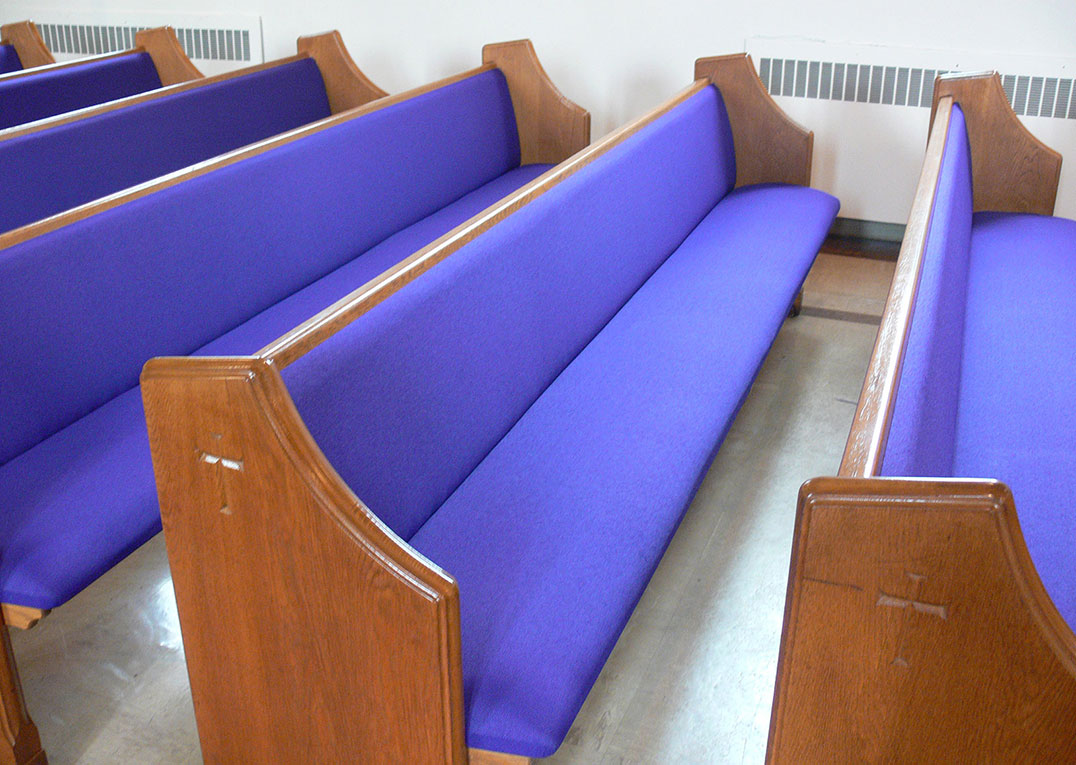
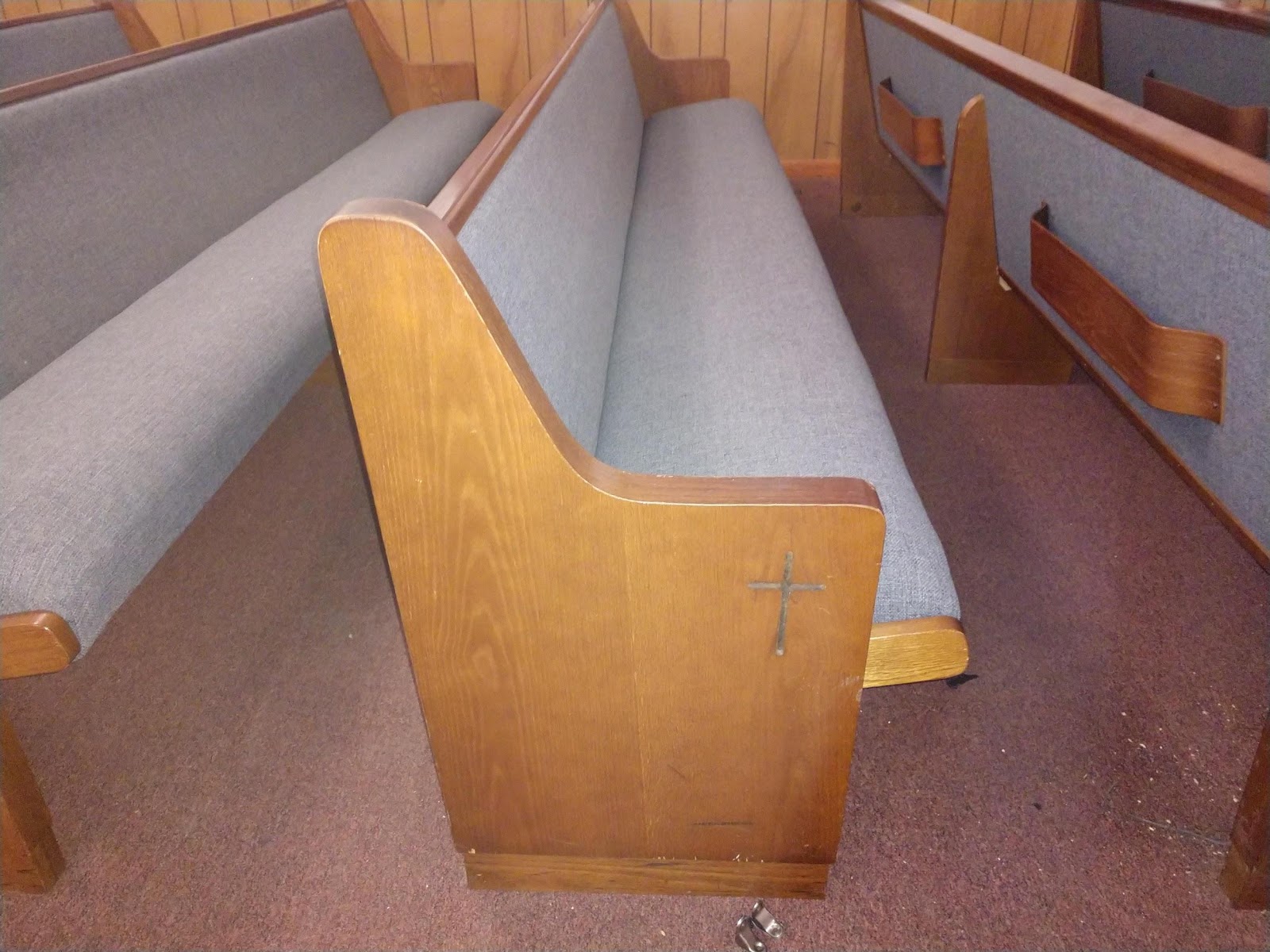
Row of church pews freshly reupholstered in durable blue fabric after restoration
A completed pew line, reupholstered and reinstalled.

Why This Decision Is Harder in Rocky Mount Than It Looks

Rocky Mount is old by North Carolina standards, and the church building stock shows it. The city grew up around Rocky Mount Mills, built in 1818 as the second cotton mill in the state, on the falls of the Tar River that gave the town its name. The Central City Historic District alone holds 166 contributing buildings spanning the late 19th through the mid 20th centuries, among them the Church of the Good Shepherd from 1877 and Holy Hope Episcopal Church from the 1910s. Across the Edgecombe County line, Lincoln Park adds another 47 contributing buildings in a historically middle-class African American section of the city.

A city that grew that early, across two counties, ends up with a lot of sanctuaries holding original wood furniture. And original wood furniture is exactly the kind of thing a low bid can quietly ruin. Nobody notices on installation day. Everybody notices in year four.

So the questions below are not about being difficult with a contractor. They are about making sure the person you hire understands what they are being handed.
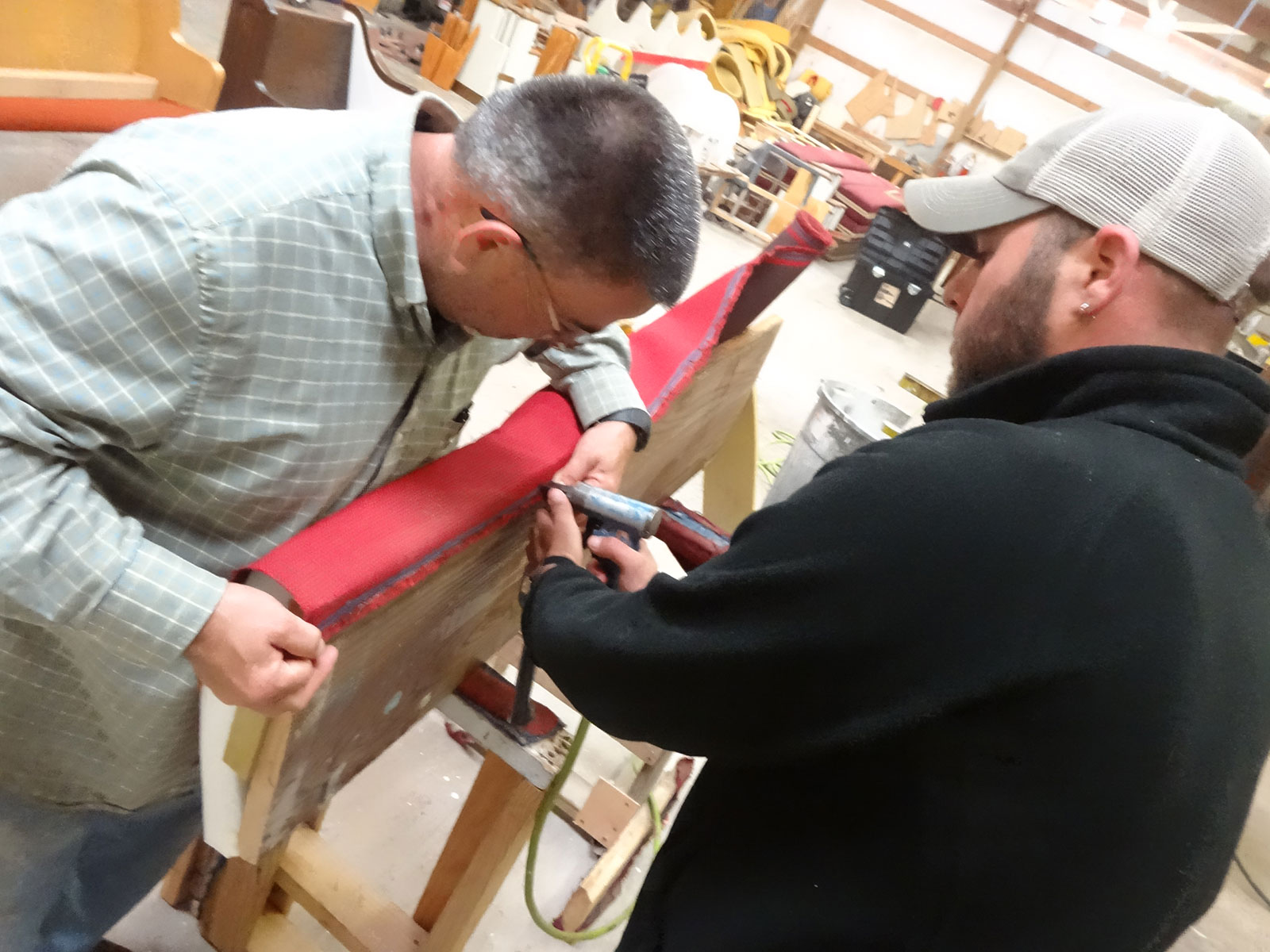
Two McPhail craftsmen repairing a church pew frame by hand in the in-house shop
Frame repair in our own shop. Who actually touches the pew is the first thing to establish.

The Eight Questions

Question 1

Do you do the work yourselves, or do you subcontract it?

This is the question that determines the value of every other answer. Pew restoration involves upholstery, wood refinishing, structural repair, and installation. When those are split across different crews, no single party is accountable for the finished pew, and a warranty claim in year six turns into a conversation about whose stage failed.

Our answerAll work is completed in-house by our own team. No outside contractors, at any stage.

Question 2

Where do your materials come from, and what foam do you use?

Ask about foam by name, not as a category. Foam is where a low bid usually hides, because a cheaper grade looks and feels identical on installation day and then compresses within a few years under weekly use. Wood and fabric sourcing is worth asking about for the same reason.

Our answerWood, fabric, and foam are all sourced domestically. Our cushions use high-quality LUX foam, chosen for durability under regular congregational use. See lay-in pew cushions for how that side works.

Question 3

What is the warranty, on what exactly, and who honors it?

There is no industry standard here, which is precisely why the question separates companies. Get the term in writing, get the scope in writing, and if the company subcontracts, ask who is actually on the hook when a seam opens up in year eight.

Our answerA 15-year warranty on upholstery work, which is rare in this trade. We can offer it because we do every stage ourselves and are still the party you call.

Question 4

Will you work around our calendar, including things that come up on short notice?

Services are the easy part, because they are predictable. Funerals are not. A company that can only work in one uninterrupted block is going to run into your church’s actual life at some point, and the sanctuary will be the thing that gives.

Our answerWe work in stages around Sunday services, weddings, funerals, and events so the sanctuary stays usable throughout. This is how we run every project, not a special accommodation.

Question 5

Is your default to repair or to replace, and why?

Ask them to justify the recommendation against your actual pews, in your sanctuary, not from photographs. Older Rocky Mount pews are frequently built from dense old-growth wood that no longer exists commercially at that quality, which usually makes repair both the cheaper answer and the better one.

Our answerRepair first, and we will tell you when it is not the right call. Structural work runs through pew parts and repairs, surface work through church pew refinishing.

Question 6

Can you match the existing pew line if we phase this over several years?

Most church budgets phase this work, and phasing only succeeds if the finished sanctuary reads as one continuous pew line rather than three separate projects done at three different times. Ask specifically about color-matching across years, not just within a single job.

Our answerYes. We use proprietary in-house coating formulas and offer color-matching with design recommendations, and because the same team stays on the account, phase three still matches phase one.

Question 7

Who handles removal, transport, and reinstallation?

A pew is heavy, awkward, and often anchored. The moment a sanctuary’s furniture is being moved by a crew who did not restore it and will not be back, small damage becomes nobody’s responsibility.

Our answerOur own team, through pew installations and deliveries, including disassembly, transport, and reinstallation.

Question 8

Can we see finished sanctuaries, and how many of these have you done?

Ask for before-and-after photographs of whole sanctuaries rather than close-up product shots, and ask for a number. Experience with pews specifically is not the same as experience with furniture generally.

Our answerMore than 2,000 completed church pew restorations, with over 30 years of combined staff experience. Before-and-after work is in our photo gallery.

Three Answers That Should Give You Pause

  • A firm quote without an in-person look. Nobody can price a pew line honestly from photographs. A number given over the phone is a number that will change, usually upward, once someone actually sees the frames.
  • Full replacement recommended before the pews were inspected. Replacement is sometimes right. It is never right as an opening position on a historic sanctuary’s original wood.
  • Vagueness about who does the work. If a company will not say plainly whether the upholstery, the refinishing, and the installation are their own people, assume they are not, and price the warranty accordingly.

What Happens When You Call Us

The consultation and quote are free, and they happen in your sanctuary. We walk the pew line, assess frame condition, veneer, finish, and joints separately, and prioritize repairs by what genuinely needs attention now against what can wait a few budget cycles. Nothing gets assumed from a phone call.

If your building sits in one of Rocky Mount’s historic districts, it is also worth confirming whether any preservation conditions apply before work begins, particularly if the church has ever used state or federal preservation tax credits tied to the property. The North Carolina State Historic Preservation Office is the right place to check.

From there, the scope is yours to set. A full church furniture services project, a phased plan across several years, or a single section of pews that has taken the worst of it. General project questions are answered on our FAQ page.

15-yr Upholstery Warranty
2,000+ Pews Restored
30+ yrs Combined Experience
100% In-House, No Subcontractors

What Congregations Say

See recent updates and photos on our Facebook page.

Serving Rocky Mount, Nash County, and Edgecombe County

Rocky Mount sits inside McPhail Church Services’ Eastern North Carolina territory, alongside Wilson, Greenville, Goldsboro, and New Bern. From our shop in Autryville we travel across the region for consultations, on-site repairs, and full restoration projects. Our North Carolina church pew services page covers how we work statewide, and the about us page introduces the family behind the shop.

Frequently Asked Questions

Does it matter whether a pew restoration company subcontracts the work?

It matters more than almost anything else you can ask about. When upholstery, wood refinishing, structural repair, and installation are split across different crews, no single party is accountable for the finished pew, and a warranty claim years later becomes a question of whose work failed. McPhail completes every stage in-house with no outside contractors, which is what makes a long warranty possible to honor.

What should a church ask about materials?

Ask specifically where the wood, fabric, and foam come from, and ask about the foam by name rather than as a general category. Foam is where a low bid usually hides, because a cheaper grade looks identical on installation day and compresses within a few years under regular use. McPhail sources wood, fabric, and foam domestically and uses high-quality LUX foam in its cushions.

How long should a church pew upholstery warranty last?

There is no industry standard, which is exactly why the question is worth asking. McPhail carries a 15-year warranty on upholstery work, which is unusually long for this trade. The follow-up question matters just as much: ask what the warranty actually covers, get it in writing, and confirm who honors it if the company that sold it subcontracted the work.

Will a pew restoration project force us to cancel services?

It should not. Ask directly whether the schedule will be built around your church calendar, including weddings and funerals that get added on short notice. McPhail works in stages around Sunday services and events so the sanctuary stays usable throughout the project, and handles removal, transport, and reinstallation with its own team.

How do we know whether our pews should be repaired or replaced?

Ask what the company’s default is, and ask them to justify it against the actual condition of your pews rather than a photograph. Older pews in Rocky Mount’s historic sanctuaries are often built from dense old-growth wood that cannot be matched with new material, so repair is usually both the cheaper and the better answer. A company that recommends full replacement without inspecting the frames has not done the work of finding out.

Can a pew restoration project be phased across budget years?

Yes, and most are. Ask two things: whether the company will prioritize by condition during the consultation, and whether they can color-match a section refinished years later to the sections done earlier. A phased project only works if the finished sanctuary reads as one pew line rather than as three separate projects.

Are churches in Rocky Mount’s historic districts subject to special rules?

It depends on the building’s designation and on whether the church has used state or federal preservation tax credits or grants tied to the property. Rocky Mount Central City Historic District alone holds 166 contributing buildings. The North Carolina State Historic Preservation Office is the right resource to confirm what applies to a specific building before work begins.

What proof of past work should we ask to see?

Ask for before-and-after photographs of finished sanctuaries rather than product shots, and ask how many pew restorations the company has actually completed. McPhail has completed more than 2,000 church pew restorations with over 30 years of combined staff experience, and keeps a before-and-after photo gallery on its site.

Get a Free Quote for Your Rocky Mount Church

Ask us the eight questions above. If the answers hold up better than the other bids, we would be glad to walk your sanctuary.

McPhail Church Services, Inc. · 59 Vickers Lane, Autryville, NC 28318 · 910-322-5673

Sources: Rocky Mount Central City Historic District, listed on the National Register of Historic Places June 19, 1980 with a boundary revision August 27, 2009, comprising 166 contributing buildings from the late 19th through mid 20th centuries, including the Church of the Good Shepherd (1877) and Holy Hope Episcopal Church (1910s). Lincoln Park Historic District, Edgecombe County, 47 contributing buildings. Rocky Mount Mills, built 1818, the second cotton mill in North Carolina. Churches are cited here as historic district architecture only.
Church Pew Refinishing — Goldsboro, NC

Refinishing Heart Pine Pews in Goldsboro’s Century-Old Sanctuaries

The pews in Goldsboro’s oldest sanctuaries were built from old-growth longleaf heart pine, a wood that took two hundred years to grow and is no longer available at that quality. You can replace those pews. You cannot match them. That single fact should shape every decision a Wayne County congregation makes about its pew line.

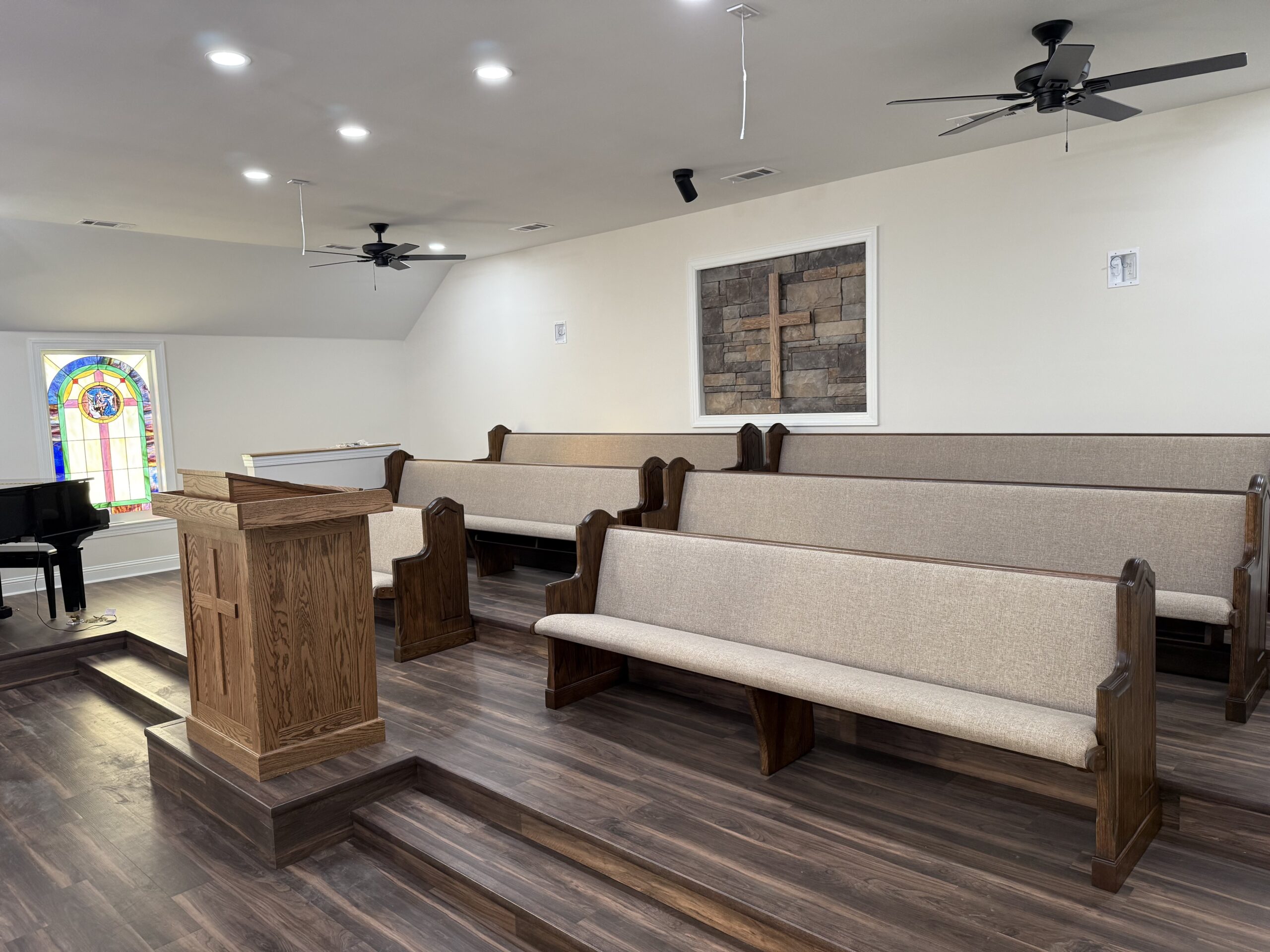
Restored church sanctuary with refinished wood-frame pews, wood floor, and stained glass window
A finished sanctuary after full pew restoration.

The Wood Wayne County Built With

Before it was farmland and before Goldsboro was a rail town, most of North Carolina’s upper coastal plain and lower piedmont was longleaf pine forest. That is the land Wayne County sits on. Longleaf was so central to the colonial economy that the tar, pitch, and turpentine rendered from its resin were the colony’s leading industry in the 1700s, and the wood itself framed nearly everything built here from that period through the late 1890s.

Goldsboro’s historic district reflects that timeline directly. Its buildings run from the mid 1800s through the 1940s, in Italianate, Victorian, Queen Anne, and Craftsman styles. First Presbyterian Church at 111 West Ash Street, built in 1856 as a stuccoed temple-form Greek Revival building with a Tuscan-columned portico and a painted wooden cupola, has stood on the National Register since 1979 and gives a sense of how far back the city’s church building stock reaches.

The congregations that built and furnished during that long window did what everyone did. They used what was growing outside. Which means a great many Goldsboro sanctuaries are still seating people on old-growth heart pine, whether or not anyone has ever said so out loud.

Refinished heart pine church pew end panel with carved detail and color-matched finish
A refinished pew end. The tone in old heart pine develops over decades and cannot be stained back on.

Why It Cannot Be Replaced, Only Restored

Heart pine is the dense inner heartwood of a mature pine, and in this region that means longleaf. Three things about it matter for a pew:

It is exceptionally dense. Longleaf is the strongest and densest of the southern pines, close to red oak. That is why a hundred-and-twenty-year-old pew frame is still square and still carrying weight after five generations of congregations.

It is full of resin. The resin that made those naval stores gives the wood natural resistance to insects and decay. In a humid Eastern North Carolina sanctuary, that resistance has been quietly doing its job for a century.

It took two centuries to grow. Heartwood forms at roughly one inch every thirty years. Old-growth longleaf reached 150 to 175 feet and took more than two hundred years to mature. Those forests were cleared generations ago, and no management program shortens that clock. You can read the North Carolina Forest Service’s own account of the species and its restoration effort on the NC Forest Service longleaf pine page.

Put together, that means a replacement pew is a genuine choice but not an equivalent one. New pews can be well built and can serve a congregation faithfully for a long time. They will not be the same material, and they will not carry the deep amber tone the original wood developed over a hundred years of light and air. When a church replaces a heart pine pew line, that wood does not come back. Our pew wood restoration service exists precisely so that decision is a real choice rather than a default.

What Makes Old Heart Pine Hard to Refinish

The same properties that let the wood survive a century make it behave differently under stripper, stain, and topcoat than the pine sold at a lumberyard today. This is the honest reason it is a specialist job.

The Real Risks

  • Sanding through the patina. The amber tone is oxidation and resin change developed through the wood, not a coating sitting on top of it. Cut through it and pale wood shows, permanently.
  • Blotching. Resin-rich areas absorb stain unevenly, so a product applied as if to plain pine can leave a mottled pew face.
  • Resin bleeding through a topcoat that was not chosen with resinous old-growth wood in mind.
  • Mismatched sections. A pew line refinished piecemeal by different hands stops reading as one continuous piece of furniture.

What Handles Them

  • Removing the failed finish while taking off as little wood as possible, rather than sanding to bare stock as a matter of course.
  • Proprietary in-house coating formulas developed for restoration work, not off-the-shelf products chosen for convenience.
  • Color-matching to the pew line’s existing tone, so a refinished section blends rather than announcing itself.
  • One team doing all of it in-house, with no subcontractors, so the same hands and the same formulas carry across the whole sanctuary.

How We Refinish a Heart Pine Pew Line

  1. Free consultation in your sanctuary

    We look at the actual pews rather than working from photographs. Frame condition, veneer condition, finish failure, and joint integrity are assessed separately, because they fail on different timelines.

  2. Structural first, surface second

    A loose joint or a cracked frame member gets addressed through pew parts and repairs before anything cosmetic happens. Refinishing over a structural problem just makes a good-looking pew that still rocks.

  3. Finish removal, not stock removal

    The failed coating comes off. The wood stays. On old heart pine, that restraint is the whole job.

  4. Color-matched refinishing

    Our church pew refinishing work uses proprietary in-house formulas matched to the pew line’s existing tone, so the result reads as the original pews cared for, not as new furniture.

  5. Upholstery, if it is in scope

    Wide fabric selection with design recommendations, domestically sourced materials, high-quality LUX foam, and a 15-year warranty on the upholstery work. See church pew upholstery for how that side is handled.

  6. Removal, transport, and reinstallation by our own team

    Handled through pew installations and deliveries, scheduled around services, weddings, and funerals so the sanctuary stays in use.

McPhail craftsman hand-sanding a heart pine church pew during in-house wood restoration
Finish removal by hand. On old heart pine, taking off less wood is the skill.

Phasing a Project Across Budget Years

Very few congregations refinish an entire sanctuary in one line item, and there is no reason to. During the consultation we prioritize by condition, so the pews that genuinely need attention now get it, and the rest wait until the budget comes back around.

The catch with phasing is color. If the front third is refinished this year and the back third three years from now, the two have to end up looking like one pew line, not two projects. That is why the color-matching and the in-house formulas matter more on a phased job than on a single-pass one, and it is a practical argument for keeping the whole project with one shop rather than rebidding it each cycle. Because we do every stage in-house with no outside contractors, the same team and the same formulas are still there when phase two comes around.

Examples of completed work are in our photo gallery, and general project questions are answered on our FAQ page.

15-yr Upholstery Warranty
2,000+ Pews Restored
30+ yrs Combined Experience
100% In-House, No Subcontractors

What Congregations Say

See recent updates and photos on our Facebook page.

Serving Goldsboro and Wayne County

Goldsboro sits inside McPhail Church Services’ core Eastern North Carolina territory, a short run from our shop in Autryville, alongside Kinston, Wilson, Greenville, and New Bern. Our North Carolina church pew services page covers how we work across the state, and the about us page has more on the family and the shop behind the work.

Frequently Asked Questions

What is heart pine, and how is it different from regular pine?

Heart pine is the dense inner heartwood of a mature pine, historically longleaf pine in this part of North Carolina. It is the strongest and densest of the southern pines, close to red oak in density, and its high resin content gives it natural resistance to insects and decay. Heartwood forms slowly, at roughly one inch every 30 years, so the boards in a century-old pew came from trees that had already stood for two centuries. Modern fast-grown pine is a different material entirely.

Why does Goldsboro have so many heart pine pews?

Longleaf pine forests once covered nearly all of North Carolina’s upper coastal plain and lower piedmont, which includes Wayne County. It was the local building material, and buildings put up from the 1700s through the late 1890s were made almost solely from it. Goldsboro’s historic district holds structures dating from the mid 1800s to the 1940s, and the congregations that built during that window furnished their sanctuaries out of what was growing nearby.

Can heart pine pews simply be replaced instead of refinished?

They can be replaced, but not matched. Old-growth longleaf of that density is no longer commercially available, because the forests that produced it were cleared generations ago and the growth rate cannot be shortened. A replacement pew can be a fine piece of furniture, but it will not be the same wood, and it will not have the amber tone the original developed over a hundred years. That is the practical argument for restoring what a sanctuary already owns.

What is the biggest mistake made when refinishing old heart pine?

Sanding too deep. The deep amber and red tone in old heart pine is not a stain sitting on the surface, it is oxidation and resin change that has developed through the wood over decades. Aggressive sanding cuts straight through it and exposes pale wood underneath, and no stain puts that tone back convincingly. The correct approach removes the failed finish while taking off as little wood as possible.

Does resin in old pine cause problems when refinishing?

It can. The same resin content that let the wood survive a century also makes it behave differently from modern lumber under stripper, stain and topcoat. Resin-rich areas absorb unevenly, which is what causes blotching when a stain is applied as if to plain pine, and resin can bleed through a coating that was not chosen for it. This is the practical reason old heart pine is a specialist job rather than a general refinishing job.

Do you have to refinish an entire sanctuary at once?

No. We prioritize during the free consultation, so a congregation can address the pews in worst condition first and phase the rest across budget years. The reason color-matching matters so much on a phased project is that section one and section three may be refinished years apart and still need to read as one continuous pew line.

Will our services have to stop while the pews are refinished?

No. We schedule pew work around Sunday services, weddings, funerals and other events so the sanctuary stays usable throughout the project. Work moves in stages, and our own team handles removal, transport and reinstallation, so the room is never left mid-project.

Get a Free Quote for Your Goldsboro Church

If your sanctuary’s pews are original heart pine, the wood is worth a careful look before anyone talks about replacing it. A consultation costs nothing.

McPhail Church Services, Inc. · 59 Vickers Lane, Autryville, NC 28318 · 910-322-5673

Sources: longleaf pine range, density, resin content, growth rate and historical use per the North Carolina Forest Service and standard timber references. Goldsboro Historic District building date range (mid 1800s to the 1940s) and First Presbyterian Church, 111 West Ash Street, built 1856 and listed on the National Register of Historic Places on May 29, 1979, per National Register records. The 1856 building was sold to the Christian Science Society in 1953 and is referenced here as surviving architecture, not as an active Presbyterian congregation.

Pew Wood Restoration — Greenville & Eastern NC

Why Coastal Humidity Is Hard on Church Pews in Greenville and Eastern NC

August is the most humid month of the year on North Carolina’s coastal plain, and a sanctuary full of century-old wood feels every bit of it. Lifting veneer, clouded finish, and joints that have quietly let go are not signs the pews are finished. They are signs the pews have been doing their job in a hard climate. McPhail Church Services restores them in-house, from our shop in Autryville.

McPhail craftsman hand-sanding the wood surface of a church pew during in-house restoration
In-house wood restoration on an original pew frame.

The Climate Greenville Pews Actually Live In

Greenville sits in Pitt County on the Tar River, well inside North Carolina’s coastal plain. The climate here is humid subtropical: hot, wet summers, mild winters, and roughly 48 inches of rain spread across the year. None of that is news to anyone who has stood in a church parking lot in August.

What is worth knowing is the shape of the year. Relative humidity in Greenville peaks in August, averaging in the mid 70s percent, and stays high from late spring through September. That is not an unusual reading for the region. It is the normal condition for the whole eastern half of the state, from Greenville down through Kinston, Goldsboro, and our own base in Sampson County.

Wood does not read a forecast. It reads the air. And the air here, for about a third of the year, sits far outside the range in which furniture wood stays still.

Restored church pew end panel with carved detail and new upholstery after refinishing
A restored pew end. The finish is what stands between the wood and the air.

What Moisture Does to a Pew, Step by Step

Wood is not inert. It takes on moisture from the air and gives it back, and it changes size doing so. Furniture wood is generally stable between about 35 and 55 percent relative humidity, with roughly 45 percent as the ideal. Held above 60 percent for more than a few days, wood swells measurably. Held below 30 percent, it shrinks and splits along the grain.

A church pew is not one piece of wood, though, and that is the real issue. It is a solid frame, a thin decorative veneer glued to the visible faces, mortise-and-tenon joints held by glue lines that are often a century old, plus fabric and foam. Each of those responds to moisture at a different rate. When the frame swells and the veneer on top of it swells at a different rate, the bond between them is the part that gives.

Here is roughly what a summer of high humidity does, in order:

Humidity Range What Happens Inside the Pew
35 to 55 percent The stable band. Wood, veneer, and glue lines all sit close to equilibrium and nothing moves enough to matter.
Above 60 percent, sustained The frame takes on moisture and swells. Veneer expands at a different rate and starts to lift, bubble, or crack along the grain, most often on end panels and seat backs.
Above 60 percent, repeatedly Glue lines in the joints work loose through repeated swelling and shrinking. The pew begins to rock or creak. Gaps open at the seat and back corners.
Sharp swings either direction The most damaging condition of all. Movement, not any single reading, is what breaks bonds. A pew that cycles hard every week ages faster than one sitting in steady high humidity.

That last row is the one most congregations have never been told, and it is the one that explains what is happening in the majority of Eastern NC sanctuaries we walk into. Our pew wood restoration work is built around addressing what that movement has already done.

Why a Sanctuary Is Harder on Wood Than a House

A house in Greenville runs its air conditioning more or less continuously through the summer. The indoor humidity settles somewhere reasonable and mostly stays there. Furniture in that house is fine.

A sanctuary works nothing like that. The building is large, the ceilings are high, and the congregation is in it for a few hours a week. Most churches, sensibly, do not pay to condition an empty room. So the system runs hard on Sunday morning, pulls the temperature and humidity down fast for a couple of hours, and then the building sits closed and unconditioned until the following week.

From the pews’ point of view, that is fifty-two sharp cycles a year, every year, on top of a baseline that already runs humid. It is the single most consistent cause of the veneer lifting and joint failure we see across Eastern North Carolina, and it has nothing to do with how well a congregation cares for its building. It is a consequence of how sanctuaries are used.

A few things genuinely help, and none of them require replacing anything:

  • Run the system at a moderate setting through the week rather than a hard Sunday-only cycle, if the budget allows it. Steady beats extreme.
  • Keep pews off exterior walls where condensation collects, and out of the direct path of supply vents.
  • Watch the ends of a long pew run separately. One end against an outside wall and the other under a vent are living in two different climates.
  • Address lifted veneer early. An edge that has just started to lift is a small repair. The same edge in three years has taken on dirt and moisture underneath it.
Two McPhail craftsmen repairing a church pew frame by hand in the in-house shop
Joint and frame repair, done in our own shop rather than subcontracted out.

Telling Humidity Damage From Ordinary Wear

A slow walk down the aisle, running a hand along the end panels and seat backs, will tell you most of what you need before you call anyone.

Ordinary Wear

  • Finish evenly dulled across the entire pew run, not patchy
  • Thinning fabric with the padding underneath still supportive
  • Small nicks and dents concentrated at aisle ends and armrests

Moisture Damage — Worth a Closer Look

  • Veneer lifting, bubbling, or cracking along the grain on end panels
  • A cloudy, milky, or blotchy look in the finish rather than an even dullness
  • Gaps opening at the corners where seat, back, and end frame meet
  • A pew that rocks, flexes, or creaks under normal weight
  • Damage concentrated at one end of a run rather than spread evenly

Flooding Is a Different Problem Entirely

Everything above is about ambient humidity, the slow kind of damage. Greenville also knows the fast kind. In September 1999, Hurricane Floyd dropped roughly 20 inches of rain on the city and the Tar River crested at a record 29.74 feet. More than 10,000 homes across the region were damaged or destroyed, and the recovery took years. Matthew in 2016 and Florence in 2018 brought comparable flooding to parts of the same territory. The North Carolina State Climate Office keeps a detailed account of what the Tar River did that week.

A pew that has stood in floodwater is a different assessment from a pew that has simply lived through humid summers. The frame, the veneer, the foam, and the finish all have to be judged separately, because they fail in different ways and on different timelines. Foam that has been submerged is not salvageable by any honest standard. A solid heart pine frame that dried out properly often is. That distinction is worth having someone look at in person rather than guessing at, and it is the kind of judgment call our team makes during a free consultation before recommending anything.

What Restoration Looks Like, and What It Does Not Require

The instinct when a pew line looks tired is to price out replacement. In most Eastern NC sanctuaries that is the expensive answer to a repairable problem. Lifted veneer can be re-laid. A clouded finish can be brought back. Joints that have worked loose can be rebuilt without touching the parts of the pew that are still sound.

Every project starts with a free consultation and quote. We walk the sanctuary, look at each pew’s actual condition rather than assuming from a photograph, and prioritize repairs by what needs attention now against what can reasonably wait a few years. Structural work goes through our pew parts and repairs service. Surface work goes through church pew refinishing, using proprietary in-house coating formulas matched to the pew’s existing tone, so a repaired section reads as original rather than as a patch.

When upholstery is in scope, we work from a wide fabric selection with color-matching and design recommendations, and our cushions use high-quality LUX foam. Every material is sourced domestically. Every upholstery job carries a 15-year warranty, which is not standard in this industry. And all of it is done by our own team in-house, with no outside subcontractors, which is the only reason we can stand behind a warranty that long.

We also work around your calendar rather than the other way around. Services, weddings, and funerals continue on schedule while the project moves in stages, and our team handles installation and delivery directly so the sanctuary is never left mid-project. Finished work is in our photo gallery, and general project questions are answered on our FAQ page.

15-yr Upholstery Warranty
2,000+ Pews Restored
30+ yrs Combined Experience
100% In-House, No Subcontractors

What Congregations Say

See recent updates and photos on our Facebook page.

Serving Greenville as Part of Our Eastern NC Service Area

Greenville sits inside McPhail Church Services’ core Eastern North Carolina territory, alongside New Bern, Goldsboro, Wilson, Kinston, and Wilmington. From our shop in Autryville we travel across the region for consultations, on-site repairs, and full pew restoration projects. Our North Carolina church pew services page covers how we work statewide, and the about us page has more on how we plan and travel for larger jobs.

Frequently Asked Questions

What relative humidity is safe for church pews?

Solid wood furniture is generally stable between about 35 and 55 percent relative humidity, with roughly 45 percent as the target. Sustained readings above 60 percent swell wood enough to buckle veneer and push glued joints apart. In Greenville and the rest of the Eastern NC coastal plain, outdoor humidity runs well above that range for much of the summer, which is why what happens inside the sanctuary matters more than the weather does.

Why do pews seem to suffer more than the rest of the church furniture?

Pews are long, they are fixed in place, and they combine several materials that respond to moisture at different rates: a solid wood frame, thin decorative veneer on the visible faces, glued joints, fabric, and foam. A long run of pews also spans the width of a room, so one end can sit against an exterior wall while the other sits under a supply vent. That difference across a single piece of furniture is what concentrates the damage.

Is running the air conditioning only on Sunday bad for the pews?

It is harder on wood than most congregations expect. Cooling a sanctuary hard for a few hours and then leaving it closed for six days creates a weekly swing between two very different moisture conditions. Wood moves with each swing, and the movement is what loosens joints and lifts veneer. A steady, moderate setting through the week is easier on pews than a sharp Sunday-only cycle, even if the average reading is similar.

How can I tell whether our pews have humidity damage or just normal wear?

Moisture damage tends to show up as veneer lifting or bubbling on end panels and seat backs, hairline cracking along the grain, a cloudy or blotchy look in the finish, joints opening at the seat and back corners, and pews that rock or creak underfoot. Normal wear looks different: an evenly dulled finish across the whole run, thinning fabric with the padding still supportive, and small nicks from decades of ordinary use.

Did the flooding that hit Greenville and the Tar River damage church pews?

Flooding is a separate problem from ambient humidity, and it is far more severe. Hurricane Floyd dropped about 20 inches of rain on Greenville in September 1999 and the Tar River crested at a record 29.74 feet, with more than 10,000 homes damaged or destroyed across the region. Matthew in 2016 and Florence in 2018 brought comparable flooding to parts of Eastern NC. A pew that has stood in water needs an in-person assessment, because the frame, the foam, and the finish all have to be judged separately.

Is August a bad month to have pew work done in Eastern NC?

No. August is simply when the problem is easiest to see, which makes it a good month to have someone look. We schedule the actual work around your church’s calendar, so services, weddings, and funerals continue on their normal schedule while the project moves in stages.

Does humidity damage mean the pews have to be replaced?

Usually not. Lifted veneer, a clouded finish, and loosened joints are all repairable, and repairing them costs far less than replacing a sanctuary’s pew line. We start with a free consultation, look at the actual condition of each pew, and prioritize what needs attention now against what can wait.

Get a Free Quote for Your Greenville Church

If the veneer is lifting or the finish has gone cloudy after another Eastern NC summer, a free consultation is the first step. We look at what is actually happening before recommending anything.

McPhail Church Services, Inc. · 59 Vickers Lane, Autryville, NC 28318 · 910-322-5673

Sources: Greenville, NC climate averages (humid subtropical coastal plain; relative humidity peaks in August; roughly 48 inches of annual rainfall). Hurricane Floyd figures, including the record 29.74-foot Tar River crest at Greenville on September 21, 1999, per the North Carolina State Climate Office. Wood stability ranges reflect standard furniture-conservation guidance of 35 to 55 percent relative humidity.