

Church Pew Refinishing — Goldsboro, NC
Refinishing Heart Pine Pews in Goldsboro’s Century-Old Sanctuaries
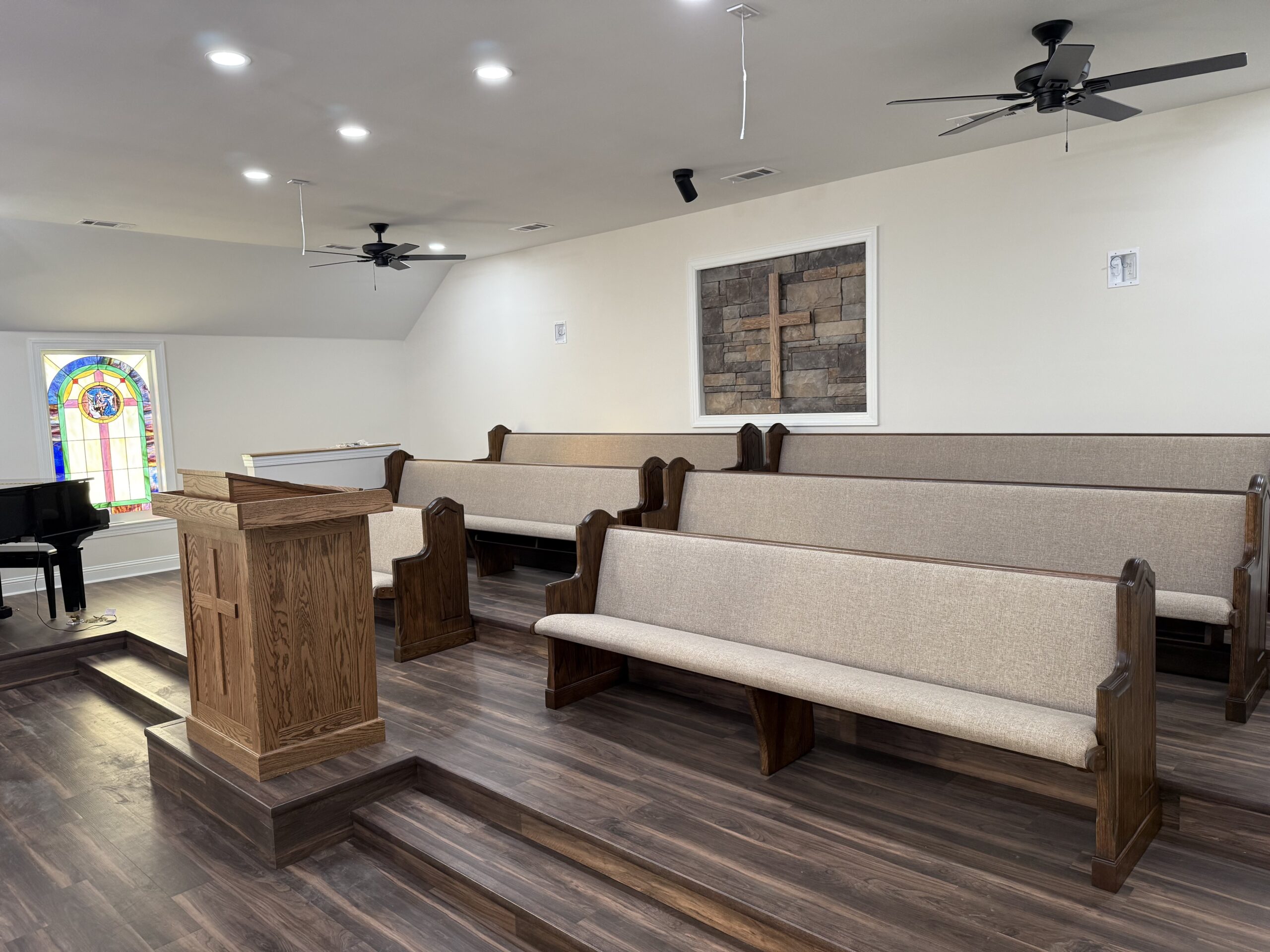
The pews in Goldsboro’s oldest sanctuaries were built from old-growth longleaf heart pine, a wood that took two hundred years to grow and is no longer available at that quality. You can replace those pews. You cannot match them. That single fact should shape every decision a Wayne County congregation makes about its pew line.
The Wood Wayne County Built With
Before it was farmland and before Goldsboro was a rail town, most of North Carolina’s upper coastal plain and lower piedmont was longleaf pine forest. That is the land Wayne County sits on. Longleaf was so central to the colonial economy that the tar, pitch, and turpentine rendered from its resin were the colony’s leading industry in the 1700s, and the wood itself framed nearly everything built here from that period through the late 1890s.
Goldsboro’s historic district reflects that timeline directly. Its buildings run from the mid 1800s through the 1940s, in Italianate, Victorian, Queen Anne, and Craftsman styles. First Presbyterian Church at 111 West Ash Street, built in 1856 as a stuccoed temple-form Greek Revival building with a Tuscan-columned portico and a painted wooden cupola, has stood on the National Register since 1979 and gives a sense of how far back the city’s church building stock reaches.
The congregations that built and furnished during that long window did what everyone did. They used what was growing outside. Which means a great many Goldsboro sanctuaries are still seating people on old-growth heart pine, whether or not anyone has ever said so out loud.
Why It Cannot Be Replaced, Only Restored
Heart pine is the dense inner heartwood of a mature pine, and in this region that means longleaf. Three things about it matter for a pew:
It is exceptionally dense. Longleaf is the strongest and densest of the southern pines, close to red oak. That is why a hundred-and-twenty-year-old pew frame is still square and still carrying weight after five generations of congregations.
It is full of resin. The resin that made those naval stores gives the wood natural resistance to insects and decay. In a humid Eastern North Carolina sanctuary, that resistance has been quietly doing its job for a century.
It took two centuries to grow. Heartwood forms at roughly one inch every thirty years. Old-growth longleaf reached 150 to 175 feet and took more than two hundred years to mature. Those forests were cleared generations ago, and no management program shortens that clock. You can read the North Carolina Forest Service’s own account of the species and its restoration effort on the NC Forest Service longleaf pine page.
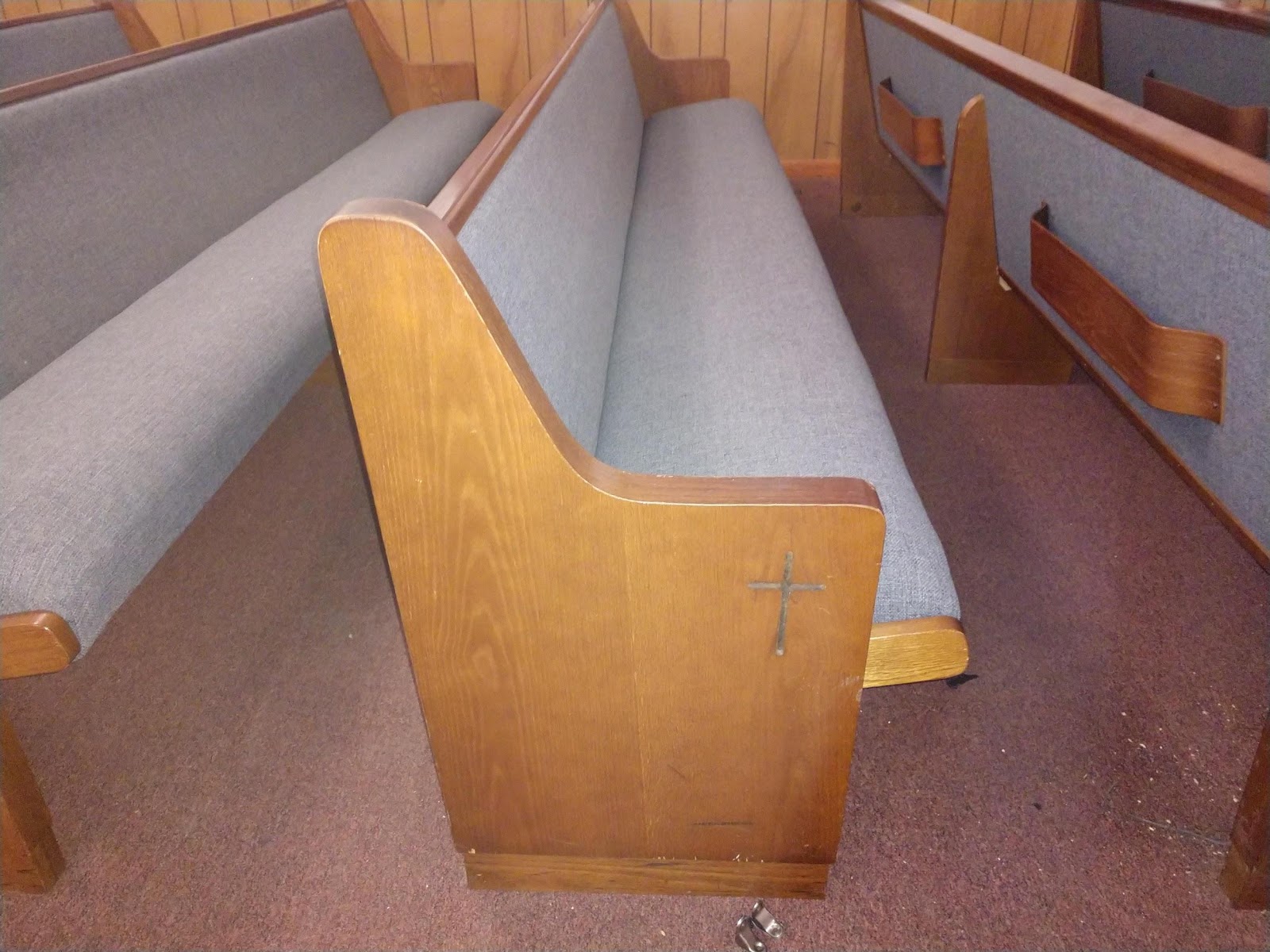
Put together, that means a replacement pew is a genuine choice but not an equivalent one. New pews can be well built and can serve a congregation faithfully for a long time. They will not be the same material, and they will not carry the deep amber tone the original wood developed over a hundred years of light and air. When a church replaces a heart pine pew line, that wood does not come back. Our pew wood restoration service exists precisely so that decision is a real choice rather than a default.
What Makes Old Heart Pine Hard to Refinish
The same properties that let the wood survive a century make it behave differently under stripper, stain, and topcoat than the pine sold at a lumberyard today. This is the honest reason it is a specialist job.
The Real Risks
- Sanding through the patina. The amber tone is oxidation and resin change developed through the wood, not a coating sitting on top of it. Cut through it and pale wood shows, permanently.
- Blotching. Resin-rich areas absorb stain unevenly, so a product applied as if to plain pine can leave a mottled pew face.
- Resin bleeding through a topcoat that was not chosen with resinous old-growth wood in mind.
- Mismatched sections. A pew line refinished piecemeal by different hands stops reading as one continuous piece of furniture.
What Handles Them
- Removing the failed finish while taking off as little wood as possible, rather than sanding to bare stock as a matter of course.
- Proprietary in-house coating formulas developed for restoration work, not off-the-shelf products chosen for convenience.
- Color-matching to the pew line’s existing tone, so a refinished section blends rather than announcing itself.
- One team doing all of it in-house, with no subcontractors, so the same hands and the same formulas carry across the whole sanctuary.
How We Refinish a Heart Pine Pew Line
-
Free consultation in your sanctuary
We look at the actual pews rather than working from photographs. Frame condition, veneer condition, finish failure, and joint integrity are assessed separately, because they fail on different timelines.
-
Structural first, surface second
A loose joint or a cracked frame member gets addressed through pew parts and repairs before anything cosmetic happens. Refinishing over a structural problem just makes a good-looking pew that still rocks.
-
Finish removal, not stock removal
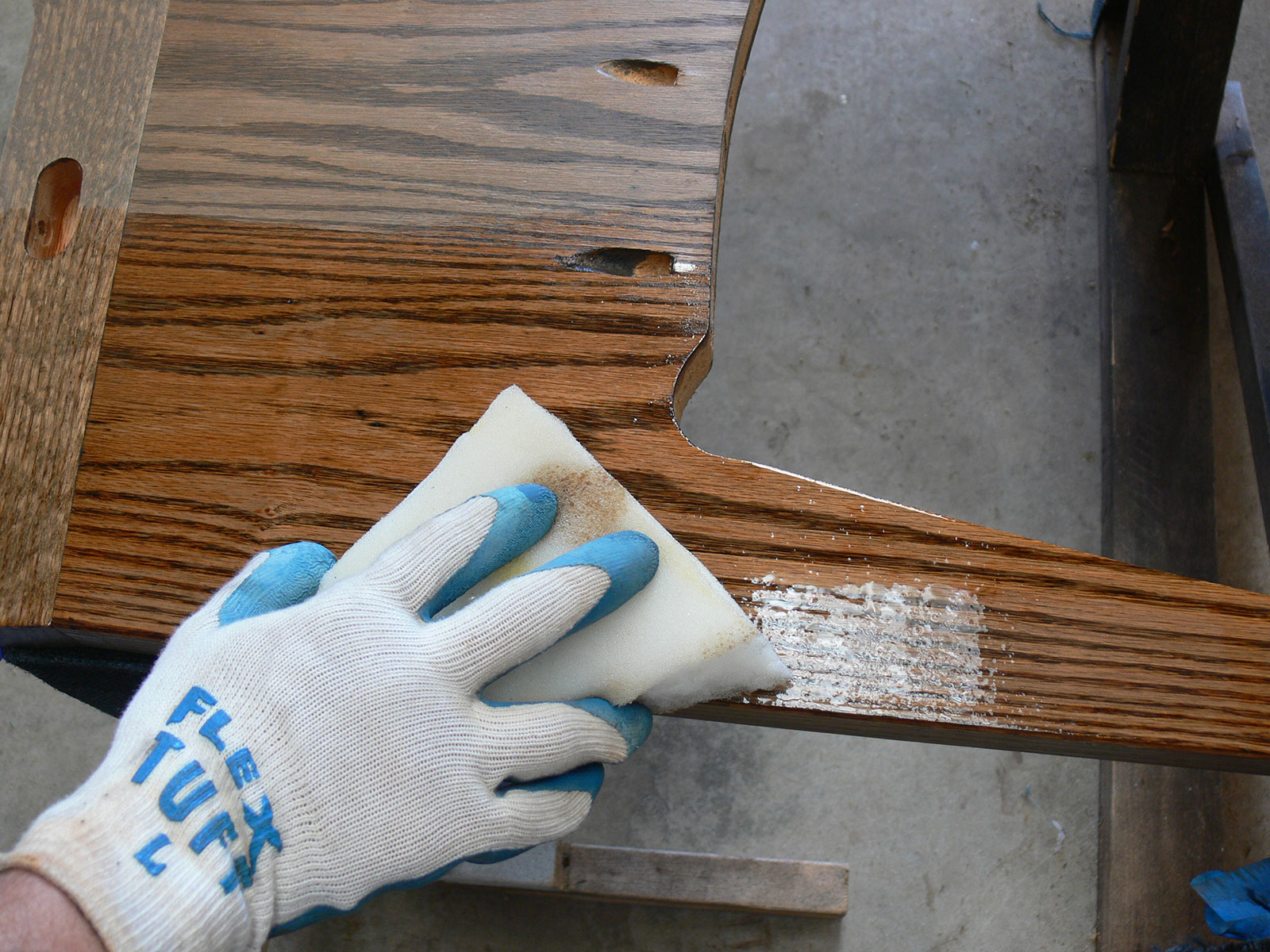
The failed coating comes off. The wood stays. On old heart pine, that restraint is the whole job.
-
Color-matched refinishing
Our church pew refinishing work uses proprietary in-house formulas matched to the pew line’s existing tone, so the result reads as the original pews cared for, not as new furniture.
-
Upholstery, if it is in scope
Wide fabric selection with design recommendations, domestically sourced materials, high-quality LUX foam, and a 15-year warranty on the upholstery work. See church pew upholstery for how that side is handled.
-
Removal, transport, and reinstallation by our own team
Handled through pew installations and deliveries, scheduled around services, weddings, and funerals so the sanctuary stays in use.
Phasing a Project Across Budget Years
Very few congregations refinish an entire sanctuary in one line item, and there is no reason to. During the consultation we prioritize by condition, so the pews that genuinely need attention now get it, and the rest wait until the budget comes back around.
The catch with phasing is color. If the front third is refinished this year and the back third three years from now, the two have to end up looking like one pew line, not two projects. That is why the color-matching and the in-house formulas matter more on a phased job than on a single-pass one, and it is a practical argument for keeping the whole project with one shop rather than rebidding it each cycle. Because we do every stage in-house with no outside contractors, the same team and the same formulas are still there when phase two comes around.
Examples of completed work are in our photo gallery, and general project questions are answered on our FAQ page.
What Congregations Say
See recent updates and photos on our Facebook page.
Serving Goldsboro and Wayne County
Goldsboro sits inside McPhail Church Services’ core Eastern North Carolina territory, a short run from our shop in Autryville, alongside Kinston, Wilson, Greenville, and New Bern. Our North Carolina church pew services page covers how we work across the state, and the about us page has more on the family and the shop behind the work.
Frequently Asked Questions
What is heart pine, and how is it different from regular pine?
Heart pine is the dense inner heartwood of a mature pine, historically longleaf pine in this part of North Carolina. It is the strongest and densest of the southern pines, close to red oak in density, and its high resin content gives it natural resistance to insects and decay. Heartwood forms slowly, at roughly one inch every 30 years, so the boards in a century-old pew came from trees that had already stood for two centuries. Modern fast-grown pine is a different material entirely.
Why does Goldsboro have so many heart pine pews?
Longleaf pine forests once covered nearly all of North Carolina’s upper coastal plain and lower piedmont, which includes Wayne County. It was the local building material, and buildings put up from the 1700s through the late 1890s were made almost solely from it. Goldsboro’s historic district holds structures dating from the mid 1800s to the 1940s, and the congregations that built during that window furnished their sanctuaries out of what was growing nearby.
Can heart pine pews simply be replaced instead of refinished?
They can be replaced, but not matched. Old-growth longleaf of that density is no longer commercially available, because the forests that produced it were cleared generations ago and the growth rate cannot be shortened. A replacement pew can be a fine piece of furniture, but it will not be the same wood, and it will not have the amber tone the original developed over a hundred years. That is the practical argument for restoring what a sanctuary already owns.
What is the biggest mistake made when refinishing old heart pine?
Sanding too deep. The deep amber and red tone in old heart pine is not a stain sitting on the surface, it is oxidation and resin change that has developed through the wood over decades. Aggressive sanding cuts straight through it and exposes pale wood underneath, and no stain puts that tone back convincingly. The correct approach removes the failed finish while taking off as little wood as possible.
Does resin in old pine cause problems when refinishing?
It can. The same resin content that let the wood survive a century also makes it behave differently from modern lumber under stripper, stain and topcoat. Resin-rich areas absorb unevenly, which is what causes blotching when a stain is applied as if to plain pine, and resin can bleed through a coating that was not chosen for it. This is the practical reason old heart pine is a specialist job rather than a general refinishing job.
Do you have to refinish an entire sanctuary at once?
No. We prioritize during the free consultation, so a congregation can address the pews in worst condition first and phase the rest across budget years. The reason color-matching matters so much on a phased project is that section one and section three may be refinished years apart and still need to read as one continuous pew line.
Will our services have to stop while the pews are refinished?
No. We schedule pew work around Sunday services, weddings, funerals and other events so the sanctuary stays usable throughout the project. Work moves in stages, and our own team handles removal, transport and reinstallation, so the room is never left mid-project.
Get a Free Quote for Your Goldsboro Church
If your sanctuary’s pews are original heart pine, the wood is worth a careful look before anyone talks about replacing it. A consultation costs nothing.
McPhail Church Services, Inc. · 59 Vickers Lane, Autryville, NC 28318 · 910-322-5673
Sources: longleaf pine range, density, resin content, growth rate and historical use per the North Carolina Forest Service and standard timber references. Goldsboro Historic District building date range (mid 1800s to the 1940s) and First Presbyterian Church, 111 West Ash Street, built 1856 and listed on the National Register of Historic Places on May 29, 1979, per National Register records. The 1856 building was sold to the Christian Science Society in 1953 and is referenced here as surviving architecture, not as an active Presbyterian congregation.