
Pew Wood Restoration — Greenville & Eastern NC
Why Coastal Humidity Is Hard on Church Pews in Greenville and Eastern NC
August is the most humid month of the year on North Carolina’s coastal plain, and a sanctuary full of century-old wood feels every bit of it. Lifting veneer, clouded finish, and joints that have quietly let go are not signs the pews are finished. They are signs the pews have been doing their job in a hard climate. McPhail Church Services restores them in-house, from our shop in Autryville.
The Climate Greenville Pews Actually Live In
Greenville sits in Pitt County on the Tar River, well inside North Carolina’s coastal plain. The climate here is humid subtropical: hot, wet summers, mild winters, and roughly 48 inches of rain spread across the year. None of that is news to anyone who has stood in a church parking lot in August.
What is worth knowing is the shape of the year. Relative humidity in Greenville peaks in August, averaging in the mid 70s percent, and stays high from late spring through September. That is not an unusual reading for the region. It is the normal condition for the whole eastern half of the state, from Greenville down through Kinston, Goldsboro, and our own base in Sampson County.
Wood does not read a forecast. It reads the air. And the air here, for about a third of the year, sits far outside the range in which furniture wood stays still.
What Moisture Does to a Pew, Step by Step
Wood is not inert. It takes on moisture from the air and gives it back, and it changes size doing so. Furniture wood is generally stable between about 35 and 55 percent relative humidity, with roughly 45 percent as the ideal. Held above 60 percent for more than a few days, wood swells measurably. Held below 30 percent, it shrinks and splits along the grain.
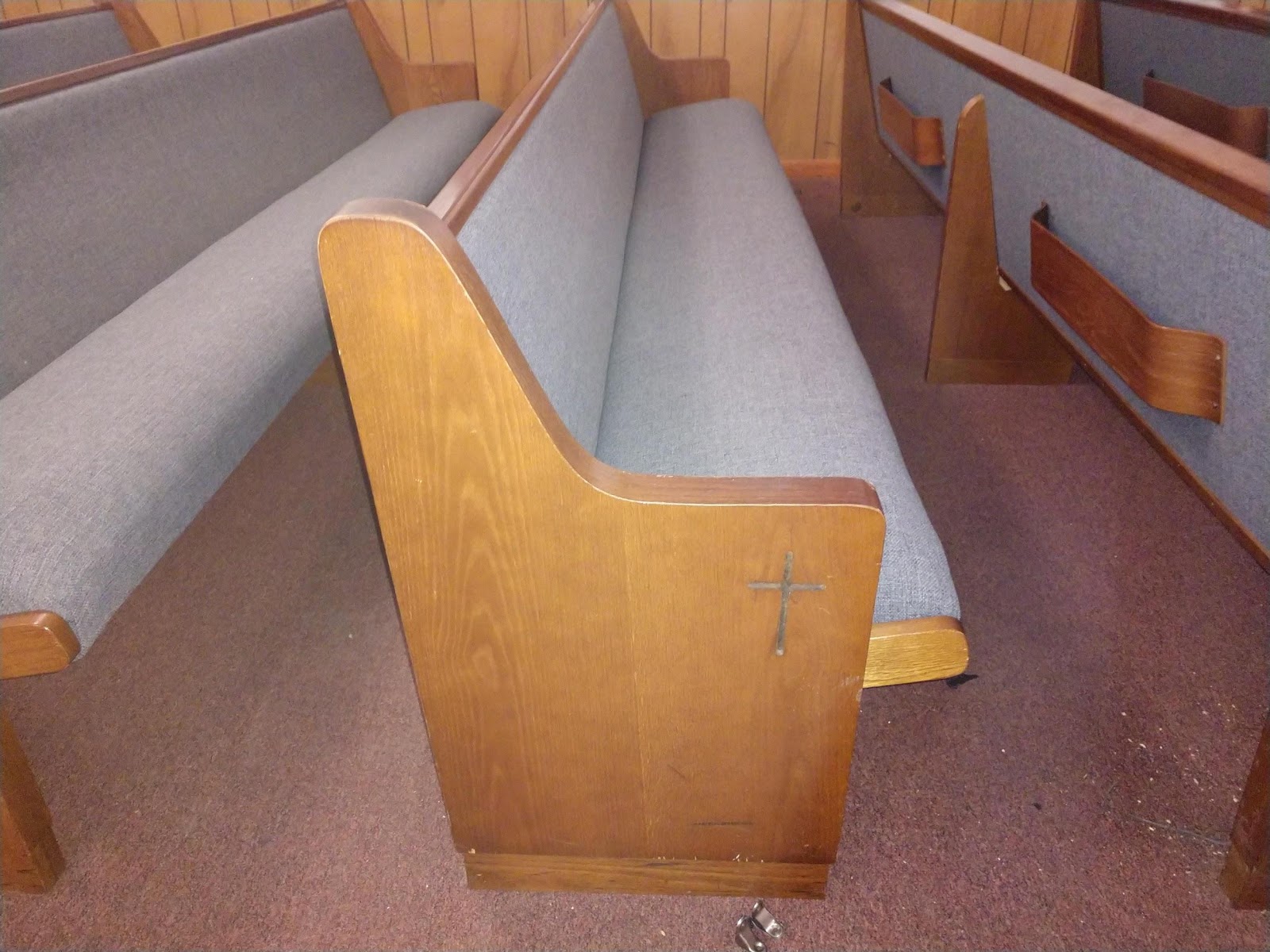
A church pew is not one piece of wood, though, and that is the real issue. It is a solid frame, a thin decorative veneer glued to the visible faces, mortise-and-tenon joints held by glue lines that are often a century old, plus fabric and foam. Each of those responds to moisture at a different rate. When the frame swells and the veneer on top of it swells at a different rate, the bond between them is the part that gives.
Here is roughly what a summer of high humidity does, in order:
| Humidity Range | What Happens Inside the Pew |
|---|---|
| 35 to 55 percent | The stable band. Wood, veneer, and glue lines all sit close to equilibrium and nothing moves enough to matter. |
| Above 60 percent, sustained | The frame takes on moisture and swells. Veneer expands at a different rate and starts to lift, bubble, or crack along the grain, most often on end panels and seat backs. |
| Above 60 percent, repeatedly | Glue lines in the joints work loose through repeated swelling and shrinking. The pew begins to rock or creak. Gaps open at the seat and back corners. |
| Sharp swings either direction | The most damaging condition of all. Movement, not any single reading, is what breaks bonds. A pew that cycles hard every week ages faster than one sitting in steady high humidity. |
That last row is the one most congregations have never been told, and it is the one that explains what is happening in the majority of Eastern NC sanctuaries we walk into. Our pew wood restoration work is built around addressing what that movement has already done.
Why a Sanctuary Is Harder on Wood Than a House
A house in Greenville runs its air conditioning more or less continuously through the summer. The indoor humidity settles somewhere reasonable and mostly stays there. Furniture in that house is fine.
A sanctuary works nothing like that. The building is large, the ceilings are high, and the congregation is in it for a few hours a week. Most churches, sensibly, do not pay to condition an empty room. So the system runs hard on Sunday morning, pulls the temperature and humidity down fast for a couple of hours, and then the building sits closed and unconditioned until the following week.
From the pews’ point of view, that is fifty-two sharp cycles a year, every year, on top of a baseline that already runs humid. It is the single most consistent cause of the veneer lifting and joint failure we see across Eastern North Carolina, and it has nothing to do with how well a congregation cares for its building. It is a consequence of how sanctuaries are used.
A few things genuinely help, and none of them require replacing anything:
- Run the system at a moderate setting through the week rather than a hard Sunday-only cycle, if the budget allows it. Steady beats extreme.
- Keep pews off exterior walls where condensation collects, and out of the direct path of supply vents.
- Watch the ends of a long pew run separately. One end against an outside wall and the other under a vent are living in two different climates.
- Address lifted veneer early. An edge that has just started to lift is a small repair. The same edge in three years has taken on dirt and moisture underneath it.
Telling Humidity Damage From Ordinary Wear
A slow walk down the aisle, running a hand along the end panels and seat backs, will tell you most of what you need before you call anyone.
Ordinary Wear
- Finish evenly dulled across the entire pew run, not patchy
- Thinning fabric with the padding underneath still supportive
- Small nicks and dents concentrated at aisle ends and armrests
Moisture Damage — Worth a Closer Look
- Veneer lifting, bubbling, or cracking along the grain on end panels
- A cloudy, milky, or blotchy look in the finish rather than an even dullness
- Gaps opening at the corners where seat, back, and end frame meet
- A pew that rocks, flexes, or creaks under normal weight
- Damage concentrated at one end of a run rather than spread evenly
Flooding Is a Different Problem Entirely
Everything above is about ambient humidity, the slow kind of damage. Greenville also knows the fast kind. In September 1999, Hurricane Floyd dropped roughly 20 inches of rain on the city and the Tar River crested at a record 29.74 feet. More than 10,000 homes across the region were damaged or destroyed, and the recovery took years. Matthew in 2016 and Florence in 2018 brought comparable flooding to parts of the same territory. The North Carolina State Climate Office keeps a detailed account of what the Tar River did that week.
A pew that has stood in floodwater is a different assessment from a pew that has simply lived through humid summers. The frame, the veneer, the foam, and the finish all have to be judged separately, because they fail in different ways and on different timelines. Foam that has been submerged is not salvageable by any honest standard. A solid heart pine frame that dried out properly often is. That distinction is worth having someone look at in person rather than guessing at, and it is the kind of judgment call our team makes during a free consultation before recommending anything.
What Restoration Looks Like, and What It Does Not Require
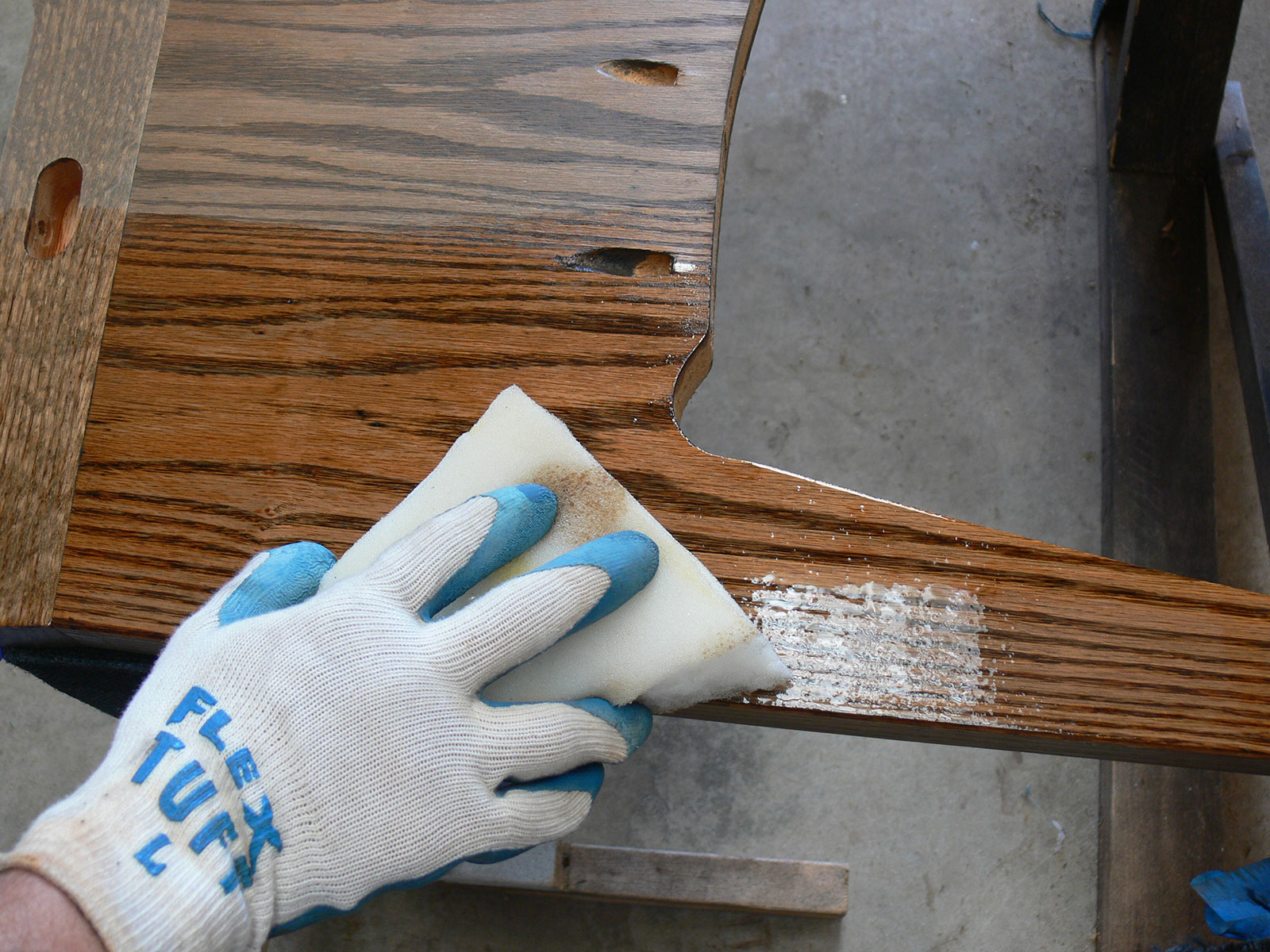
The instinct when a pew line looks tired is to price out replacement. In most Eastern NC sanctuaries that is the expensive answer to a repairable problem. Lifted veneer can be re-laid. A clouded finish can be brought back. Joints that have worked loose can be rebuilt without touching the parts of the pew that are still sound.
Every project starts with a free consultation and quote. We walk the sanctuary, look at each pew’s actual condition rather than assuming from a photograph, and prioritize repairs by what needs attention now against what can reasonably wait a few years. Structural work goes through our pew parts and repairs service. Surface work goes through church pew refinishing, using proprietary in-house coating formulas matched to the pew’s existing tone, so a repaired section reads as original rather than as a patch.
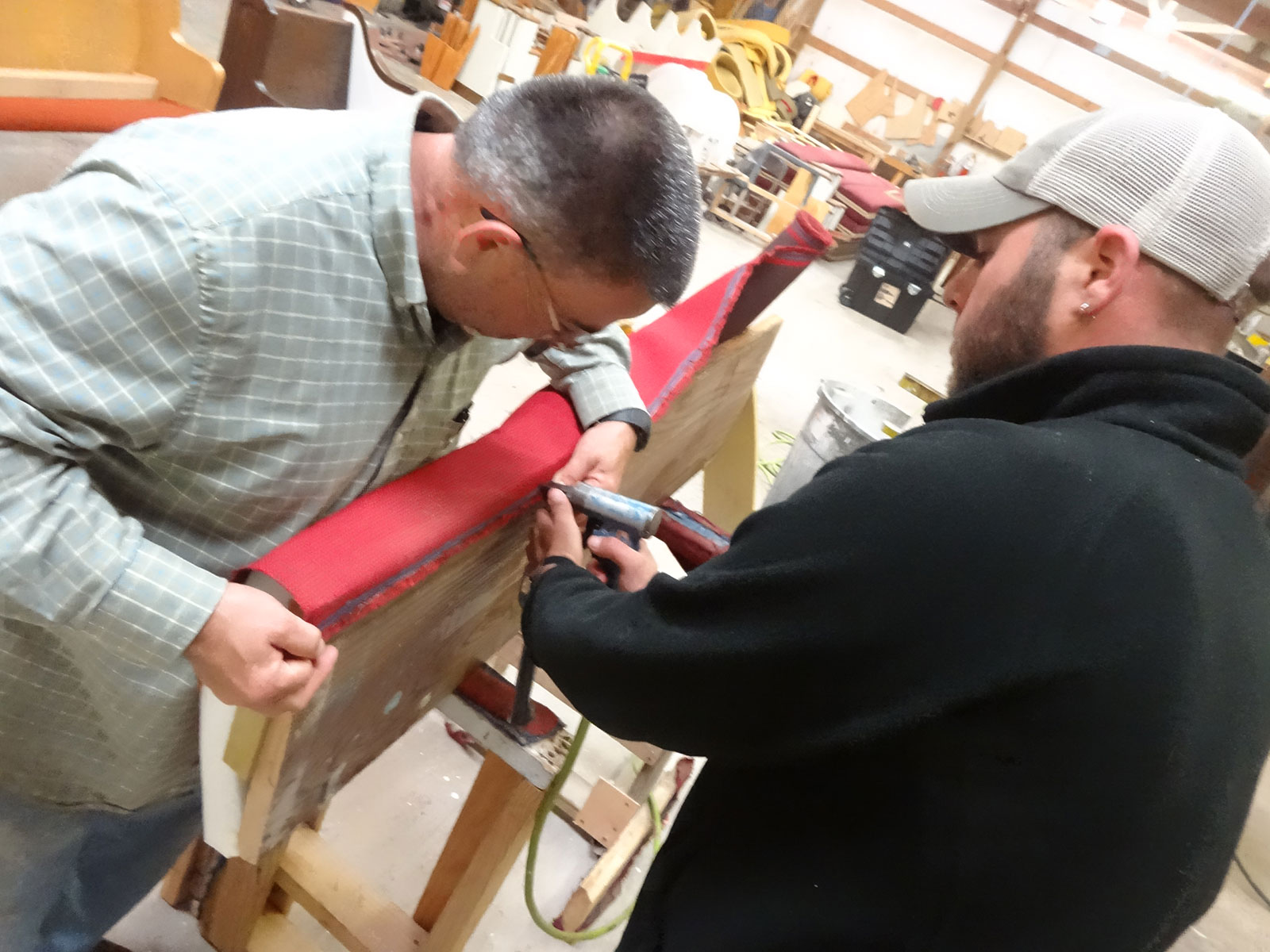
When upholstery is in scope, we work from a wide fabric selection with color-matching and design recommendations, and our cushions use high-quality LUX foam. Every material is sourced domestically. Every upholstery job carries a 15-year warranty, which is not standard in this industry. And all of it is done by our own team in-house, with no outside subcontractors, which is the only reason we can stand behind a warranty that long.
We also work around your calendar rather than the other way around. Services, weddings, and funerals continue on schedule while the project moves in stages, and our team handles installation and delivery directly so the sanctuary is never left mid-project. Finished work is in our photo gallery, and general project questions are answered on our FAQ page.
What Congregations Say
See recent updates and photos on our Facebook page.
Serving Greenville as Part of Our Eastern NC Service Area
Greenville sits inside McPhail Church Services’ core Eastern North Carolina territory, alongside New Bern, Goldsboro, Wilson, Kinston, and Wilmington. From our shop in Autryville we travel across the region for consultations, on-site repairs, and full pew restoration projects. Our North Carolina church pew services page covers how we work statewide, and the about us page has more on how we plan and travel for larger jobs.
Frequently Asked Questions
What relative humidity is safe for church pews?
Solid wood furniture is generally stable between about 35 and 55 percent relative humidity, with roughly 45 percent as the target. Sustained readings above 60 percent swell wood enough to buckle veneer and push glued joints apart. In Greenville and the rest of the Eastern NC coastal plain, outdoor humidity runs well above that range for much of the summer, which is why what happens inside the sanctuary matters more than the weather does.
Why do pews seem to suffer more than the rest of the church furniture?
Pews are long, they are fixed in place, and they combine several materials that respond to moisture at different rates: a solid wood frame, thin decorative veneer on the visible faces, glued joints, fabric, and foam. A long run of pews also spans the width of a room, so one end can sit against an exterior wall while the other sits under a supply vent. That difference across a single piece of furniture is what concentrates the damage.
Is running the air conditioning only on Sunday bad for the pews?
It is harder on wood than most congregations expect. Cooling a sanctuary hard for a few hours and then leaving it closed for six days creates a weekly swing between two very different moisture conditions. Wood moves with each swing, and the movement is what loosens joints and lifts veneer. A steady, moderate setting through the week is easier on pews than a sharp Sunday-only cycle, even if the average reading is similar.
How can I tell whether our pews have humidity damage or just normal wear?
Moisture damage tends to show up as veneer lifting or bubbling on end panels and seat backs, hairline cracking along the grain, a cloudy or blotchy look in the finish, joints opening at the seat and back corners, and pews that rock or creak underfoot. Normal wear looks different: an evenly dulled finish across the whole run, thinning fabric with the padding still supportive, and small nicks from decades of ordinary use.
Did the flooding that hit Greenville and the Tar River damage church pews?
Flooding is a separate problem from ambient humidity, and it is far more severe. Hurricane Floyd dropped about 20 inches of rain on Greenville in September 1999 and the Tar River crested at a record 29.74 feet, with more than 10,000 homes damaged or destroyed across the region. Matthew in 2016 and Florence in 2018 brought comparable flooding to parts of Eastern NC. A pew that has stood in water needs an in-person assessment, because the frame, the foam, and the finish all have to be judged separately.
Is August a bad month to have pew work done in Eastern NC?
No. August is simply when the problem is easiest to see, which makes it a good month to have someone look. We schedule the actual work around your church’s calendar, so services, weddings, and funerals continue on their normal schedule while the project moves in stages.
Does humidity damage mean the pews have to be replaced?
Usually not. Lifted veneer, a clouded finish, and loosened joints are all repairable, and repairing them costs far less than replacing a sanctuary’s pew line. We start with a free consultation, look at the actual condition of each pew, and prioritize what needs attention now against what can wait.
Get a Free Quote for Your Greenville Church
If the veneer is lifting or the finish has gone cloudy after another Eastern NC summer, a free consultation is the first step. We look at what is actually happening before recommending anything.
McPhail Church Services, Inc. · 59 Vickers Lane, Autryville, NC 28318 · 910-322-5673
Sources: Greenville, NC climate averages (humid subtropical coastal plain; relative humidity peaks in August; roughly 48 inches of annual rainfall). Hurricane Floyd figures, including the record 29.74-foot Tar River crest at Greenville on September 21, 1999, per the North Carolina State Climate Office. Wood stability ranges reflect standard furniture-conservation guidance of 35 to 55 percent relative humidity.