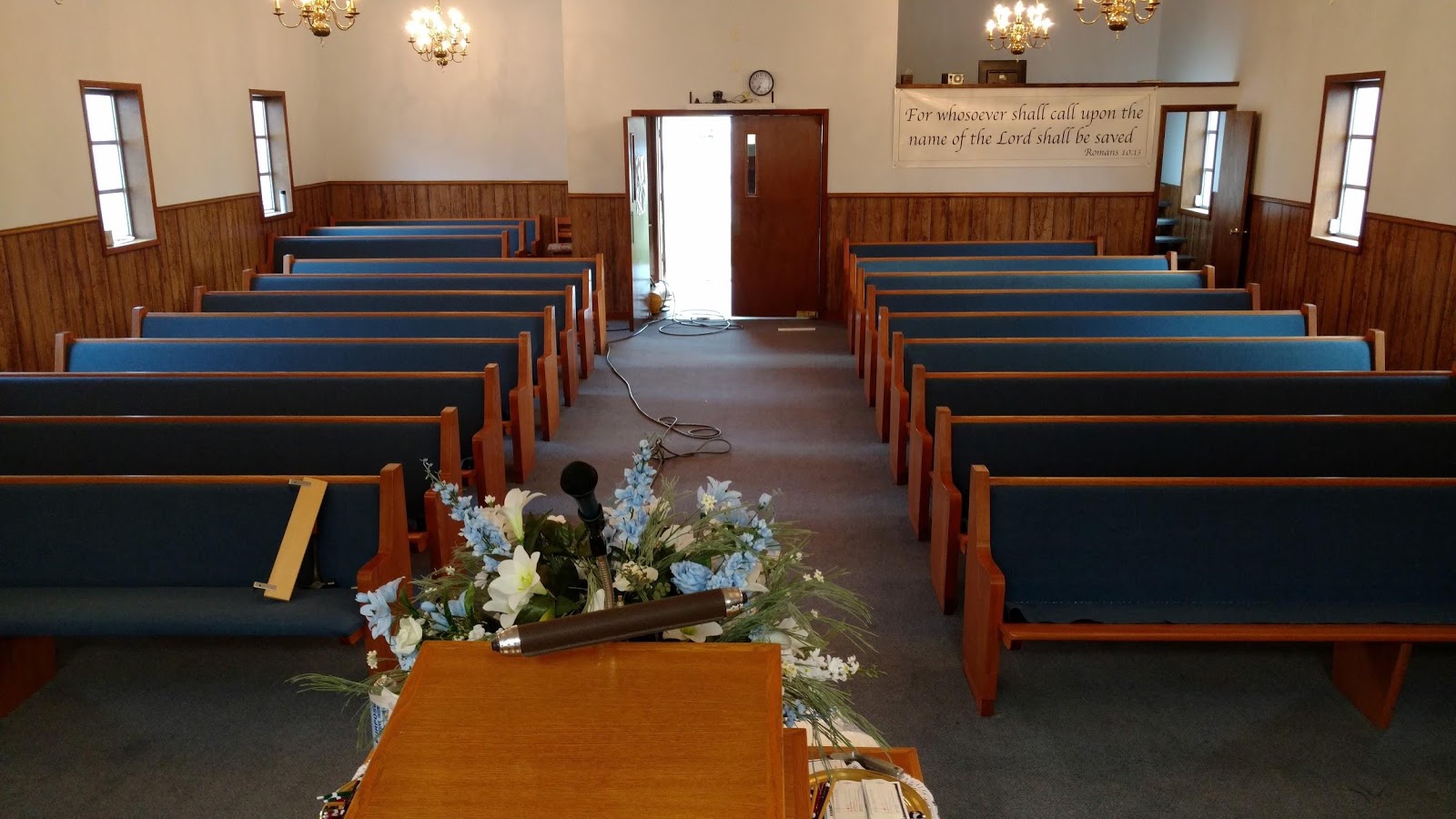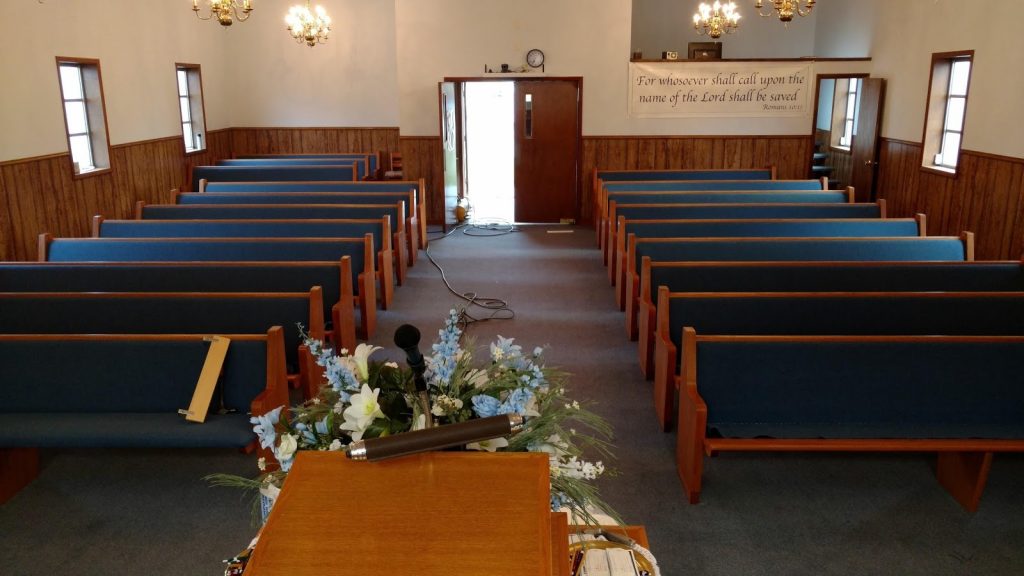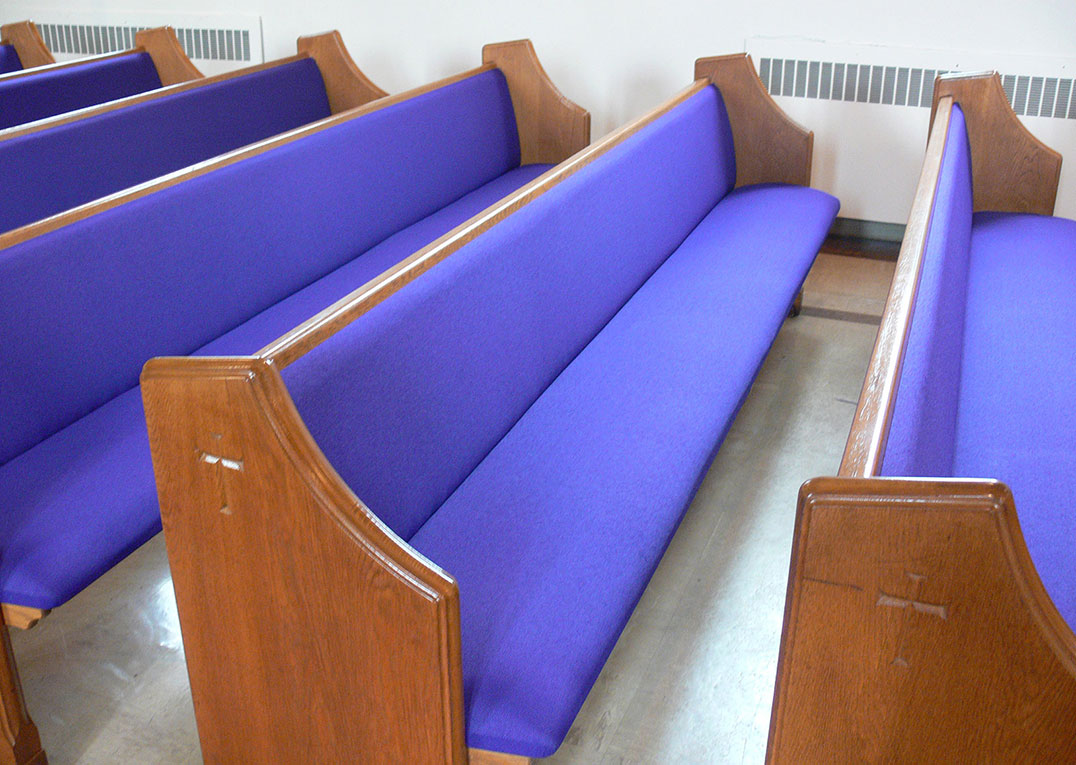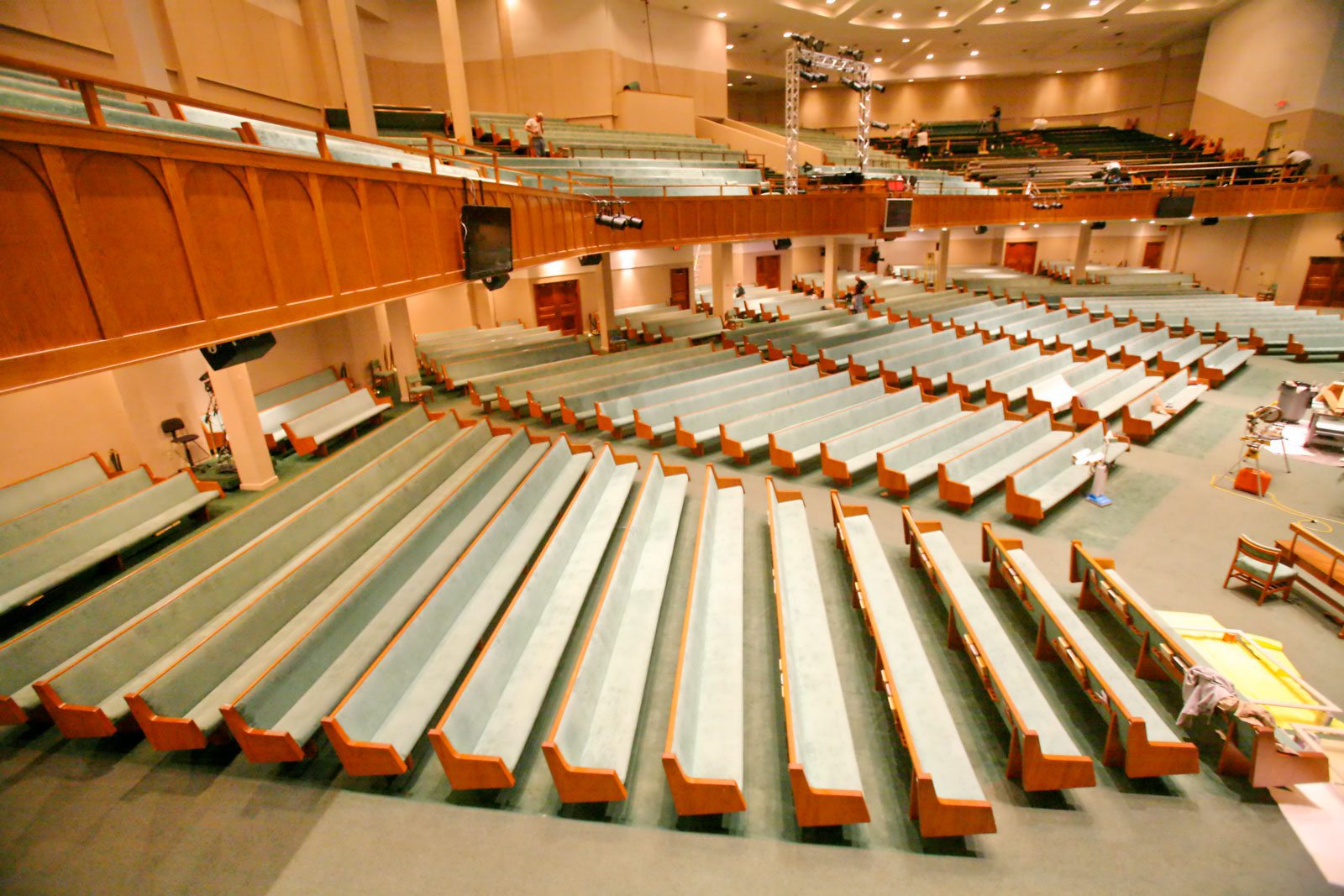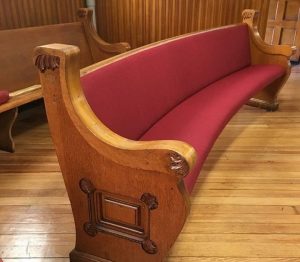
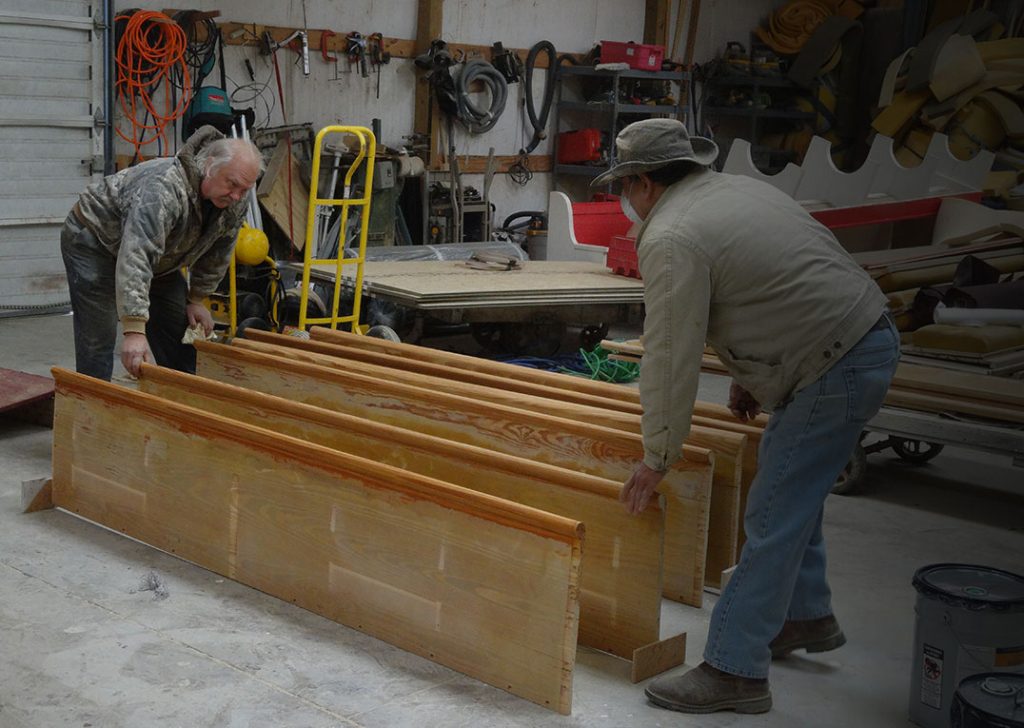
church pew restoration

Installing pews in a historic Philadelphia church requires careful planning. Many churches in Philadelphia have unique architectural features – narrow aisles, stone columns, or raised platforms – that affect seating layout. Follow these steps to ensure a smooth, safe pew installation:

  1. Evaluate and Measure the Space: Begin by measuring your sanctuary’s dimensions, including length, width, and ceiling height. Note any fixed obstacles like columns, alcoves, or steps. Also measure doorways and corridors if you’ll move pews in pieces. Philadelphia’s older churches often have tight entryways, so confirm that each pew or pew section will fit through hallways and doors before planning the layout.
  2. Plan Your Layout: Sketch a scale diagram of the sanctuary and plot pew rows, center aisle, and side aisles. Aim for at least a 5-foot-wide main aisle and about 3-foot side aisles. Standard guidance also calls for roughly 36 inches of front-to-front spacing between rows. Check local building and fire codes – churches must comply with occupancy rules for public assembly. Ensure your design maintains all required exit paths and includes space for accessible seating (for example, a 36-inch-wide route for wheelchairs).
  3. Prepare the Pews: If you’re reusing existing or used pews, it’s best to disassemble them before moving. As McPhail notes, “It is generally best for the used church furniture to be completely taken apart to its basic parts, shipped to its destination then installed as if it were new furniture”. One important point: pew support legs are often cut to fit a specific floor height. After moving, you may need to trim or adjust each leg for a level fit. Move the pew sections into place near their final positions before reassembling.
  4. Install and Anchor Pews: Starting with the front row, place each pew and use a level to ensure it’s straight. Secure pew ends firmly to the floor – proper anchoring prevents wobbling. McPhail offers anchoring solutions because loose pew ends are a common issue. Also, be sure to re-anchor or fasten furniture so it meets all fire-safety codes. Continue placing pews row by row, always checking measurements. Make sure each row is aligned, that seating lines are even, and that hymnals, kneelers, and cup holders are positioned uniformly.
  5. Final Checks: Walk all aisles and pathways to verify clearances match your plan. Confirm that exit routes remain at least the minimum width and that pews do not obstruct any signage or doors. Sit on a few pews to test stability. Once everything is level, anchored, and code-compliant, your installation is complete.

Pew installation is a job that calls for experience and precision. Contact McPhail Church Services for professional pew installation in Philadelphia, PA. Our team can handle the planning, measuring, moving, and anchoring – ensuring your new pew layout is safe, comfortable, and compliant with all codes.
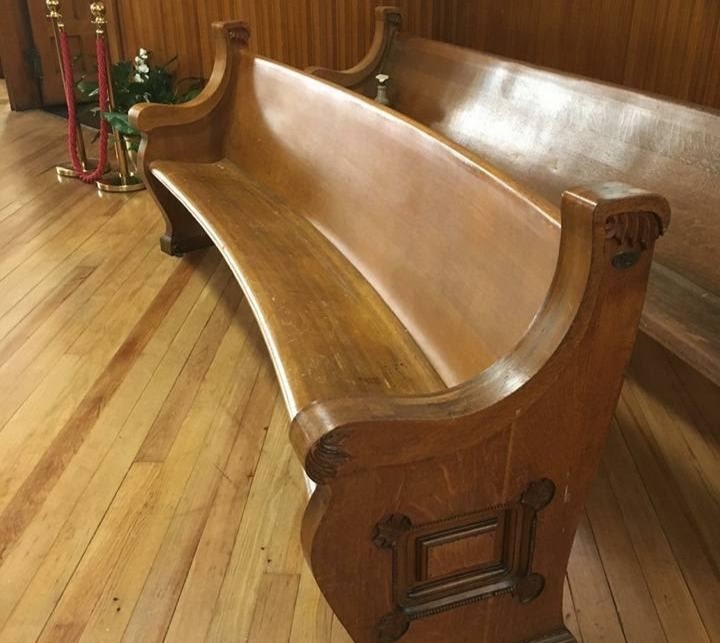
church pew restoration

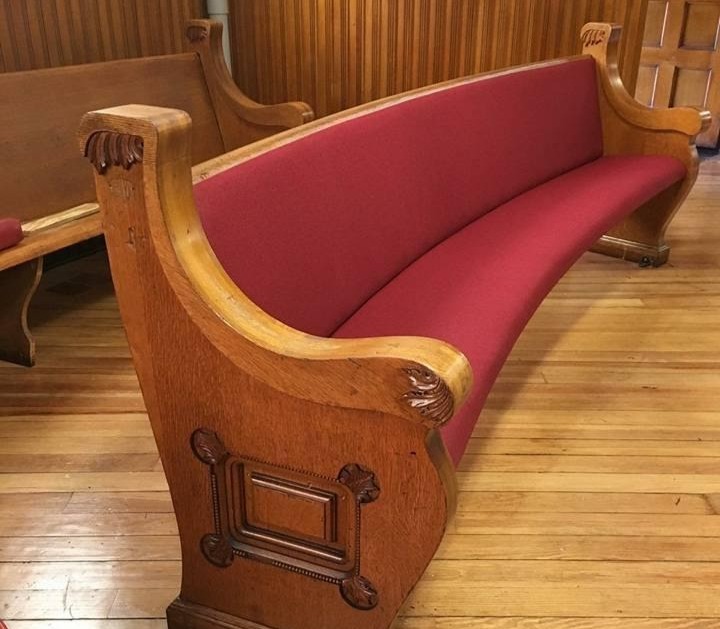
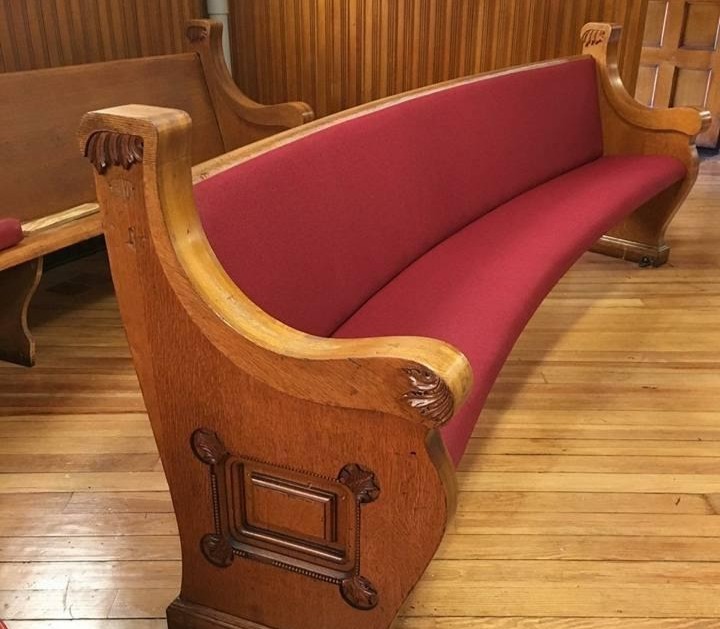
Richmond, Virginia is home to many historic churches with centuries-old wood pews that reflect the city’s rich heritage. These antique benches have witnessed generations of worship, so when it’s time to refresh seating, it’s important to balance tradition with modern comfort and safety. Thoughtful pew reupholstery can honor the past while providing a welcoming place to sit today.

Balancing Tradition and Comfort

Maintaining historic pews means respecting their original character. Craftsmen often avoid high-gloss finishes, using stains that match the original wood tones. Likewise, new cushions or fabrics should fit the period style – for example, muted damasks or simple woven textures in classic colors. At the same time, modern padding adds comfort. As one expert notes, restorers can “erase years of wear… and change the color or the cushion upholstery to give your pews a whole new look” while still honoring the pews’ traditional role. In practice, this might mean adding a thin foam layer under the existing seat or selecting fabric patterns that look vintage. The key is subtlety – the pews should feel very much as the congregation remembers, only more comfortable.

Choosing Materials to Match History

Fabric selection is crucial to preserve your church’s aesthetic. For a Richmond sanctuary, that might mean velvets, heavy silks, or woven jacquards in colors that complement stained glass and woodwork. At the same time, contract-grade fabrics provide durability. Industry experts recommend materials like woven polyester or Crypton, which are engineered to “withstand daily wear and tear” in high-use settings. Many churches choose treated microsuede or vinyl for pew seats because they repel spills and stains and are easy to clean. These modern fabrics can mimic traditional textures – for instance, vinyl can be embossed with a subtle pattern – while outlasting older cloths. The goal is a fabric that looks appropriately period-inspired but endures through years of weekly services.

Fire Safety and Accessibility

Even historic churches must meet today’s safety standards. Upholstered pews in public buildings are generally required to use fire-resistant fabrics and must pass tests like CAL 117 or NFPA 701. McPhail selects only certified, flame-retardant upholstery materials for reupholstering antique pews, ensuring every cushion carries the necessary compliance labels. Accessibility is another modern consideration: while places of worship often have some ADA exemptions, inclusive design is encouraged. McPhail can trim pew ends or leave gaps so that wheelchair-accessible routes (typically 36 inches wide) are maintained. In short, new upholstery and layout changes can make historic seating both safe and welcoming for all parishioners.

McPhail Church Services understands the care that historic pews demand. We take extra care with antique and custom pieces, “using traditional methods and materials to maintain [their] character”. Our craftspeople match fabric patterns, wood stains, and finishing techniques so that repairs look original. Whether it’s refinishing worn wood or expertly re-covering cushions, McPhail’s restoration work blends the old and new seamlessly.

Give your Richmond church’s pews the respectful restoration they deserve. Contact McPhail Church Services today to discuss historic pew reupholstery in Richmond, VA. We’ll help you select fabrics and finishes that honor your church’s history while keeping your congregation comfortable and safe for years to come.

church pew padding before

Your church’s pews are more than just seating – they’re a vital part of your sanctuary’s history and comfort. In Charlotte’s humid climate, wooden pews endure heavy use, and over time they can start to show wear. Keeping an eye out for warning signs ensures your congregation’s safety and comfort. Here are five common signs your Charlotte, NC church pews need professional repair:

  1. Creaking or Squeaking: If pews groan or squeak under weight, it often signals loose joints or failing hardware. Congregants may joke about “old floorboards,” but persistent squeaks can indicate serious structural issues. High humidity in Charlotte (summers are known to be hot and humid) causes wood to expand and contract, stressing joints and weakening glue over time. Don’t ignore these noises – they often foreshadow a larger failure.
  2. Cracked or Splintered Wood: Visible cracks, splits, or spintered boards are clear distress signals. Splinters or chunks of wood breaking off not only mar the look of your pews, they can injure worshippers. McPhail experts note that “broken or splintered wood in one or several areas” is a tell-tale sign of needed repair. Moisture fluctuations can warp planks and pop joints apart, so in Charlotte’s changing seasons you might see new cracks if repairs are delayed.
  3. Loose or Unstable Legs: Wobbly or detached pew legs are a serious safety hazard. Over time, even solid oak legs can loosen from repeated use or shifting floors. Loose support means a pew can tip or collapse under pressure. McPhail Church Services advises churches to watch for “loose, damaged, or shaky structures” as warning signs. Repairing or re-anchoring legs promptly prevents someone from being hurt when benches give way.
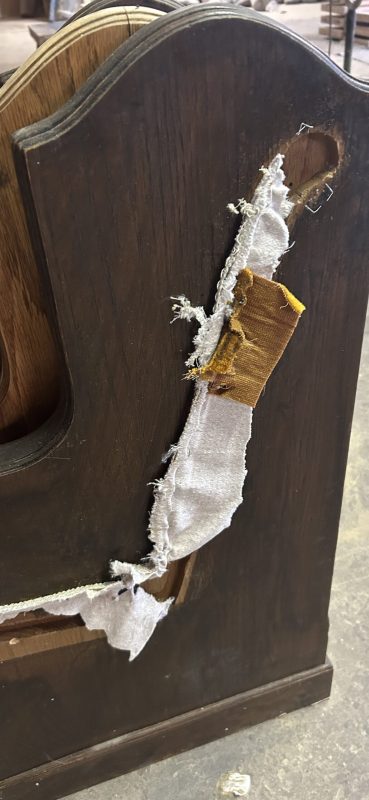
  4. Worn, Torn, or Unsightly Upholstery: Torn, stained, or flattened pew cushions not only look bad, they affect comfort and safety. Old padding can lose resilience and may not meet modern fire-safety requirements. Rips or abrasions in the fabric invite faster deterioration of the foam underneath. If upholstery is frayed, discolored, or smells musty, reupholstering the pew can restore both its appearance and code compliance.
  5. Missing or Broken Accessories: Many pews have built-in kneelers, cup holders, or book racks. When these are missing, broken, or hanging loose, it can distract congregants and detract from worship. Even minor damage (like a loose hymnal rack or cracked kneeler) is worth fixing. McPhail highlights that replacing broken accessories is part of comprehensive pew repair services.

Charlotte Climate and Building Codes

Local factors make Charlotte churches especially prone to pew wear. Summers here are notably hot and humid, so wood absorbs moisture and swells, then dries and shrinks in winter. This constant movement stresses joints and finishes. North Carolina’s fire and building codes require that sanctuary seating meet safety standards – for example, flame-resistant upholstery and proper aisle clearances – to protect congregations in an emergency. Neglecting these issues could violate safety codes and endanger worshippers during a fire or other crisis.

The Cost of Delaying Repairs

Putting off pew repairs is risky. Damaged pews pose slip-and-fall hazards and may injure someone if a bench breaks under pressure. Beyond physical danger, aging pews can give visitors the impression of neglect, undermining your church’s image. Legally, churches must comply with local safety codes and cannot ignore obvious hazards. Economically, small repairs now prevent much larger expenses later – for example, fixing one cracked board costs far less than replacing an entire pew set later.

Does your Charlotte church need pew repairs? Contact McPhail Church Services today to schedule an inspection of your sanctuary seating. Our team of experts will evaluate the condition of your pews, recommend needed repairs or refinishing, and ensure everything meets comfort and safety standards. Protect your congregation and your investment – reach out to McPhail for professional church pew repair in Charlotte, NC.

When you run into a pew problem, you can count on McPhail Church Services. We recently connected with a church in Georgia who found what seemed to be a great deal on pew refinishing. Unfortunately, the original contractor overcommitted, because working with pews is different from working with other furniture. The church was left unsatisfied with pews that had been improperly upholstered and coated in the wrong finishing products. 

In just a couple of weeks, we were able to pick up the furniture and reverse the damage, which required stripping all of the wood, refinishing, and reupholstering on all 31 pews. Now, the church has comfortable seating that meets their design requests – with workmanship that’s guaranteed for years to come.

IMG_9539
IMG_2014
IMG_2013
image000001
image000000 2

If your pews need a repair, refresh, or a refinish job, reach out for a quote!

    Services of Interest

    If your knees go straight through the foam and hit the base—it’s time for a replacement!

    These humble components of sanctuary seating play a major role in congregational comfort, yet they wear out faster than the pews themselves. Whether your kneelers are damaged, uncomfortable, or showing their age, McPhail Church Services can help you find the best solution.

    Should We Repair or Replace?

    In many cases, replacing kneelers is often more cost-effective than reupholstering, especially when factoring in labor and materials. A single pew may have five or more kneelers, each requiring removal, reupholstering, repairs, and reinstallation. New kneelers typically provide better value and longevity.

    If preservation matters to your congregation, we can refurbish and reupholster existing kneelers to maintain their character.

    What Makes a Quality Kneeler?

    Metal frames are the gold standard for durability. Unlike wood frames that suffer from foot pressure and cleaning damage, metal construction offers stronger pew connections and powder-coated longevity.

    High-density foam provides firm support without bottoming out—one of the most overlooked elements. Your congregation’s knees stay cushioned without sinking to the base.

    Fabric options range from standard and designer fabrics to cleanable vinyls, allowing you to match your existing upholstery while meeting your space’s aesthetic and durability needs.

    Ready to Upgrade?

    At McPhail Church Services, you’ll receive the highest quality materials from trusted vendors whether reupholstering or buying new.

    Contact us today for a consultation and custom quote for your sanctuary.

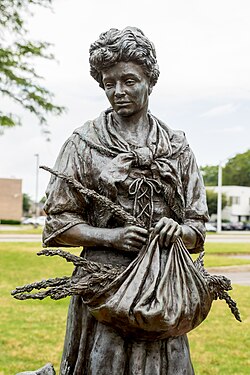
    If you’ve driven down Witchduck Road in Virginia Beach, you’ve traveled a path with a story as unique as its name. Long before it became a bustling thoroughfare, Witchduck Road was tied to a legend that dates back more than 300 years—a story of Grace Sherwood, often remembered as the Witch of Pungo.

    The Legend of Grace Sherwood

    In the early 1700s, Grace Sherwood was a widowed farmer, healer, and midwife living in what was then Princess Anne County. Independent and outspoken, she soon became the subject of suspicion among her neighbors. When crops failed or livestock fell ill, she was blamed.

    On July 10, 1706, Sherwood was ordered to undergo a “trial by water” in the nearby Lynnhaven River. The superstition was simple: if she floated, she was guilty of witchcraft; if she sank, she was innocent (though at the risk of drowning). Bound and cast into the water, Sherwood freed herself and swam to safety. Her survival, however, was seen as proof of guilt. She was convicted and imprisoned, though she eventually regained her freedom and lived well into her eighties.

    The site of her ordeal became known as Witchduck Point, and today, her story lives on in the name Witchduck Road.

    Faith and Resilience on Witchduck Road

    Three centuries later, the landscape has changed, but the spirit of resilience endures. What was once a place of fear and superstition is now home to communities of faith—churches that gather people together in hope, prayer, and service.

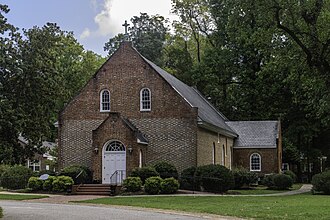
    Among these sacred spaces is Old Donation Episcopal Church, a parish with roots reaching back to the 1600s. As one of the oldest churches in the United States, Old Donation has stood as a steadfast witness to centuries of change in Virginia Beach. From colonial times throughOld Donation Episcopal Church the present day, it has remained a place of grace, forgiveness, and restoration, serving as a beacon of light for the community along Witchduck Road.

    Our Role in Preserving Sacred Spaces

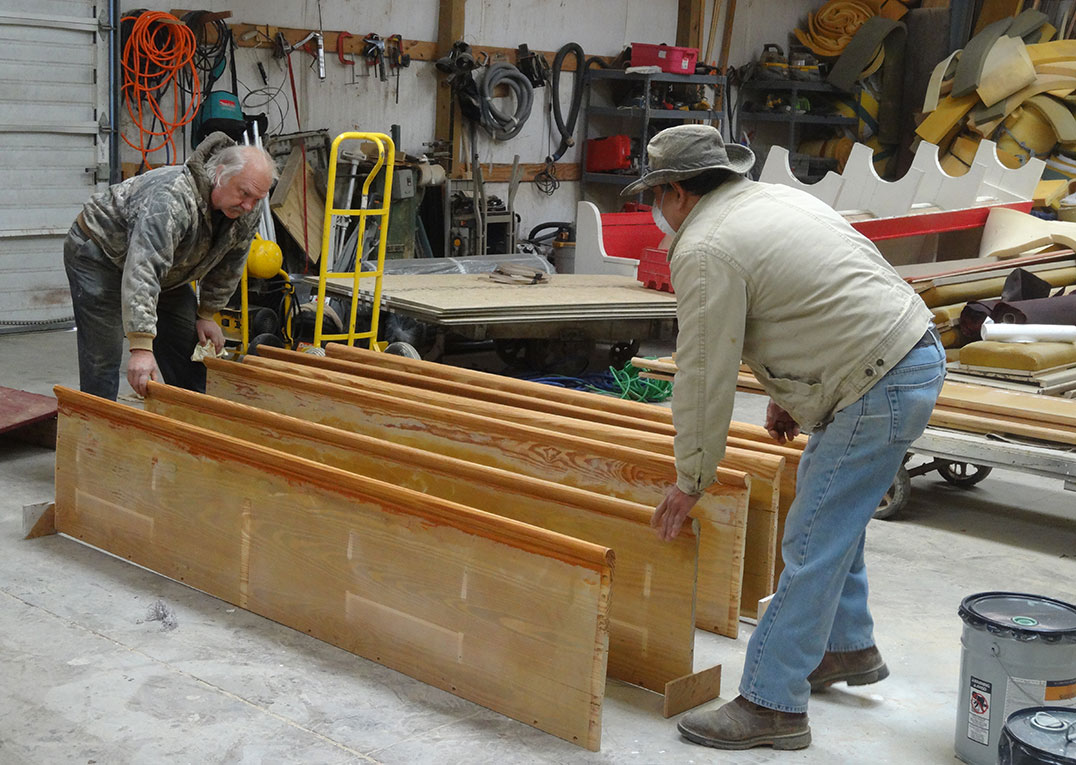
    We are honored to have been chosen to refinish the pews at Old Donation Episcopal Church. This project was more than craftsmanship—it was a way of helping preserve a sacred space where history, tradition, and faith meet.

    Just as Grace Sherwood’s story reminds us of the endurance of the human spirit, Old Donation Episcopal reminds us of the endurance of faith. Every piece we restore—whether a pew, pulpit, or altar—is more than wood or fabric; it’s a vessel for memory, prayer, and tradition that spans generations.

    Carrying the Story Forward

    The next time you pass down Witchduck Road, take a moment to remember the story behind the name. It’s a road that has carried both fear and faith, superstition and strength. And today, it carries with it the promise of communities that continue to grow, gather, and worship.

    Mcphail Church Services proudly supports that mission by ensuring the beauty and dignity of sacred spaces endure for generations to come.

    Witchduck Road may have been born out of a tale of trial and hardship, but today it stands as a place of hope and restoration—much like the work we’re privileged to do at Old Donation Episcopal Church and beyond.

    Ready to Begin Your Church’s Restoration Project?

    If your congregation is considering pew refinishing or other restoration work, we would be honored to help. Contact us today to learn more about how we can preserve the beauty and heritage of your sacred space.

    church pew upholstery after

    church pew upholstery after

    Getting multiple quotes for your church pew project? Here’s exactly what to expect when working with McPhail Church Services – and why our process ensures you get the best estimate for your sanctuary.

    When your church pews need upholstery, refinishing, or restoration, getting an accurate quote is the first step toward transforming your sanctuary. At McPhail Church Services, we’ve refined our process over 20+ years to ensure every church receives a tailored estimate that reflects their unique needs and budget.

    Step 1: Your 15-20 Minute Discovery Call

    What We'll Discuss During Your Call

    Every project begins with a personal conversation. During this brief introductory call, one of our experienced associates will help you outline your project scope and gather essential information about your church’s specific needs.

    Furniture Details

    • Number of pews in your sanctuary and any additional furniture requiring attention
    • Length of each pew (measured in linear feet)
    • Which areas of the pew are upholstered (seat cushions, front of back, back of back)
    • Special features like book racks or kneelers

    Service Options

    • On-site vs. off-site restoration (we’ll recommend the best approach for your project)
    • Timeline considerations and scheduling flexibility
    • Budget parameters

    Your Church’s Unique Requirements

    • Historical preservation needs
    • Fabric preferences and durability requirements
    • Scheduling around services and events
    • Any special considerations for your congregation

    Contact McPhail Church Services

    Ask A Question Or Request A Free Quote

      Services of Interest

      Step 2: Developing Your Customized Quote

      After our discovery call, our team gets to work creating a comprehensive quote tailored specifically to your church. Most of our pew projects are priced based on total linear feet, but we consider every detail that makes your sanctuary unique.

      Our In-House Team Advantage

      Unlike many contractors who subcontract work, your quote will reflect services performed entirely by our expert in-house team. This approach ensures:

      • Consistent quality throughout your project
      • Better cost control and timeline management
      • Accountability from start to finish

      Best-In-Class Vendors

      For quality materials, new pews, and special considerations, we work with carefully selected vendors and partners we’ve trusted for over 15 years. These relationships allow us to provide comprehensive solutions while maintaining our quality standards.

      Step 3: Quote Review and Refinement

      You can expect to receive your detailed quote within just a few days of our initial call. We’re happy to work with you to refine our proposal and adjust our offerings to best meet your needs.

      We understand that many churches come to us at the earliest stage of their renovation projects. We’ll remain in touch and are committed to working with you on a proposal that works for you – on your timeline.

      Why Churches Choose McPhail Church Services

      We know you’re likely collecting multiple bids – that’s smart business. However, not all quotes are created equal. When you choose McPhail Church Services, you’re choosing:

      • Expert In-House Craftsmanship: With decades of experience, we bring deep respect for your sanctuary and congregation to every project.
      • Flexible Scheduling: We work around your church schedule to avoid disrupting services, understanding that your sanctuary serves your community year-round.
      • Comprehensive Warranty: We back our upholstery work with a 15-year warranty, demonstrating our confidence in our craftsmanship.
      • Family Business Values: As a family-owned company, we’re built on trust and quality relationships, not shortcuts.

      Ready to Get Started?

      At McPhail Church Services, we believe every church deserves a restoration process that’s as smooth as the beautiful results. Whether your pews pinch, your sanctuary needs a refresh, or your woodwork requires careful restoration, we tailor each project to honor your space, respect your time, and serve your congregation.

      Contact Us for Your Free Quote

      Contact McPhail Church Services

      Ask A Question Or Request A Free Quote

        Services of Interest

        Common church pew fabrics include:

        Vinyl: Durable and easy to clean, making it suitable for high-traffic areas. It comes in various colors and textures, mimicking leather or other materials.

        Polyester: Offers a wide range of colors and patterns, is resistant to wrinkling and fading, and is relatively easy to clean.

        Olefin: Known for its strength, colorfastness, and resistance to staining, sunlight, and chemicals. It’s often used in outdoor or high-traffic areas.

        Acrylic: Resembles wool but is more durable and fade-resistant. It’s often used for its softness and resistance to sunlight.

        Wool: Known for its luxurious feel and durability, but it can be more expensive and may require more maintenance.

        Blend Fabrics: Combining different materials for a balance of durability, comfort, and aesthetic appeal.


        Know What Church Pew Fabrics You're Looking For?

          Services of Interest

          Most Common Church Pew Colors

          The most common colors for church pews are typically traditional and neutral tones that complement the overall aesthetic of the church’s interior. Some of the most common colors include:

          Medium to Dark Wood Stains: These range from rich cherry and mahogany to darker walnut and espresso tones, providing a classic and timeless look.

          Light Wood Stains: Lighter stains like oak or pine offer a more natural and rustic appearance, often used in churches with a more casual or traditional feel.

          Green: Green pews can create a serene and calming atmosphere, often associated with nature and growth, making them suitable for churches seeking a peaceful ambiance.

          Blue: Blue pews can evoke a sense of tranquility and spirituality, often associated with the sky and the sea, making them ideal for churches aiming for a serene and contemplative environment.

          Red: Red pews can add warmth and richness to a church interior, symbolizing passion and vitality. They can create a bold and inviting atmosphere, suitable for churches seeking a vibrant and dynamic look.

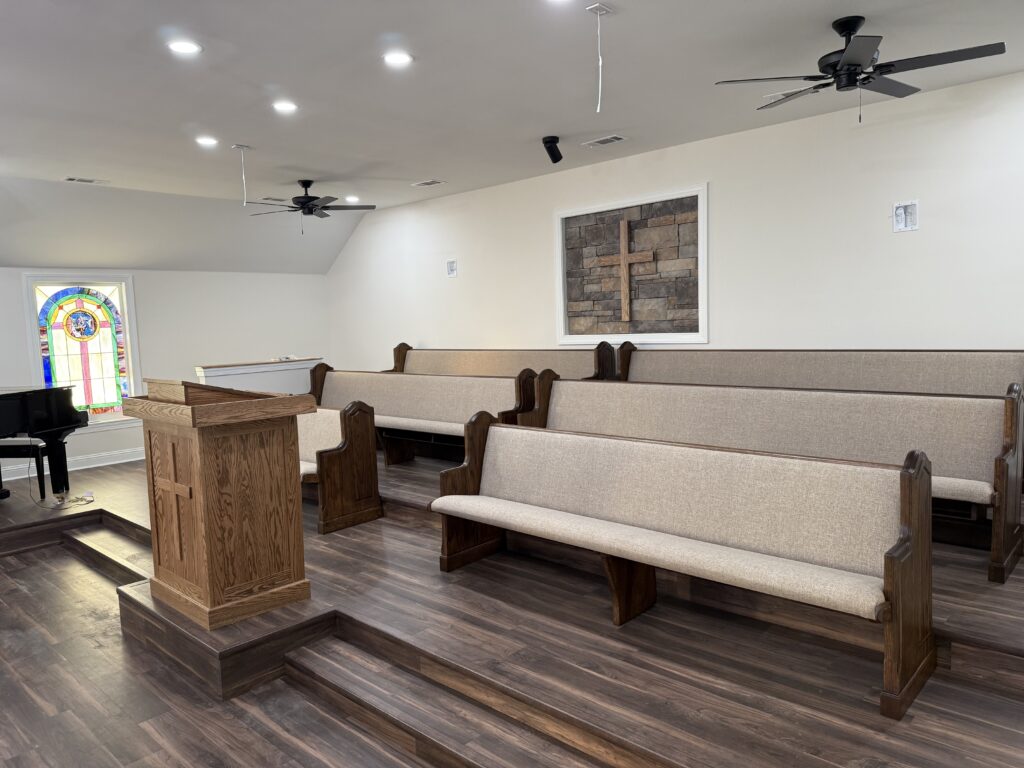
          Gray: Gray pews are gaining popularity for their modern and contemporary look. They can add a sense of sophistication and elegance to a church interior.

          church pew upholstery after
          new church pew upholstery
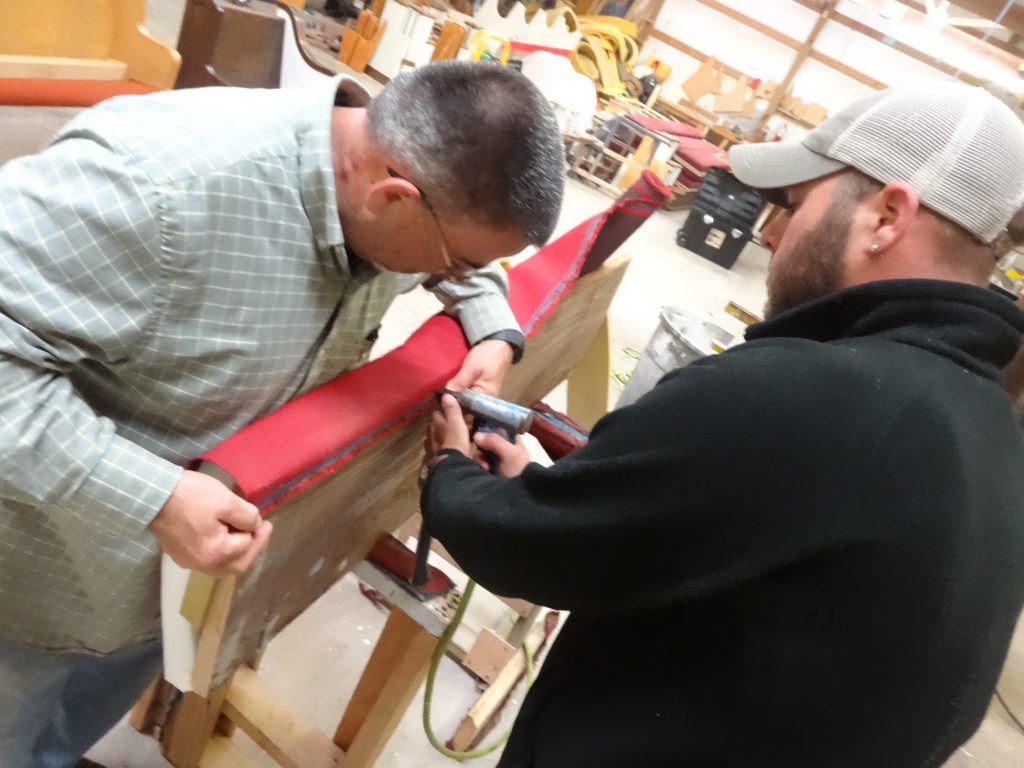
          pew upholstery project
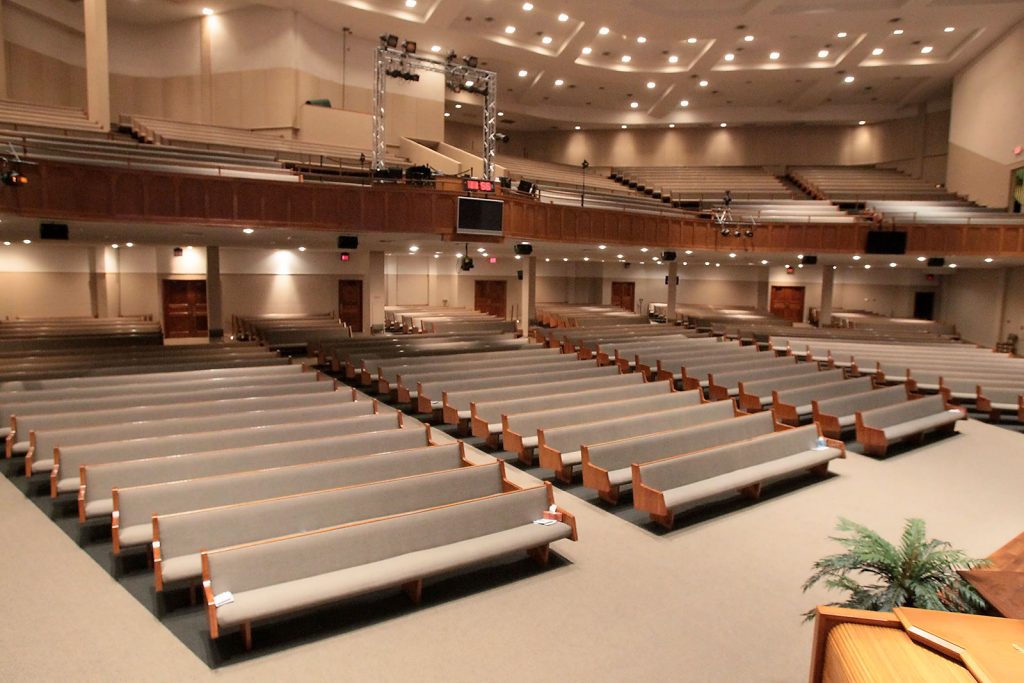
          church sanctuary

          Church Pew Upholstery


          At McPhail Church Services, we take pride in being a trusted name in church furniture upholstery and restoration. With decades of experience, our skilled craftsmen have perfected the art of upholstering and restoring church pews, ensuring they not only look beautiful but also stand the test of time.

          Our commitment to quality craftsmanship and customer satisfaction sets us apart. We understand the importance of preserving the historical and sentimental value of church pews, which is why we use only the finest materials and techniques in our work.

          Whether you need a complete restoration of your church pews or simple repairs and reupholstering, we have the expertise to handle it all. Our team is dedicated to providing personalized service and attention to detail, ensuring that every project is completed to the highest standards.

          At McPhail Church Services, we don’t just restore church pews; we help preserve a piece of your church’s history. Contact us today to learn more about our services and how we can help restore your church pews to their former glory.

          Contact Us For Pew Upholstery

            Services of Interest

            Welcome to our guide on how to restore a church pew! Church pews are not just pieces of furniture; they are steeped in history and tradition, often holding sentimental value for congregations. Over time, these pews can become worn and damaged, losing their original beauty and charm. However, with the right techniques and tools, restoring a church pew can bring it back to its former glory. In this blog post, we will explore the step-by-step process of restoring a church pew, from assessing the damage to refinishing the wood and reupholstering the seat. Whether you are a church caretaker looking to restore an old pew or a DIY enthusiast eager to tackle a new project, this guide will provide you with the knowledge and inspiration you need to revive a piece of history.

            Restoration Steps

            Restoring a church pew can be a rewarding project that preserves its historical and sentimental value. Here are five key steps involved in restoring a church pew:

            Assessment: Thoroughly examine the pew to assess the extent of the damage, including scratches, dents, cracks, or areas where the finish has worn off.

            Repair and Cleaning: Repair any structural damage, such as loose joints or broken parts, using wood glue and filler. Clean the pew to remove dust, dirt, and grime using a mild soap and water solution.

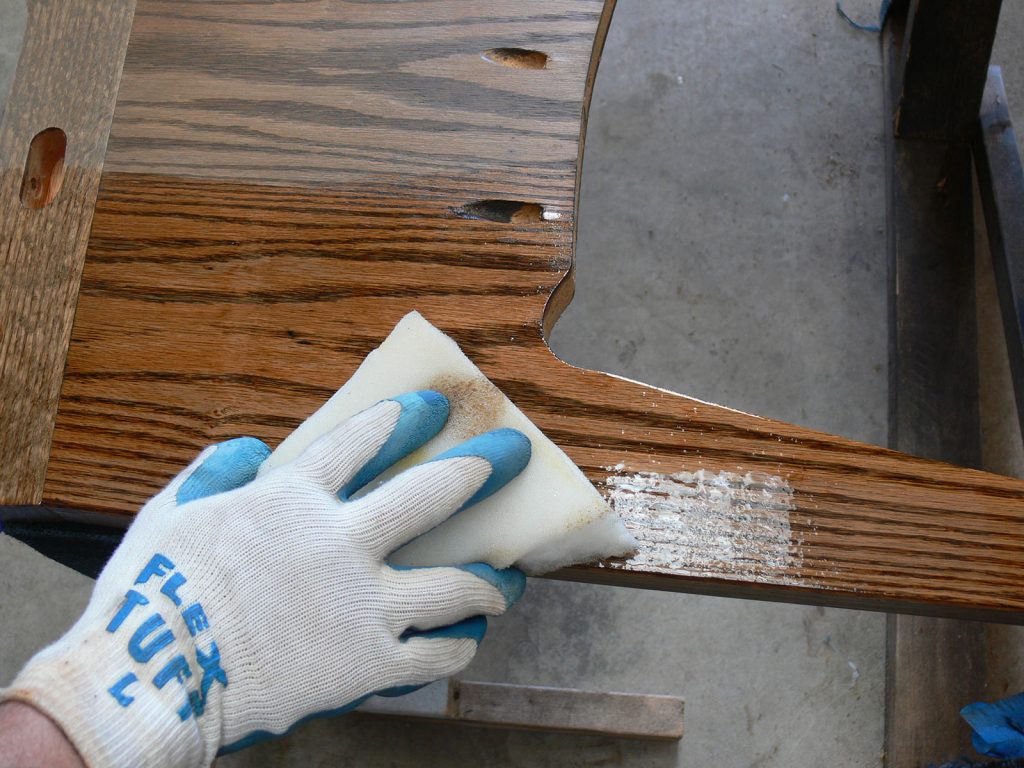
            Sanding: Sand the entire pew to remove the existing finish and smooth out imperfections. Start with coarse grit sandpaper and gradually move to finer grit for a smooth finish.

            Refinishing: Apply a wood stain or paint to the pew, following the manufacturer’s instructions. Allow the stain or paint to dry completely before applying a finish to protect the wood and enhance its appearance.

            Reassembly: Once the finish and upholstery (if applicable) are complete, reassemble the pew and ensure all parts are secure. Regular maintenance, such as dusting and avoiding placing heavy or sharp objects on it, will help preserve the restored pew.


            pew wood restoration

            Contact McPhail Church Services To Restore Your Church Pews

              Services of Interest

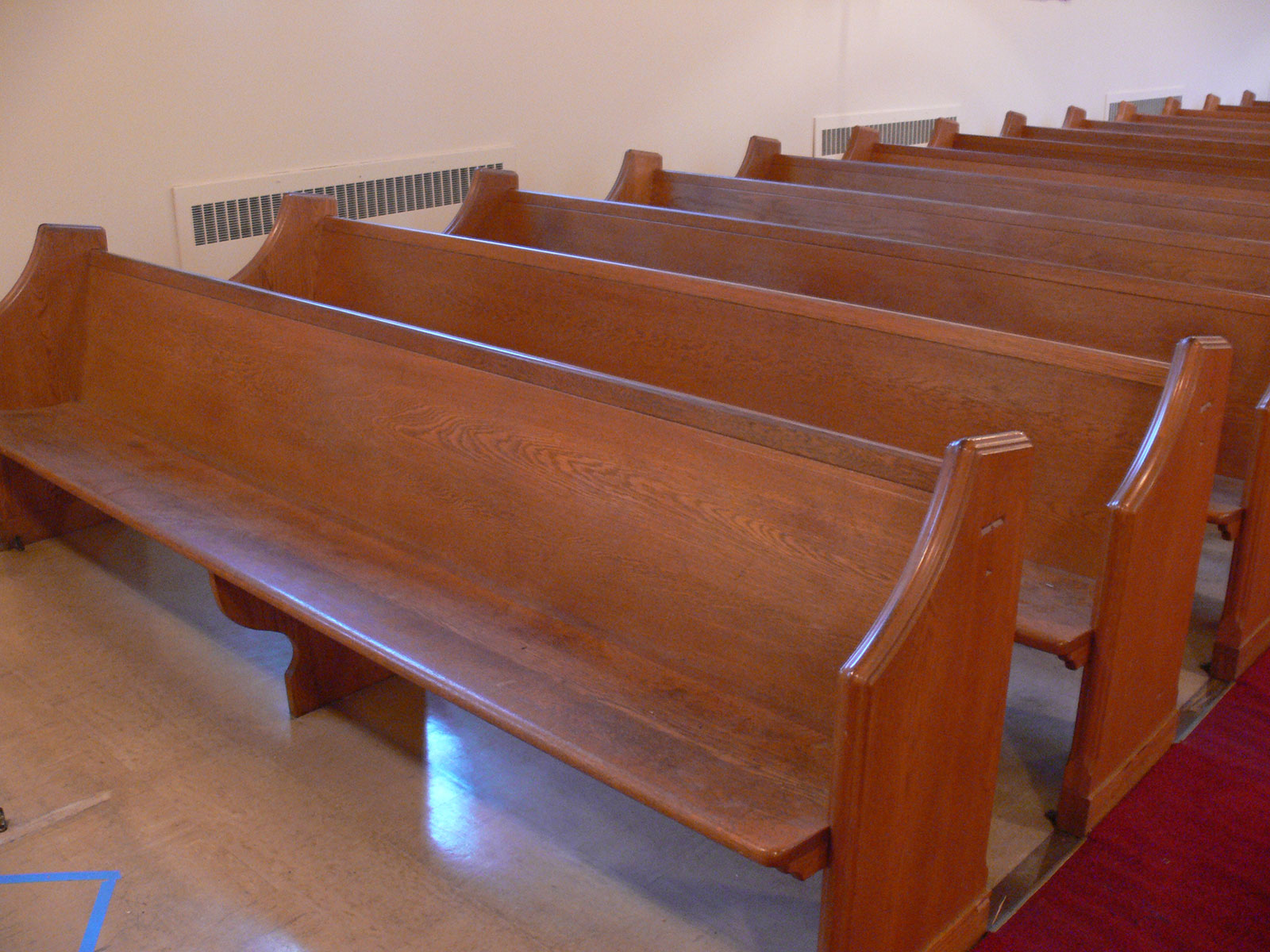
              church pew work

              Reupholster An Old Church Bench

              Reupholstering old church pews is a great choice for several reasons. It helps preserve its historical and sentimental value, especially if it’s been part of your church for a long time. You can update its look with new fabrics to match any decor changes. Plus, reupholstering makes the pew more comfortable for congregants during services. It’s also environmentally friendly, as it keeps the pew out of landfills. Overall, reupholstering is a sustainable and cost-effective way to maintain your church’s history and ensure the pew continues to be enjoyed.

              new church pew upholstery

              Refinish Your Old Church Pews

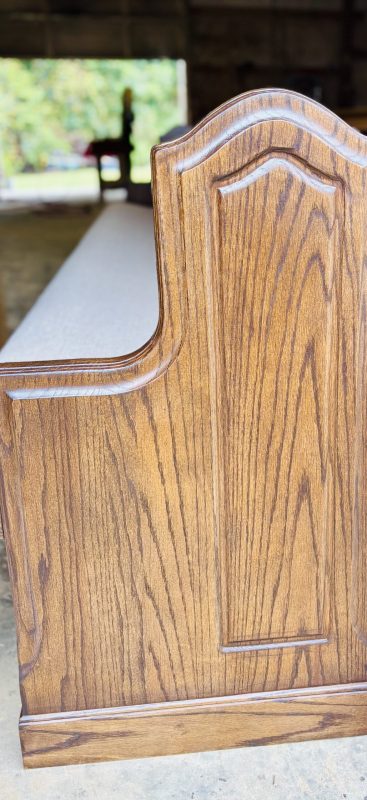
              Refinishing an old church pew can revitalize it, preserving its historical and sentimental value. It repairs surface damage like scratches and worn finishes, restoring its original beauty. This process also lets you update the pew’s appearance to match any decor changes. Refinishing extends the pew’s lifespan, ensuring it continues to serve the congregation. Overall, refinishing is a cost-effective and sustainable way to maintain its beauty and honor its significance in your church’s history.

              Repairing A Church Pew

              Repairing old church pews is a wise choice for several reasons. It allows you to fix any structural issues, such as loose joints or broken parts, ensuring the pew is safe for congregants. Repairing can also extend the pew’s lifespan, avoiding the need for costly replacements. Additionally, it helps maintain the pew’s historical and sentimental value, preserving your church’s history. By investing in repairs, you demonstrate your commitment to preserving its significance for future generations. Overall, repairing an old church pew is a practical and meaningful way to honor its past while ensuring its continued use.

              Donating

              Donating an old church pew is a meaningful way to repurpose it. Consider giving it to other churches, religious organizations, community centers, or historical societies. Websites like “The House of Worship Furniture” also offer donation options. Before donating, make sure the recipient can use it.

              Get In Contact With Us Today

                Services of Interest