
Church Pew Care • New Bern, NC • Coastal Eastern NC
Why New Bern’s Humidity Is Your Church Pews’ Worst Enemy
Sitting at the confluence of two rivers, New Bern is one of the most humid spots in eastern North Carolina. Here is exactly what that means for the wooden pews in your sanctuary — and what you can do about it.
Get a Free Assessment → 910-322-5673There are few places in North Carolina where the natural environment works harder against wood furniture than New Bern. The city sits precisely at the confluence of the Neuse and Trent Rivers, tucked between the Pamlico Sound and the coastal plain — a geography that produces some of the most persistently humid conditions anywhere in the eastern part of the state. Average relative humidity regularly climbs above 80 percent, and during the warmer months it rarely drops low enough to give wood a meaningful chance to stabilize.
For the congregations responsible for maintaining New Bern’s historic churches — many of them housing pews that have stood for well over a century — this is not an abstract concern. Humidity is the single most consistent source of long-term damage to wooden church furniture, and in coastal eastern North Carolina, it operates virtually year-round. Understanding how it works, what it does to your pews, and when to call in a professional is essential knowledge for any church administrator, facilities director, or stewardship committee.
At McPhail Church Services, we have spent more than 30 years restoring church pews up and down the East Coast — and we have seen humidity damage in every stage, from early surface dulling to complete structural failure. What follows is an honest account of the problem and a practical guide to protecting what your congregation has been entrusted to maintain.
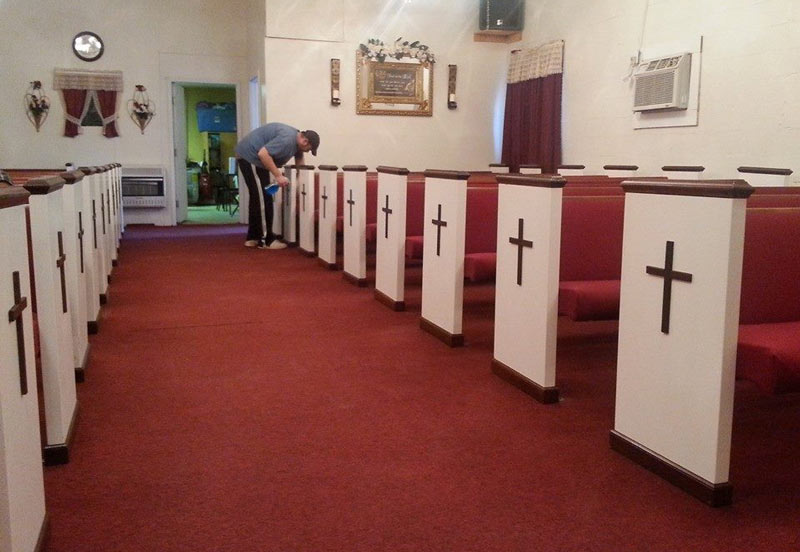
McPhail Church Services at work inside a historic sanctuary — restoring pews that humidity and time had taken their toll on.
How Humidity Actually Damages Wood
Wood is hygroscopic — it naturally absorbs and releases moisture from the surrounding air in a constant attempt to reach equilibrium with its environment. In a stable, climate-controlled setting, this movement is modest and manageable. In coastal North Carolina, where humidity swings dramatically between seasons and sometimes between days, the movement is relentless.
When humidity rises, wood absorbs moisture and expands. When it falls, the wood releases moisture and contracts. This cycle — repeated thousands of times over the lifetime of a pew — creates cumulative mechanical stress that no finish coat can fully prevent indefinitely. Here is what that stress produces at each stage:
The damage does not announce itself dramatically. It accumulates quietly — a slightly rougher surface here, a loose joint there — until the day someone sits in a pew that shifts underfoot, or a visitor runs a hand along the back rail and comes away with a splinter.
The Six Stages of Humidity Damage in Church Pews
Humidity damage follows a recognizable progression. Most congregations do not notice it until Stage 3 or 4, by which point the cost of restoration is meaningfully higher than it would have been at Stage 1 or 2. Knowing what to look for at each stage gives your leadership the ability to act before damage compounds.
Stage 1 — Surface Dulling
Finish loses its sheen and takes on a flat, cloudy appearance. The wood itself is not yet damaged, but the protective coat has begun to fail. Easily addressed with a professional wood restoration treatment.
Stage 2 — Grain Opening
As finish erodes, the wood grain begins to open. Surfaces feel slightly rough or gritty to the touch. Moisture is now reaching the wood directly with each humidity cycle. Refinishing at this stage prevents deeper penetration.
Stage 3 — Stain Fading & Blotching
Uneven moisture absorption causes stain to fade in patches, producing a blotchy, inconsistent appearance across pew surfaces. Structural integrity is still intact, but full strip-and-refinish is now required.
Stage 4 — Veneer Separation
Repeated expansion and contraction causes veneer layers to separate at edges, corners, and decorative elements. Gaps appear and splinters become a concern for congregants. Structural repairs are now needed alongside refinishing.
Stage 5 — Joint Failure
Mortise-and-tenon joints and glued connections loosen as wood movement breaks the bond. Pews creak, wobble, and may shift when occupied. This is a safety concern that requires immediate professional attention.
Stage 6 — Structural Compromise
In severe or long-neglected cases, sustained moisture intrusion — especially following flood events — can cause deep wood rot, anchor failure, and irreversible structural damage. Replacement of individual sections or full pews may be necessary.
Practical Tip
Walk your sanctuary at least twice a year — once in early spring before humidity peaks, and once in late fall — and run your hand along the back rail and seat surface of several pews. Roughness, softness, or any give in the structure are all early warning signs worth acting on.
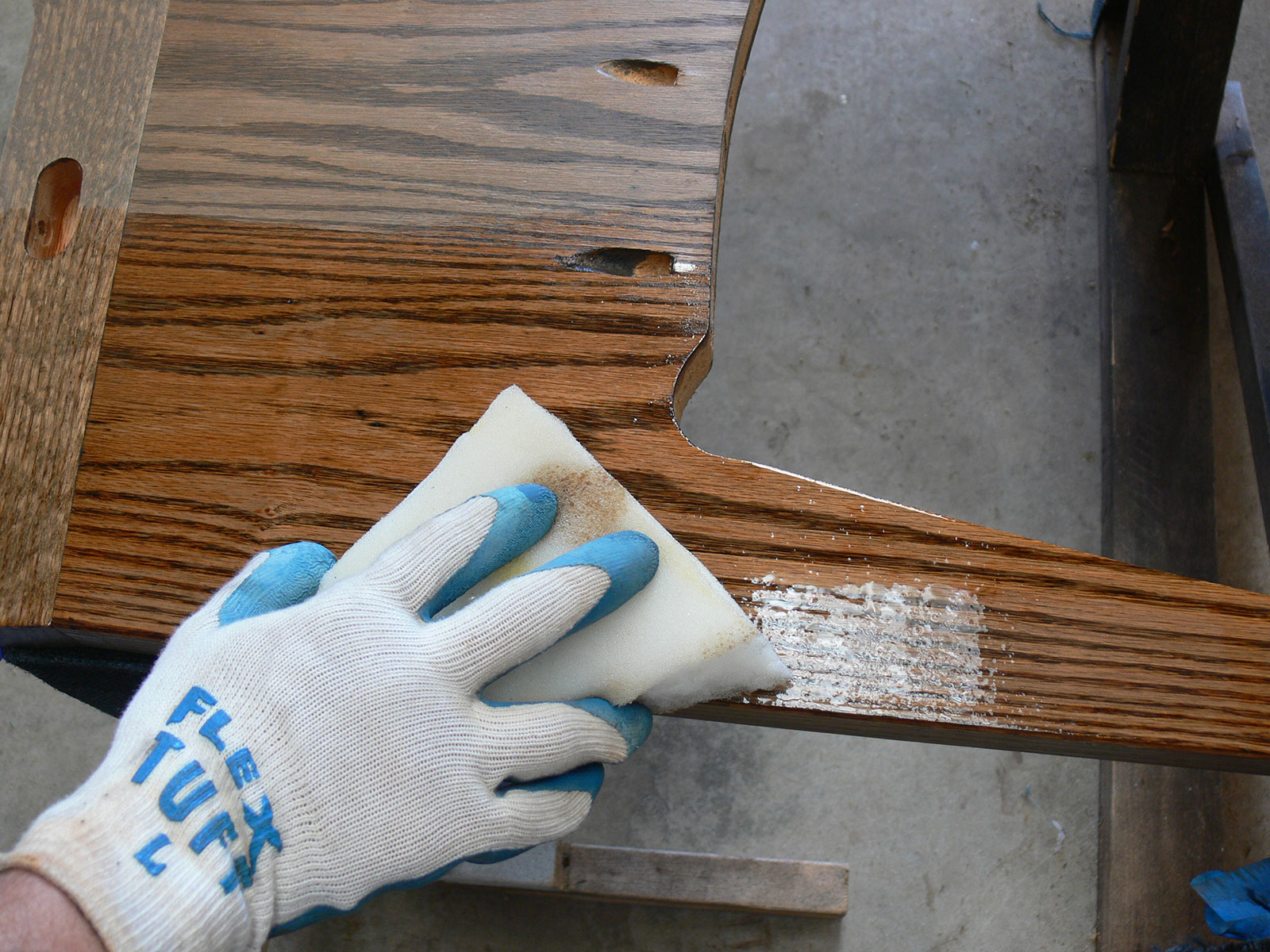
Stripping and refinishing pew wood is the most effective way to stop humidity damage from progressing further.
The Role of Salt Air in Accelerating Damage
New Bern’s humidity problem does not exist in isolation. The city’s proximity to the Pamlico Sound and the broader coastal system means that airborne salt — carried inland on prevailing winds — is a regular presence inside church buildings, particularly those with older or less tightly sealed construction.
Salt air compounds humidity damage in two specific ways. First, salt particles are hygroscopic themselves — they attract and hold moisture, which means that salt-contaminated wood surfaces tend to remain damp longer than they otherwise would, accelerating the wood’s moisture cycling. Second, salt accelerates the oxidation of metal hardware throughout the pew system: anchor bolts, end-cap screws, kneeler hinges, hymnal rack brackets, and any exposed fasteners are all vulnerable. Corroded hardware weakens structural connections and, in some cases, stains the surrounding wood.
For churches within a few miles of the waterfront — including many of New Bern’s oldest downtown congregations — salt air is a factor that should be explicitly discussed when planning any restoration project.
We have restored pews in churches from eastern North Carolina to the New England coast, and the combination of river humidity and salt air that churches in places like New Bern contend with is among the most demanding we encounter. It requires a finish system specifically designed to seal and protect — not just look good on installation day.
Upholstery and the Hidden Humidity Problem
Wooden pew frames get most of the attention in conversations about humidity damage — but upholstered cushions are equally vulnerable, and the damage they sustain is often invisible until it becomes a serious problem.
Upholstery foam is a highly effective sponge. In high-humidity environments, foam beneath pew cushion fabric absorbs ambient moisture steadily over months and years, even when no liquid water is ever directly introduced. The consequences include:
- Mildew growth within the foam core, which produces musty odors that permeate the sanctuary and can be difficult to trace to their source
- Foam compression and breakdown, causing cushions to flatten unevenly and lose their supportive function well before their expected lifespan
- Fabric deterioration from the inside out, with mildew weakening stitching and causing discoloration that is visible on the surface
- Wood deck damage beneath the cushion, as moisture trapped between foam and wood creates conditions for staining, swelling, and in severe cases, rot
The warning sign that most congregations notice first is odor — a persistent mustiness in the sanctuary that lingers despite cleaning. If your church has that smell, there is a good chance the upholstery foam is the source, and no amount of surface cleaning will address it. The foam needs to be removed, the pew decks inspected and treated, and the upholstery replaced.
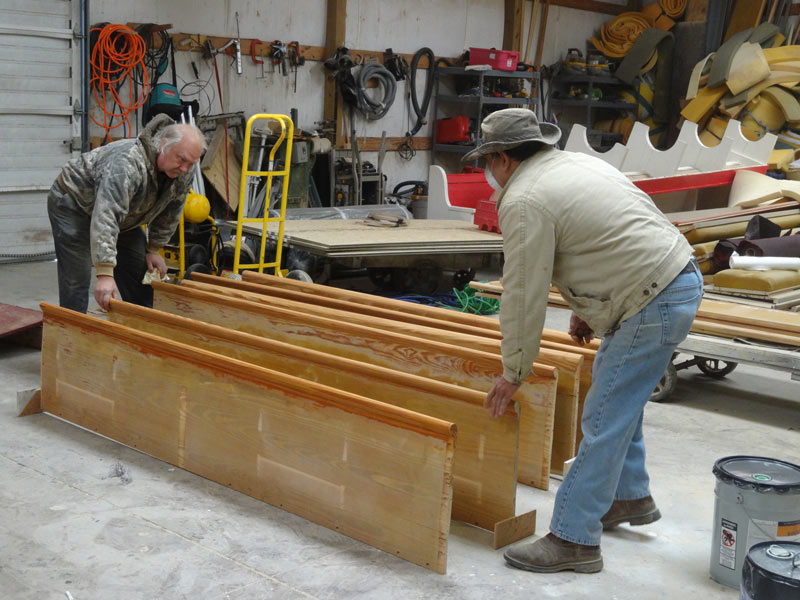
In the shop, our team assesses each pew individually — looking beneath the surface for moisture damage that isn’t visible from the aisle.
What Your Church Can Do Between Professional Restorations
Professional restoration is the most effective intervention for humidity damage, but there are practical steps your congregation can take to slow the progression between major projects.
Climate control is the single most impactful factor. If your HVAC system allows it, maintaining interior relative humidity between 45 and 55 percent year-round will significantly reduce the rate of wood movement and finish wear. Many older church buildings in New Bern were not originally designed with modern climate control in mind — if yours is among them, even portable dehumidifiers in the sanctuary during the most humid months can make a meaningful difference.
Ventilation matters. Pews along exterior walls, near windows, and in areas with limited airflow are almost always in worse condition than those in the center of the nave. If your building has persistent ventilation challenges, noting which pews are most affected will help prioritize where restoration is needed first.
Avoid water-based cleaning products on finished wood surfaces. Many commercial cleaning sprays introduce exactly the moisture you are trying to minimize. A dry microfiber cloth removes dust effectively without adding humidity. For periodic conditioning, consult a professional before applying any product — not all wood treatments are compatible with all finish systems, and the wrong choice can accelerate rather than prevent degradation.
Inspect anchor points annually. Loose pews are not just uncomfortable — they are a liability. Anchor bolts in high-humidity environments corrode faster than manufacturers anticipate, and a pew that feels solid during a quiet Tuesday inspection may shift under the load of a full congregation. If any pew rocks or shifts at all, it should be assessed by a professional before your next service.
When to Call Us
If your pews are showing any signs at Stage 2 or beyond — rough surfaces, blotchy stain, loose joints, persistent odor, or visible separation — the most cost-effective decision you can make is to call before the damage advances another stage. Early intervention consistently costs less and produces better results than deferred maintenance.
How McPhail Addresses Humidity Damage
Every restoration we undertake begins with a thorough assessment of the actual condition of your pews — not a visual-only inspection, but a hands-on evaluation of structural integrity, finish condition, anchor points, and, where upholstery is present, the condition of foam and fabric. We want to know exactly what humidity has done before we begin reversing it.
Our refinishing process strips existing finish entirely, allowing us to address open grain and surface damage directly before applying our proprietary in-house formula coating — a system we have developed and refined over 30 years specifically for the demands of church pew wood in challenging climates. It is designed not just to restore appearance but to seal and protect against the moisture cycling that causes damage in the first place.
For upholstery, we remove all existing fabric and foam, inspect and treat the pew deck, and reupholster with materials chosen for both appearance and long-term durability in humid coastal environments. Vinyl, for example, is inherently resistant to moisture and mildew and is an excellent choice for churches in high-humidity areas where upholstery longevity is a priority.
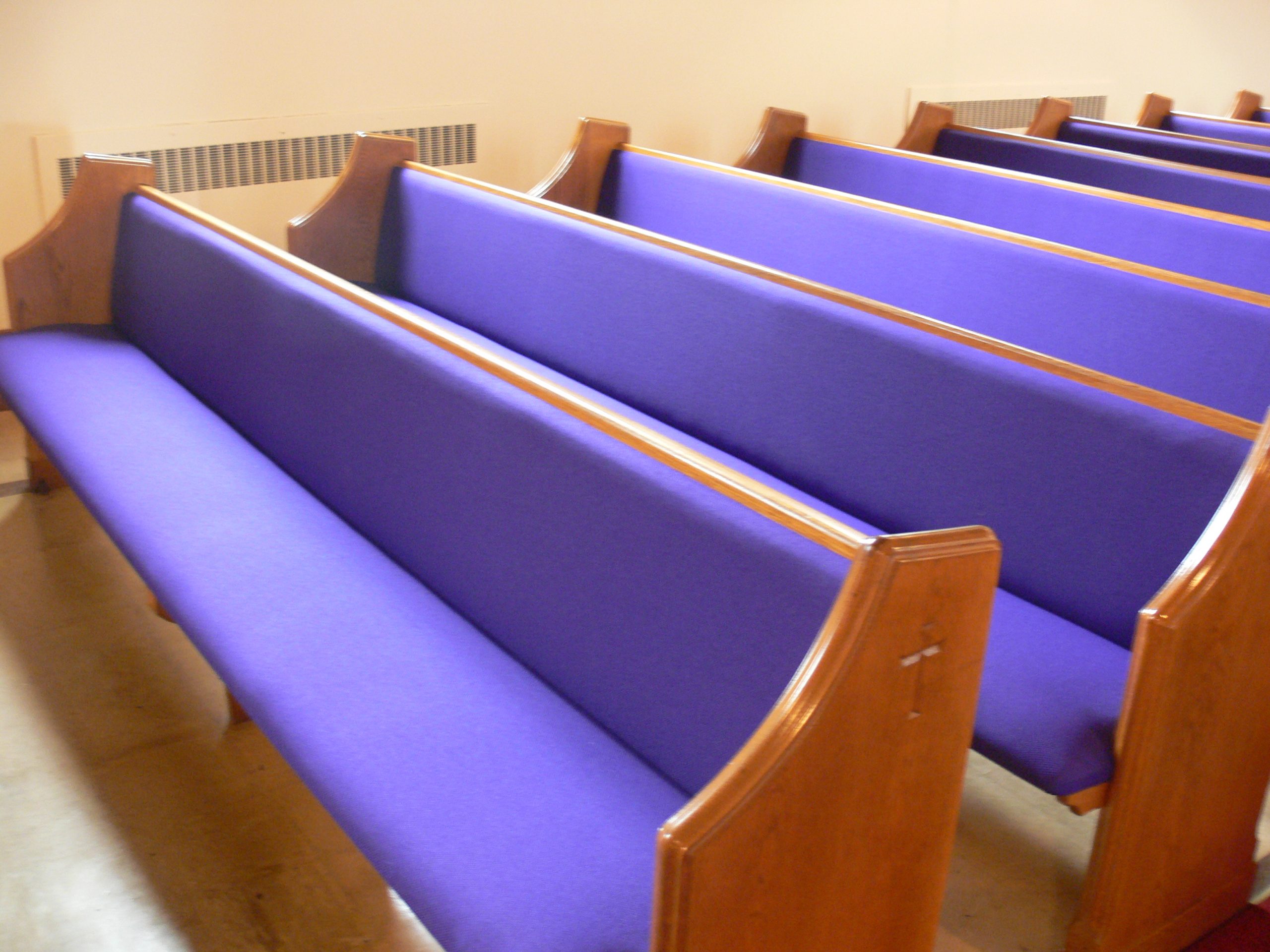
Restored pews ready for the congregation — refinished wood sealed against moisture, fresh upholstery selected for coastal durability.
The Cost of Waiting
Humidity damage is not the kind of problem that resolves itself or stabilizes on its own. Every season that passes without intervention is another season of expansion, contraction, and cumulative stress on wood that may already be decades old. The gap between Stage 2 and Stage 5 can close faster than most church leadership teams expect — particularly in a climate as demanding as coastal eastern North Carolina.
The good news is that even significantly degraded pews can almost always be restored rather than replaced, provided the work is done before structural failure becomes irreversible. McPhail Church Services has brought pews back from conditions that other contractors had written off, and we do so routinely. But the earlier we see them, the more we can do — and the less it costs your congregation.
If your New Bern church has pews that have not been professionally assessed or restored in the last ten years, we would encourage you to reach out before another humid summer runs its course.
Get a Free Pew Assessment
No obligation — honest evaluationWe serve New Bern, Craven County, and churches throughout eastern NC and the East Coast. Family-owned, 30+ years of experience restoring historic church pews.
📞 Call 910-322-5673Humidity & Your Pews