
Church Pew Restoration • New Bern, NC
A Guide to New Bern’s Historic Church Pews — and How to Keep Them Beautiful
Three centuries of spiritual heritage live in the pews of New Bern’s churches. Here is what every congregation should know about protecting them.
Get a Free Quote → 910-322-5673New Bern, North Carolina is one of the oldest cities in the American South. Founded in 1710 and named for Bern, Switzerland by its Swiss and German settlers, it served as the colonial capital of North Carolina and has been a center of civic and spiritual life for more than three centuries. Walking through its downtown historic district today, that heritage is impossible to miss — anchored by a remarkable collection of churches whose congregations have worshipped, mourned, celebrated, and served their communities for generations.
Many of New Bern’s most beloved sanctuaries now carry National Register of Historic Places designations, recognizing their architectural and cultural significance. Inside each of them, wooden pews bear witness to that history. They have held thousands of hands, supported countless prayers, and endured the full force of coastal North Carolina’s climate — the salt air, the humidity that rolls off the Neuse and Trent Rivers, and the storm seasons that periodically remind the region of its vulnerability.
For church leadership entrusted with the stewardship of these spaces, the question of how to care for historic pews is not a trivial one. At McPhail Church Services, it is a question we have answered for churches up and down the East Coast for more than 30 years — and one we are fully equipped to answer for congregations in New Bern and across Craven County.
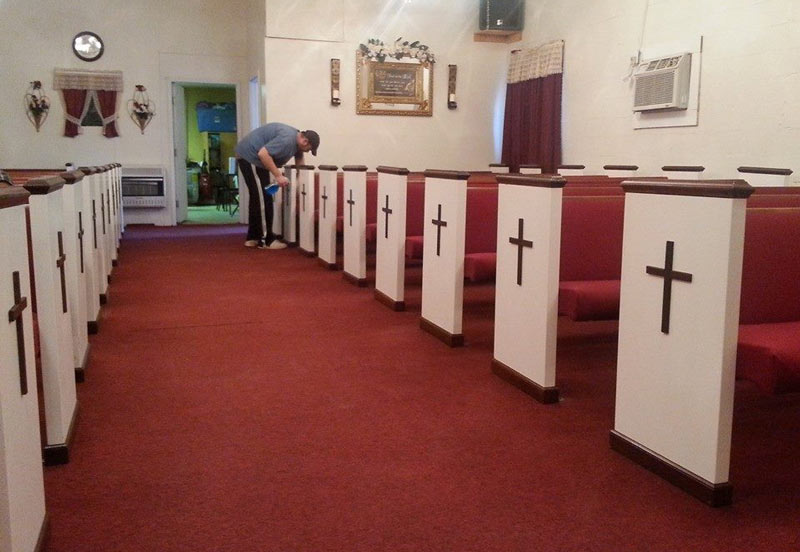
McPhail Church Services restoring pews in place inside a historic sanctuary.
The Sanctuaries That Define New Bern’s Spiritual Landscape
To understand the scope of what is at stake in New Bern’s historic churches, it helps to know something about the buildings themselves and the pew traditions they represent.
Christ Episcopal Church at 320 Pollock Street is perhaps the city’s most storied sanctuary. The current structure dates primarily to 1871, incorporating the brick shell of a church built in 1824. Its Gothic and Gothic Revival architecture — pointed arches, stone detailing, soaring interior proportions — is typical of a period when Episcopal congregations sought to project permanence and reverence through their built environments. Pews in churches of this era were typically crafted from dense hardwoods like white oak or heart pine, finished with oil-based stains and varnishes designed to deepen and protect the grain. After 150 years of use, those finishes require skilled, specialized attention.
First Baptist Church on Middle Street, built in 1848, is one of the finest examples of Gothic Revival ecclesiastical architecture in eastern North Carolina. Its two-stage turreted entrance tower and Flemish-bond brickwork make it an unmistakable landmark. The pews inside a church of this age have almost certainly been repaired, refinished, or reupholstered at least once — and likely deserve another careful assessment.
Centenary United Methodist Church, completed in 1904–1905, represents the late Victorian and early Edwardian approach to church design — multipurpose brick construction, classically proportioned facades, and interiors built for both formality and community gathering. Churches of this period frequently featured curved pew ends, ornamental carvings, and upholstered cushions added over successive decades as congregations prioritized comfort alongside tradition.
New Bern’s African American church heritage is equally significant and equally deserving of expert care. St. Peter’s AME Zion Church, Rue Chapel AME Church, First Missionary Baptist Church, St. John’s Missionary Baptist Church, and Ebenezer Presbyterian Church are all listed on the National Register as part of the Historic African American Churches in Craven County Multiple Property Submission — a recognition of their profound role in the spiritual, social, and political life of New Bern’s Black community from Reconstruction through the twentieth century. The pews in these sanctuaries are not merely furniture. They are artifacts of witness and perseverance, and they warrant restoration with corresponding reverence.
Historic and heirloom church pews are our specialties. We have completed many historic churches and understand the care and aptitude required to take on such a task — bringing both technical mastery and deep respect for what these sanctuaries represent.
What New Bern’s Climate Does to Church Pews
New Bern’s position at the confluence of two rivers — and its proximity to the Pamlico Sound and the Atlantic coast — creates a climate that is particularly demanding on wood furniture. High relative humidity for much of the year causes wood to expand and contract repeatedly, stressing joints, loosening anchors, and opening hairline cracks in finish coats that allow moisture to penetrate deeper into the grain. Salt air accelerates oxidation of metal hardware and contributes to the breakdown of protective finishes over time.
The consequences are predictable and, left unaddressed, progressive:
- Wood grain opens and surfaces become rough to the touch
- Stain fades unevenly, leaving a blotchy or dull appearance
- Veneer separates at edges and corners
- Upholstered cushions develop mildew beneath the fabric, particularly near exterior walls or in poorly ventilated spaces
- Structural joints loosen, causing pews to creak, shift, or become unsafe
- Anchor bolts corrode, compromising the floor connection
Hurricane seasons add an additional layer of risk. New Bern experienced severe flooding during Hurricane Florence in 2018, and the region remains in the direct path of storm systems that can bring sustained moisture intrusion, physical damage, and the particular challenge of restoring pews that have been exposed to standing water.
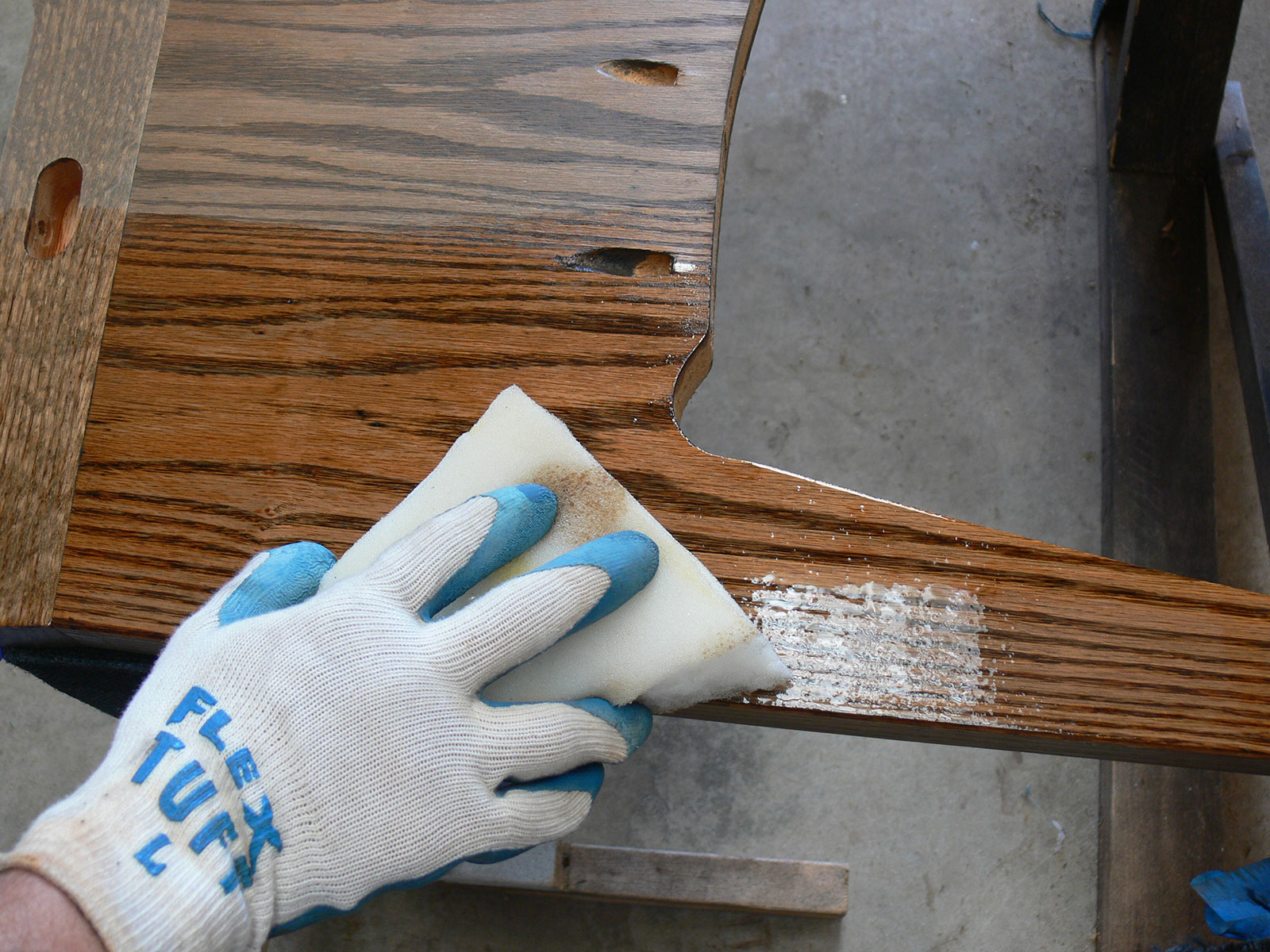
Our team applies finish to bare wood using our proprietary in-house formula coating.
Our Restoration Process — Built for Historic Work
McPhail Church Services has spent more than three decades refining a restoration process specifically suited to the demands of historic and heirloom church pews. We are not a general woodworking shop that occasionally takes on church work. Pew restoration is our sole focus, and every member of our crew has been trained in the specific techniques that historic work requires.
Our refinishing process begins with careful removal and transportation of the pews to our shop, where the existing finish is stripped back to bare wood. Our craftsmen then assess the wood itself — identifying areas of structural compromise, open grain, or previous repairs that need to be addressed before any new finish is applied. We apply our proprietary in-house formula coating, a refinishing system developed and refined over decades of working with historic hardwoods. Once complete, pews are returned to the sanctuary, aligned to their original positions, and re-anchored to the floor.
For upholstery, our process is equally thorough. We remove existing fabric and foam, evaluate the condition of the pew deck and frame, and reupholster using materials selected for durability, appearance, and long-term performance in the coastal environment. We offer a range of fabric options — vinyl, polyester, and woven fabrics — and work with church leadership to choose colors and textures that honor the sanctuary’s aesthetic.
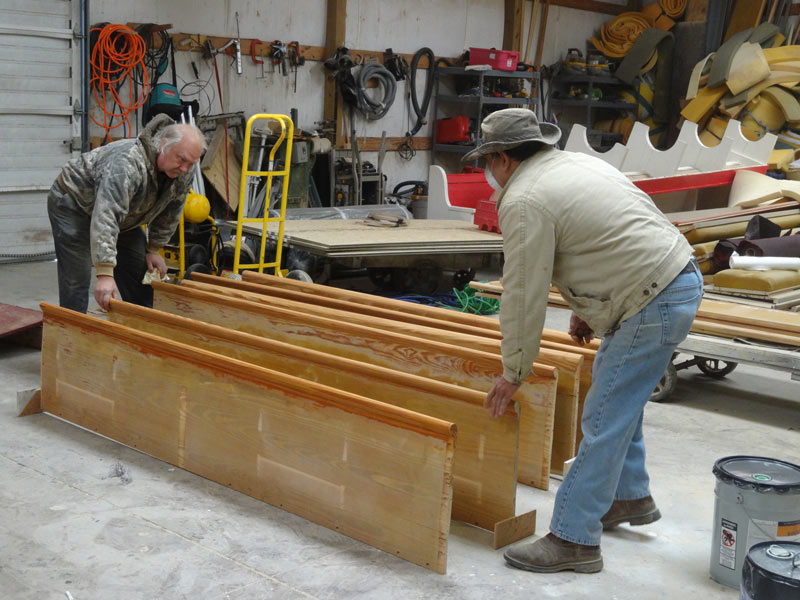
Every pew that comes through our shop is evaluated, stripped, and restored by our experienced craftsmen.
What to Expect When You Work With Us
We understand that scheduling a pew restoration project is a significant decision — logistically, financially, and in terms of the disruption to your congregation’s regular worship life. Our team works to make the process as straightforward as possible from the first conversation to the final walk-through.
We begin every project with a free quote. We will assess the condition of your pews, discuss your goals, and provide a clear scope of work with honest pricing. We schedule projects with your church calendar in mind — whether that means working around a major holiday season, a building anniversary, or a planned capital campaign — and we hold to our timelines. Our track record speaks to this: we have consistently completed projects on or ahead of schedule, even on large-scale jobs involving dozens of pews.
We are a family-owned business based in Autryville, NC, and we have deep roots in eastern North Carolina. Serving the churches of New Bern and Craven County is not a market opportunity to us — it is a responsibility we take seriously, as neighbors and as craftsmen who understand what these buildings mean to the communities they anchor.
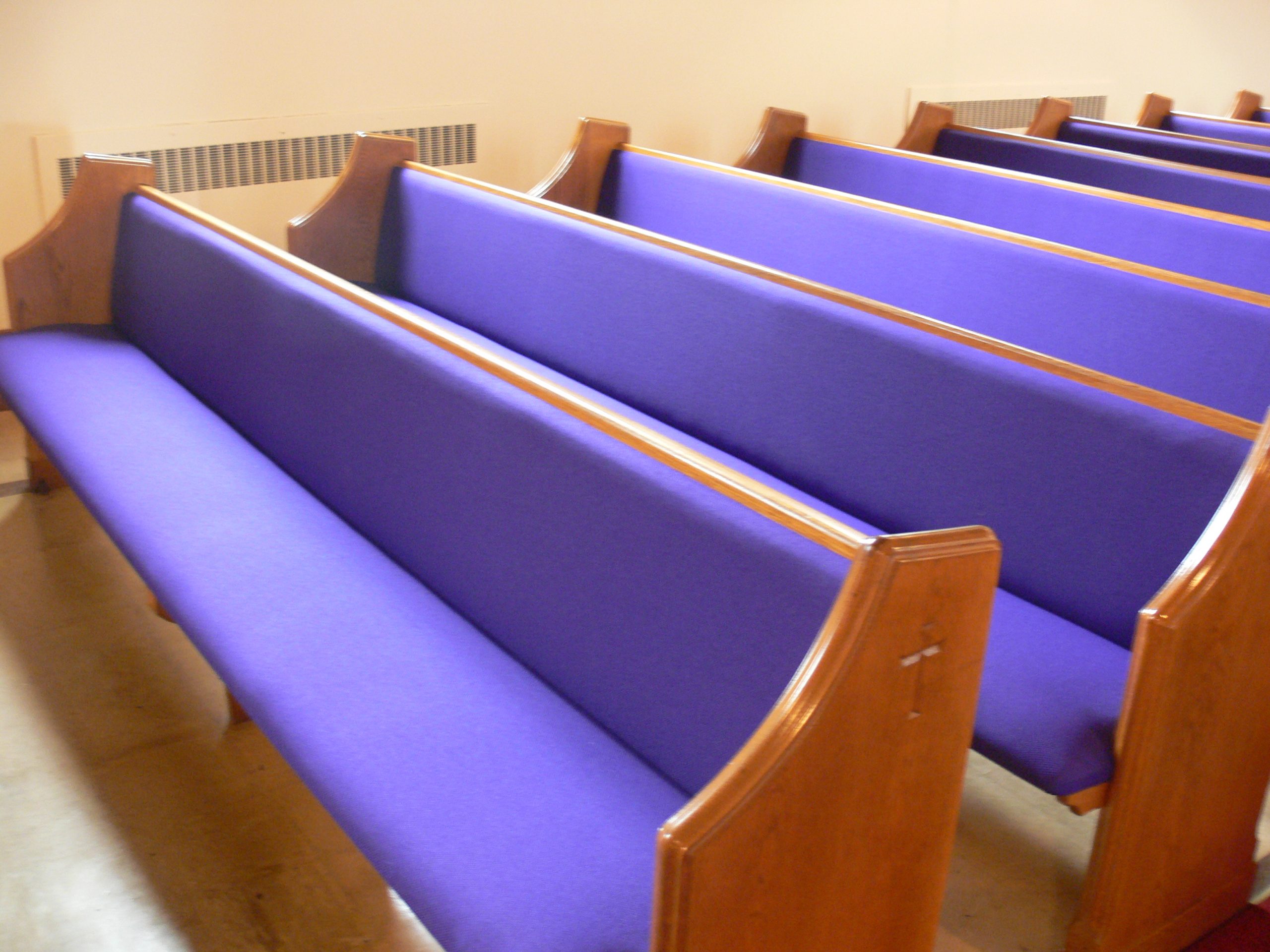
Completed pew restoration — refinished wood and fresh upholstery ready for the congregation.
Honoring What Has Been Entrusted to You
The pews in your sanctuary have served your congregation through seasons of growth and loss, through ordinary Sundays and extraordinary ones. They have outlasted building campaigns, pastoral transitions, and the kind of ordinary wear that accumulates quietly — until the day someone finally looks closely and realizes how far things have drifted from what they once were.
Restoration is not merely maintenance. It is an act of stewardship — a statement that the community gathered in that space values what was built before them and intends to pass it forward in good condition. For churches in New Bern, with their deep roots and their place in the historical record of North Carolina, that stewardship carries particular weight.
McPhail Church Services is ready to help you carry it. We serve congregations throughout eastern North Carolina and along the entire East Coast, bringing the same standard of craftsmanship to every project — whether it involves a single pew in a small country church or a full sanctuary restoration in a nationally registered landmark.
Ready to Restore Your Pews?
Free quotes — No obligationWe serve New Bern, Craven County, and churches throughout eastern NC and the East Coast. Family-owned, 30+ years of experience.
📞 Call 910-322-5673Have Questions?