Storm & Disaster Recovery • New Bern, NC • Eastern NC

After the Storm: Restoring New Bern Church Pews Following Hurricane Damage

When a hurricane hits, the sanctuary is often one of the first places a community needs to gather. Here is what to do — and who to call — to get your pews restored as quickly and completely as possible.

Emergency Response → 910-322-5673

Storm & Disaster Recovery New Bern, NC McPhail Church Services

New Bern knows hurricanes. In September 2018, Hurricane Florence made landfall south of the city and pushed a catastrophic storm surge up the Neuse River, flooding thousands of homes, businesses, and churches with water that in some areas stood several feet deep for days. It was one of the worst flooding events in the city’s recorded history — and it was not the first, nor likely the last.

For the congregations that call New Bern home, hurricanes are not an abstract risk. They are a recurring reality that church leadership must be prepared to navigate — not just in the immediate aftermath, when the focus is on safety and insurance documentation, but in the weeks and months that follow, when the harder work of restoring the physical sanctuary begins.

Church pews are among the most vulnerable elements of a sanctuary during a storm event. They sit on the floor, in direct contact with floodwaters. They are made primarily of wood, which absorbs moisture rapidly and begins to deteriorate within days of sustained exposure. They carry upholstery that becomes a breeding ground for mold almost immediately. And they are often irreplaceable — handcrafted from old-growth hardwoods that no modern mill produces, bearing the marks and memories of generations of congregants.

This guide is written for church leadership in New Bern and across coastal eastern North Carolina. It covers what storm damage actually does to pews, what steps to take in the hours and days after a storm, how the restoration process works, and what to realistically expect. It also tells a story about what it means to show up for a community when the storm has passed and the hard work is just beginning.
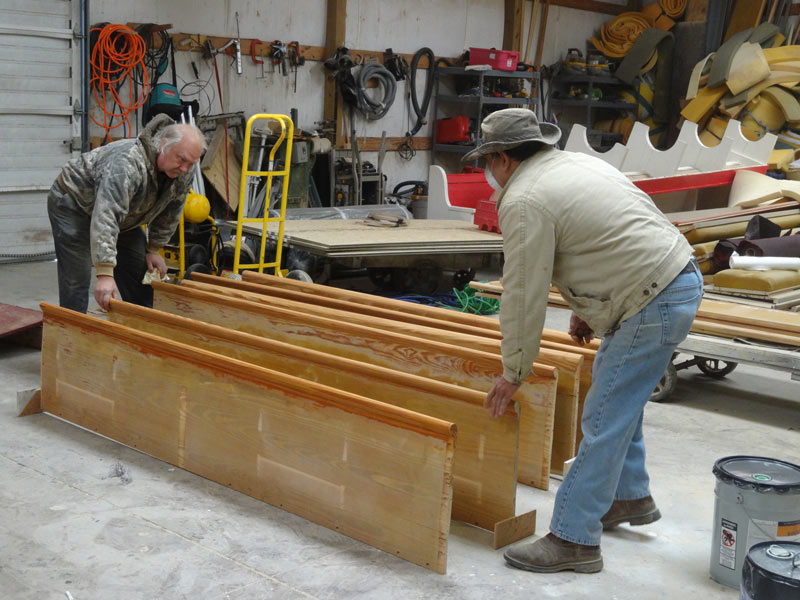
McPhail Church Services team restoring storm-damaged church pews

McPhail Church Services has restored pews in churches throughout eastern NC following hurricane and storm damage events.

From the Field — Hurricane Helene, 2024

“He showed up with supplies and cooked 300 meals in our church yard.”

When Hurricane Helene tore through western North Carolina in the fall of 2024, Pleasant Hill Baptist Church in Asheville was among the communities hit hard. McPhail Church Services was already in the middle of a pew restoration project for the church when the storm struck. The day after Helene passed, Norman McPhail called the church — not to discuss the project timeline, but to ask what the community needed.

He showed up with a storm crew and relief supplies. He set up in the church yard and cooked 300 meals for neighbors and families who had nowhere else to turn. Only after the community had been fed did the conversation return to the pews.

The project was completed to the congregation’s full satisfaction. But what Jason Cox, the church’s representative, remembered most was something that had nothing to do with wood or upholstery:

Norman is a stand-up guy. He showed up when we needed him, had our pews dismantled and removed in a day and a half, and in the midst of our job our area was hit hard with Hurricane Helene. He contacted me the day after the storm and said him and his crew would be bringing relief supplies and cooking our church a meal. True to his word, he showed up with supplies and cooked 300 meals in our church yard. He stayed in contact throughout the entire process and did an amazing job.

— Jason Cox, Pleasant Hill Baptist Church, Asheville, NC

That story says something important about how McPhail Church Services approaches this work. Storm response for us has never been purely transactional. When a church calls us after a hurricane, we understand that the people on the other end of that call are dealing with something far larger than damaged furniture — and we show up accordingly.

What a Hurricane Actually Does to Church Pews

Storm damage to church pews is rarely a single, catastrophic event. It is a cascade — a sequence of damage types that begin the moment floodwater enters the sanctuary and continue for weeks or months afterward if not properly addressed. Understanding the full scope of what happens helps church leadership make informed decisions about restoration versus replacement, and about the urgency of acting quickly.

  • Immediate water absorption. Wood begins absorbing standing water almost immediately. Depending on the species and the condition of the existing finish, a pew can absorb significant moisture within hours of submersion. Swelling begins quickly, stressing joints and finish coats from the inside.
  • Finish delamination. As wood swells, the bond between the wood surface and the finish coat breaks down. Finish bubbles, peels, and lifts — opening the wood to direct and ongoing moisture exposure long after the floodwater recedes.
  • Joint failure. The mortise-and-tenon joints and glued connections that hold pews together are particularly vulnerable to sustained moisture. Glue bonds dissolve. Joints loosen. What was a solid, anchored pew becomes something that moves, creaks, and eventually collapses under occupant weight.
  • Mold growth in upholstery. Upholstered cushions become saturated almost instantly and retain that moisture for a very long time. Within 24 to 48 hours of exposure, mold begins to develop in the foam core. Left in place, mold spreads to the wood deck beneath, compounding the damage significantly.
  • Anchor and hardware corrosion. Floodwater — particularly the brackish water that enters New Bern during surge events — accelerates corrosion of anchor bolts, end-cap hardware, kneeler hinges, and any other metal components throughout the pew system. Corroded anchors compromise structural integrity and can stain surrounding wood.
  • Secondary humidity damage. Even after the standing water is gone, elevated interior humidity in a storm-damaged building continues to drive moisture into wood that is already compromised. Without active dehumidification, the damage continues to progress for weeks.

The First 72 Hours: What to Do Immediately After a Storm

The decisions made in the first 72 hours after a storm significantly affect both the extent of the damage and the cost of restoring it. Speed matters more in storm recovery than in any other type of pew restoration work. Here is the sequence we recommend to every church we work with in the aftermath of a hurricane or major flood event.

  1. Prioritize safety before re-entry. Do not enter the building until it has been cleared by local authorities and a structural assessment has confirmed the building is safe to occupy. Floodwater introduces hazards — electrical, structural, and biological — that are not always visible. Your congregation and leadership team matter more than the pews.
  2. Document everything before touching anything. Once re-entry is safe, photograph and video every pew from multiple angles before any cleanup or removal begins. Document the waterline on pew legs and end panels, any visible damage, and the general state of the sanctuary. This documentation is essential for insurance claims and will be requested by any competent restoration contractor.
  3. Contact your insurance carrier immediately. Report the loss as quickly as possible and ask specifically about coverage for church furniture, fixtures, and pew restoration. Get a claim number and a point of contact. Keep records of every conversation.
  4. Begin ventilation and dehumidification. Open every available window and door as soon as it is safe to do so. If you have access to commercial dehumidifiers or fans, deploy them immediately. The goal is to begin reducing interior humidity as quickly as possible — every hour of sustained moisture exposure increases the damage and the cost of reversing it.
  5. Do not attempt to dry or clean upholstered pews yourself. Saturated foam cushions cannot be effectively dried in place. Attempting to do so with fans or heat typically drives mold deeper into the foam rather than eliminating it. Leave upholstered pews for professional assessment — but do remove any standing water from the surrounding area.
  6. Call a professional pew restoration specialist. General contractors and cleaning companies are not equipped to assess or restore historic church pews. Contact a specialist with documented experience in storm damage recovery for church furniture — the sooner, the better.

Important

Do not discard any pew components — including damaged wood sections, hardware, or upholstery — until a restoration professional has assessed them. What looks irreparable to an untrained eye is often salvageable, and discarding original material may affect your insurance claim and your ability to restore historic pews authentically.
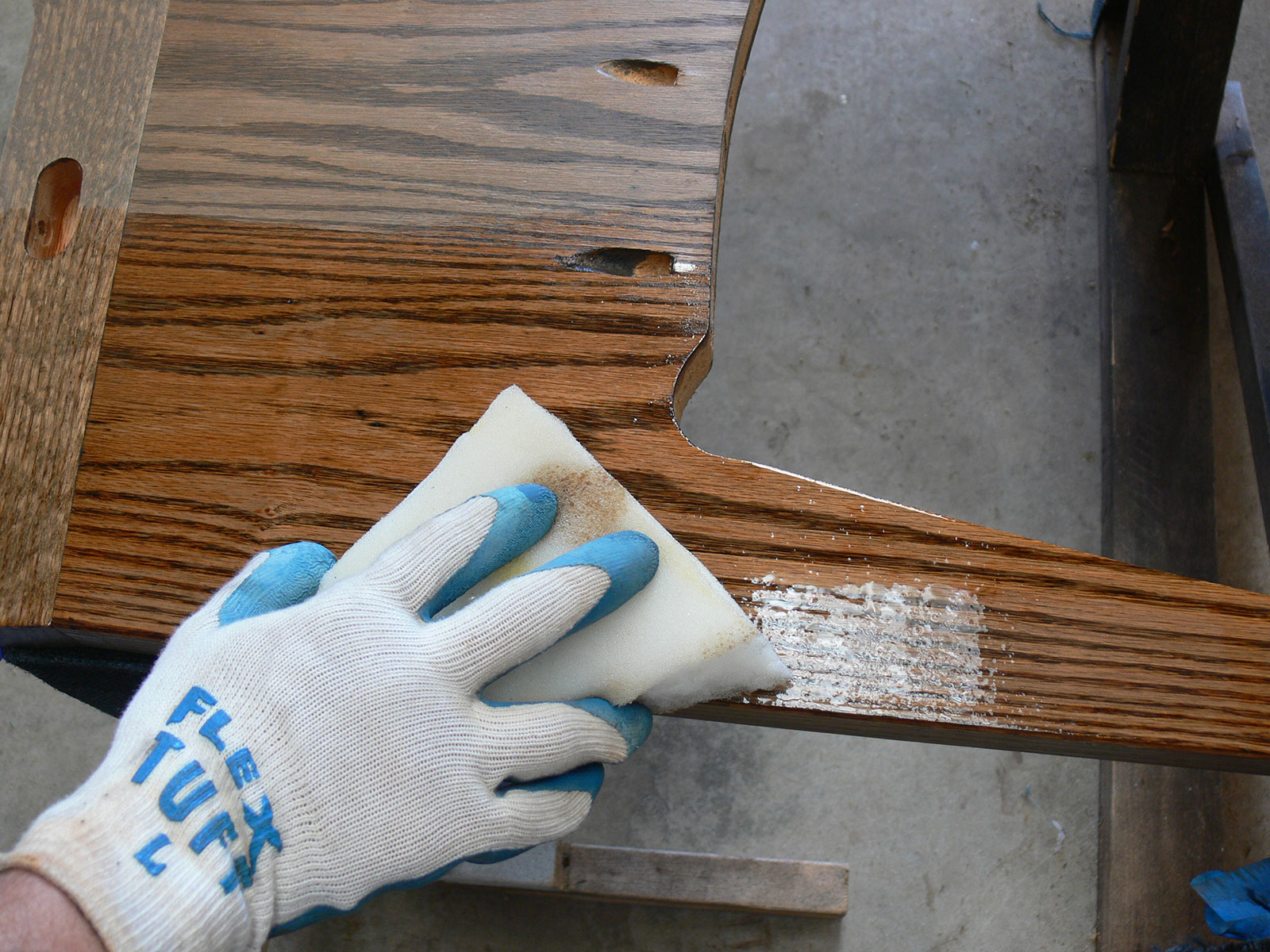
McPhail applying proprietary finish to bare wood during storm damage restoration

Storm-damaged pews are stripped entirely to bare wood before our proprietary finish system is applied — ensuring no compromised material is sealed beneath the new coat.

The Storm Restoration Timeline: What to Expect

Once a professional assessment is underway, restoration follows a predictable sequence. The timeline for each phase varies based on the extent of damage, the number of pews, and the building’s ability to be actively dehumidified. Below is a general framework for what the process looks like from initial contact through completion.

As Soon as Possible

Initial Contact & Assessment

We visit the sanctuary, assess the condition of every pew, document damage, and discuss the scope of work. We provide a clear written estimate suitable for submission to your insurance carrier.

Days 1–3 of Project

Pew Removal & Transport

Our experienced crew carefully dismantles and removes all affected pews, cataloguing each piece to ensure correct reinstallation. Pews are transported to our restoration shop.

Shop Phase

Stripping, Structural Repair & Drying

All finish is stripped to bare wood. Structural repairs are made to joints, veneer, and any components compromised by moisture. Wood is allowed to fully stabilize before any new finish is applied.

Shop Phase

Refinishing & Reupholstery

Our proprietary formula coating is applied to fully stabilized wood. Upholstery is completely replaced — no storm-exposed foam is reused. New fabric and foam are selected with your sanctuary’s aesthetic and the coastal environment in mind.

Final Phase

Return, Installation & Walk-Through

Restored pews are returned to the sanctuary, aligned to their original positions, and re-anchored to the floor. We conduct a full walk-through with church leadership before considering the project complete.

Navigating Insurance for Pew Storm Damage

Insurance claims for church pew damage are more straightforward than many congregations expect — provided the documentation is thorough and the restoration contractor can provide a detailed, itemized estimate. Here is what we have learned from working alongside church administrators through this process many times.

Your photographic documentation is the foundation of your claim. Insurers need to see the pre-remediation condition of every affected item. Photos and video taken before any cleanup or removal began carry far more weight than descriptions or estimates made after the fact. This is the single most important reason to document before you do anything else.

Get a written estimate from a pew restoration specialist, not a general contractor. Insurance adjusters are accustomed to seeing estimates from generalists, but an estimate from a specialist with documented experience in church pew restoration — including line-item breakdowns for refinishing, structural repairs, reupholstery, removal, and reinstallation — carries more credibility and typically results in a more accurate settlement.

Ask about replacement cost versus actual cash value coverage. Some church insurance policies cover replacement cost — the cost to restore pews to their pre-storm condition — while others cover only actual cash value, which applies depreciation. Understanding which coverage applies to your policy before you file will help you set accurate expectations for the settlement.

Keep records of every expense. Temporary seating, dehumidifier rental, emergency cleaning — any cost incurred as a direct result of the storm event may be claimable. Save every receipt and log every conversation with your insurer.

We Can Help

McPhail Church Services can provide detailed written estimates formatted for insurance submission. We have worked with church insurance claims many times and understand what adjusters need to see. Call us at 910-322-5673 and we will walk you through the process.

Restoration vs. Replacement: Making the Right Decision

After a significant storm event, some congregations face pressure — from contractors, from well-meaning members, or simply from the overwhelming scale of the damage — to replace pews entirely rather than restore them. In most cases, this is the wrong decision, and it is worth understanding why.

Historic church pews — particularly those found in New Bern’s older sanctuaries, many of which are listed on the National Register of Historic Places — are typically made from old-growth hardwoods that are no longer commercially available. White oak, heart pine, and American chestnut pews from the 19th and early 20th centuries have a density, grain character, and structural integrity that modern lumber simply cannot replicate. Replacing them means losing something that cannot be recovered.

More practically, restoration almost always costs less than replacement — even for significantly storm-damaged pews. The investment in skilled restoration work preserves both the material and the history embodied in the original pews, and the result is a sanctuary that looks and feels the way your congregation remembers it, rather than one that has been furnished from a catalog.

We will always give you an honest assessment. If a pew or section genuinely cannot be restored, we will tell you plainly. But in our experience, the threshold for true irreparability is much higher than most people assume when they are standing in a storm-damaged sanctuary overwhelmed by the scale of what they are looking at.
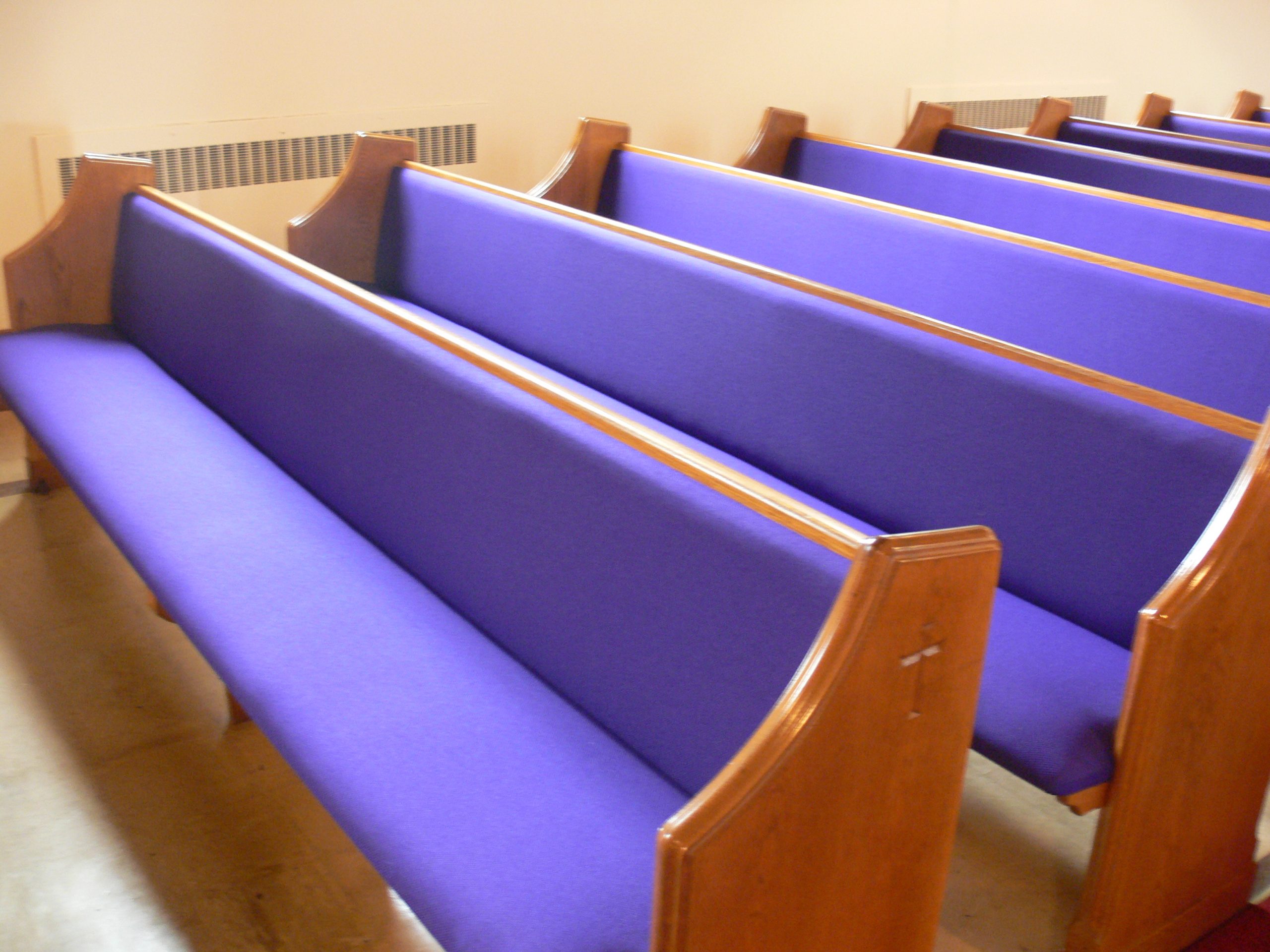
Fully restored church pews returned to sanctuary after storm damage repair

Pews returned and reinstalled after storm damage restoration — the sanctuary ready once again for the congregation that needs it most.

The Sanctuary Is Where the Community Gathers

After a hurricane, a church is not just a building waiting to be repaired. It is the place where a shaken community comes to find steadiness — where people who have lost homes and possessions and, in the worst storms, loved ones, come to be together. Getting that space back in order is not merely a facilities project. It is an act of pastoral care.

Norman McPhail cooked 300 meals in a church yard after Hurricane Helene because he understood that. The pews mattered — and they got done right, on schedule, to a standard the congregation was proud of. But the meal came first, because that was what the moment required.

McPhail Church Services is based in Autryville, NC, less than two hours from New Bern. We have deep roots in eastern North Carolina and a long history of responding to storm-damaged churches up and down the East Coast. When the next storm comes — and for communities in coastal NC, there will be a next storm — we want you to know that you have someone to call who will show up, assess the damage honestly, restore your pews with real craftsmanship, and be a steady presence through the process from start to finish.

Storm Damage? Call Us First.

Free assessment — Insurance estimates provided

We serve New Bern, Craven County, and churches throughout eastern NC and the East Coast. Family-owned, 30+ years of storm recovery and pew restoration experience.

📞  Call 910-322-5673

Storm Recovery & Pew Restoration

Frequently Asked Questions

How quickly do we need to act after a hurricane damages our pews?
As quickly as possible — ideally within the first 24 to 72 hours of safe re-entry. Mold begins developing in saturated upholstery foam within 24 to 48 hours of exposure, and wood joints begin losing structural integrity as moisture accumulates. Every day of delay allows the damage to progress further and increases the cost of restoration. Call us as soon as the building is safe to enter and we will prioritize your assessment.
Can pews that have been completely submerged in floodwater be restored?
In most cases, yes — provided they are addressed promptly. Complete submersion causes significant damage, but our process strips everything back to bare wood, makes all necessary structural repairs, allows the wood to fully stabilize and dry, and then applies a complete new finish system. We have successfully restored pews that had been submerged for multiple days. The key factors are the species of wood, the age and construction of the pew, and how quickly restoration begins after the event.
Will our insurance cover pew storm damage restoration?
Most standard church property insurance policies do cover storm damage to fixtures and furnishings, including pews. Coverage details vary — particularly around replacement cost versus actual cash value — so we recommend reviewing your policy and speaking with your carrier as soon as possible after the event. McPhail Church Services can provide detailed written estimates formatted specifically for insurance submission, which helps facilitate the claims process significantly.
Should we try to dry out the pews ourselves while waiting for a professional?
You can and should begin ventilating the sanctuary — open windows and doors, run fans to move air, and deploy dehumidifiers if available. However, do not attempt to dry or clean the pews themselves, particularly any upholstered surfaces. Applying heat or direct airflow to saturated foam typically drives mold deeper into the cushion rather than eliminating it. And critically, do not discard any pew components before a restoration professional has assessed them — even badly damaged pieces may be salvageable or necessary for insurance documentation.
Is it better to restore storm-damaged pews or replace them entirely?
In the vast majority of cases, restoration is both the better outcome and the more economical choice. Historic church pews — particularly those in New Bern’s older sanctuaries — are made from old-growth hardwoods that are no longer commercially available. Replacing them means permanently losing material and craftsmanship that cannot be replicated. Restoration preserves the original pews, costs less than replacement in most cases, and results in a sanctuary that looks the way your congregation remembers it. We will always give you an honest assessment of what is genuinely restorable and what is not.
How long does storm damage pew restoration take?
Timeline depends on the extent of damage and the number of pews involved. For a mid-size sanctuary, a full restoration following storm damage — including removal, transport, stripping, structural repair, stabilization, refinishing, reupholstery, and reinstallation — typically takes two to four weeks. We work efficiently and hold to our timelines. We also work with your leadership to minimize disruption to services wherever possible, including phased restoration approaches when the space needs to remain in use.
Do you work with historic churches that are on the National Register of Historic Places?
Yes — historic and heirloom pews are our specialty. New Bern has a significant concentration of NRHP-listed churches, and we have extensive experience with the technical sensitivity and documentation that historic preservation work requires. If your church is listed or contributing to a historic district, please let us know during the initial assessment so we can approach the work with the appropriate level of care and documentation.
Do you serve churches outside of New Bern?
Yes. We are based in Autryville, NC and serve congregations throughout eastern North Carolina, along the entire East Coast, and beyond — including projects in Texas, Canada, and the Turks and Caicos Islands. Storm response is something we have done for churches from the Outer Banks to the mountains of western NC. Wherever you are, if you have storm-damaged pews, we want to hear from you.

Church Pew Care • New Bern, NC • Coastal Eastern NC

Why New Bern’s Humidity Is Your Church Pews’ Worst Enemy

Sitting at the confluence of two rivers, New Bern is one of the most humid spots in eastern North Carolina. Here is exactly what that means for the wooden pews in your sanctuary — and what you can do about it.

Get a Free Assessment → 910-322-5673

Church Pew Care New Bern, NC McPhail Church Services

There are few places in North Carolina where the natural environment works harder against wood furniture than New Bern. The city sits precisely at the confluence of the Neuse and Trent Rivers, tucked between the Pamlico Sound and the coastal plain — a geography that produces some of the most persistently humid conditions anywhere in the eastern part of the state. Average relative humidity regularly climbs above 80 percent, and during the warmer months it rarely drops low enough to give wood a meaningful chance to stabilize.

For the congregations responsible for maintaining New Bern’s historic churches — many of them housing pews that have stood for well over a century — this is not an abstract concern. Humidity is the single most consistent source of long-term damage to wooden church furniture, and in coastal eastern North Carolina, it operates virtually year-round. Understanding how it works, what it does to your pews, and when to call in a professional is essential knowledge for any church administrator, facilities director, or stewardship committee.

At McPhail Church Services, we have spent more than 30 years restoring church pews up and down the East Coast — and we have seen humidity damage in every stage, from early surface dulling to complete structural failure. What follows is an honest account of the problem and a practical guide to protecting what your congregation has been entrusted to maintain.

McPhail Church Services craftsman restoring wooden church pews in a sanctuary

McPhail Church Services at work inside a historic sanctuary — restoring pews that humidity and time had taken their toll on.

How Humidity Actually Damages Wood

Wood is hygroscopic — it naturally absorbs and releases moisture from the surrounding air in a constant attempt to reach equilibrium with its environment. In a stable, climate-controlled setting, this movement is modest and manageable. In coastal North Carolina, where humidity swings dramatically between seasons and sometimes between days, the movement is relentless.

When humidity rises, wood absorbs moisture and expands. When it falls, the wood releases moisture and contracts. This cycle — repeated thousands of times over the lifetime of a pew — creates cumulative mechanical stress that no finish coat can fully prevent indefinitely. Here is what that stress produces at each stage:

80%+ Average relative humidity in New Bern during summer months
30+ Years of humidity cycles the average historic New Bern pew has already endured
Faster finish breakdown in high-humidity coastal environments vs. inland churches

The damage does not announce itself dramatically. It accumulates quietly — a slightly rougher surface here, a loose joint there — until the day someone sits in a pew that shifts underfoot, or a visitor runs a hand along the back rail and comes away with a splinter.

The Six Stages of Humidity Damage in Church Pews

Humidity damage follows a recognizable progression. Most congregations do not notice it until Stage 3 or 4, by which point the cost of restoration is meaningfully higher than it would have been at Stage 1 or 2. Knowing what to look for at each stage gives your leadership the ability to act before damage compounds.

Stage 1 — Surface Dulling

Finish loses its sheen and takes on a flat, cloudy appearance. The wood itself is not yet damaged, but the protective coat has begun to fail. Easily addressed with a professional wood restoration treatment.

Stage 2 — Grain Opening

As finish erodes, the wood grain begins to open. Surfaces feel slightly rough or gritty to the touch. Moisture is now reaching the wood directly with each humidity cycle. Refinishing at this stage prevents deeper penetration.

Stage 3 — Stain Fading & Blotching

Uneven moisture absorption causes stain to fade in patches, producing a blotchy, inconsistent appearance across pew surfaces. Structural integrity is still intact, but full strip-and-refinish is now required.

Stage 4 — Veneer Separation

Repeated expansion and contraction causes veneer layers to separate at edges, corners, and decorative elements. Gaps appear and splinters become a concern for congregants. Structural repairs are now needed alongside refinishing.

Stage 5 — Joint Failure

Mortise-and-tenon joints and glued connections loosen as wood movement breaks the bond. Pews creak, wobble, and may shift when occupied. This is a safety concern that requires immediate professional attention.

Stage 6 — Structural Compromise

In severe or long-neglected cases, sustained moisture intrusion — especially following flood events — can cause deep wood rot, anchor failure, and irreversible structural damage. Replacement of individual sections or full pews may be necessary.

Practical Tip

Walk your sanctuary at least twice a year — once in early spring before humidity peaks, and once in late fall — and run your hand along the back rail and seat surface of several pews. Roughness, softness, or any give in the structure are all early warning signs worth acting on.

McPhail technician applying proprietary finish to stripped church pew wood

Stripping and refinishing pew wood is the most effective way to stop humidity damage from progressing further.

The Role of Salt Air in Accelerating Damage

New Bern’s humidity problem does not exist in isolation. The city’s proximity to the Pamlico Sound and the broader coastal system means that airborne salt — carried inland on prevailing winds — is a regular presence inside church buildings, particularly those with older or less tightly sealed construction.

Salt air compounds humidity damage in two specific ways. First, salt particles are hygroscopic themselves — they attract and hold moisture, which means that salt-contaminated wood surfaces tend to remain damp longer than they otherwise would, accelerating the wood’s moisture cycling. Second, salt accelerates the oxidation of metal hardware throughout the pew system: anchor bolts, end-cap screws, kneeler hinges, hymnal rack brackets, and any exposed fasteners are all vulnerable. Corroded hardware weakens structural connections and, in some cases, stains the surrounding wood.

For churches within a few miles of the waterfront — including many of New Bern’s oldest downtown congregations — salt air is a factor that should be explicitly discussed when planning any restoration project.

We have restored pews in churches from eastern North Carolina to the New England coast, and the combination of river humidity and salt air that churches in places like New Bern contend with is among the most demanding we encounter. It requires a finish system specifically designed to seal and protect — not just look good on installation day.

Upholstery and the Hidden Humidity Problem

Wooden pew frames get most of the attention in conversations about humidity damage — but upholstered cushions are equally vulnerable, and the damage they sustain is often invisible until it becomes a serious problem.

Upholstery foam is a highly effective sponge. In high-humidity environments, foam beneath pew cushion fabric absorbs ambient moisture steadily over months and years, even when no liquid water is ever directly introduced. The consequences include:

  • Mildew growth within the foam core, which produces musty odors that permeate the sanctuary and can be difficult to trace to their source
  • Foam compression and breakdown, causing cushions to flatten unevenly and lose their supportive function well before their expected lifespan
  • Fabric deterioration from the inside out, with mildew weakening stitching and causing discoloration that is visible on the surface
  • Wood deck damage beneath the cushion, as moisture trapped between foam and wood creates conditions for staining, swelling, and in severe cases, rot

The warning sign that most congregations notice first is odor — a persistent mustiness in the sanctuary that lingers despite cleaning. If your church has that smell, there is a good chance the upholstery foam is the source, and no amount of surface cleaning will address it. The foam needs to be removed, the pew decks inspected and treated, and the upholstery replaced.

McPhail craftsman assessing and working on church pew wood in the shop

In the shop, our team assesses each pew individually — looking beneath the surface for moisture damage that isn’t visible from the aisle.

What Your Church Can Do Between Professional Restorations

Professional restoration is the most effective intervention for humidity damage, but there are practical steps your congregation can take to slow the progression between major projects.

Climate control is the single most impactful factor. If your HVAC system allows it, maintaining interior relative humidity between 45 and 55 percent year-round will significantly reduce the rate of wood movement and finish wear. Many older church buildings in New Bern were not originally designed with modern climate control in mind — if yours is among them, even portable dehumidifiers in the sanctuary during the most humid months can make a meaningful difference.

Ventilation matters. Pews along exterior walls, near windows, and in areas with limited airflow are almost always in worse condition than those in the center of the nave. If your building has persistent ventilation challenges, noting which pews are most affected will help prioritize where restoration is needed first.

Avoid water-based cleaning products on finished wood surfaces. Many commercial cleaning sprays introduce exactly the moisture you are trying to minimize. A dry microfiber cloth removes dust effectively without adding humidity. For periodic conditioning, consult a professional before applying any product — not all wood treatments are compatible with all finish systems, and the wrong choice can accelerate rather than prevent degradation.

Inspect anchor points annually. Loose pews are not just uncomfortable — they are a liability. Anchor bolts in high-humidity environments corrode faster than manufacturers anticipate, and a pew that feels solid during a quiet Tuesday inspection may shift under the load of a full congregation. If any pew rocks or shifts at all, it should be assessed by a professional before your next service.

When to Call Us

If your pews are showing any signs at Stage 2 or beyond — rough surfaces, blotchy stain, loose joints, persistent odor, or visible separation — the most cost-effective decision you can make is to call before the damage advances another stage. Early intervention consistently costs less and produces better results than deferred maintenance.

How McPhail Addresses Humidity Damage

Every restoration we undertake begins with a thorough assessment of the actual condition of your pews — not a visual-only inspection, but a hands-on evaluation of structural integrity, finish condition, anchor points, and, where upholstery is present, the condition of foam and fabric. We want to know exactly what humidity has done before we begin reversing it.

Our refinishing process strips existing finish entirely, allowing us to address open grain and surface damage directly before applying our proprietary in-house formula coating — a system we have developed and refined over 30 years specifically for the demands of church pew wood in challenging climates. It is designed not just to restore appearance but to seal and protect against the moisture cycling that causes damage in the first place.

For upholstery, we remove all existing fabric and foam, inspect and treat the pew deck, and reupholster with materials chosen for both appearance and long-term durability in humid coastal environments. Vinyl, for example, is inherently resistant to moisture and mildew and is an excellent choice for churches in high-humidity areas where upholstery longevity is a priority.

Beautifully restored and reupholstered church pews completed by McPhail Church Services

Restored pews ready for the congregation — refinished wood sealed against moisture, fresh upholstery selected for coastal durability.

The Cost of Waiting

Humidity damage is not the kind of problem that resolves itself or stabilizes on its own. Every season that passes without intervention is another season of expansion, contraction, and cumulative stress on wood that may already be decades old. The gap between Stage 2 and Stage 5 can close faster than most church leadership teams expect — particularly in a climate as demanding as coastal eastern North Carolina.

The good news is that even significantly degraded pews can almost always be restored rather than replaced, provided the work is done before structural failure becomes irreversible. McPhail Church Services has brought pews back from conditions that other contractors had written off, and we do so routinely. But the earlier we see them, the more we can do — and the less it costs your congregation.

If your New Bern church has pews that have not been professionally assessed or restored in the last ten years, we would encourage you to reach out before another humid summer runs its course.

Get a Free Pew Assessment

No obligation — honest evaluation

We serve New Bern, Craven County, and churches throughout eastern NC and the East Coast. Family-owned, 30+ years of experience restoring historic church pews.

📞  Call 910-322-5673

Humidity & Your Pews

Frequently Asked Questions

Is New Bern’s humidity really that much worse than other parts of NC?
Yes — measurably so. New Bern’s location at the confluence of the Neuse and Trent Rivers, combined with its proximity to the Pamlico Sound and the Atlantic coast, produces consistently higher relative humidity than inland cities like Raleigh or Charlotte. During summer months, interior humidity in an uncontrolled building can regularly exceed 80 percent — well above the range that wood furniture can tolerate without ongoing damage.
How do I know if humidity has already damaged our pews?
Run your hand along the back rail and seat surface of several pews. A rough or gritty texture means the finish has eroded and the wood grain has opened — that is Stage 2 damage and warrants a professional assessment. Also look for uneven or faded stain, any wobble or creak when weight is applied, gaps at veneer edges, and musty odor in the sanctuary. Any of these signs indicate that humidity damage is already underway.
What humidity level should we maintain inside the sanctuary?
The ideal range for wood furniture is 45 to 55 percent relative humidity. At this level, wood movement is minimal and protective finishes remain effective for much longer. Many older church buildings in New Bern were not designed with modern climate control in mind — if yours struggles to maintain this range, even running portable dehumidifiers in the sanctuary during peak summer months will meaningfully reduce the rate of damage.
Can musty-smelling pews be fixed, or do they need to be replaced?
In most cases, musty pews can be fully restored rather than replaced. The odor almost always originates from mildew within the upholstery foam — not the wood itself. Our process removes all existing fabric and foam, inspects and treats the pew deck, and reupholsters with fresh materials. Once the foam source is eliminated and the wood is properly sealed, the odor does not return. Full pew replacement is rarely necessary for odor alone.
Does salt air from the coast affect pews even this far inland?
Yes, particularly for churches within a few miles of the waterfront. Airborne salt particles are hygroscopic — they attract and hold moisture — which means salt-contaminated wood surfaces stay damp longer, accelerating the humidity cycling that causes damage. Salt also accelerates corrosion of metal hardware throughout the pew system: anchor bolts, end-cap screws, kneeler hinges, and bracket fasteners are all affected. This is worth discussing explicitly when planning any restoration project in a coastal setting.
What fabric is best for church pews in a high-humidity environment?
Vinyl is the most practical choice for coastal high-humidity environments. It does not absorb moisture, resists mildew, and is easy to clean — making it particularly well suited to churches in eastern North Carolina where humidity is a persistent factor. It is available in a wide range of colors and textures, including options that closely resemble traditional woven fabrics. We are happy to walk you through the options during your free quote.
How often should church pews in coastal NC be professionally inspected?
We recommend a professional assessment every five to seven years for churches in high-humidity coastal environments — more frequently for pews that are over 50 years old, are housed in buildings with limited climate control, or have a history of storm or flood exposure. Between professional visits, your own twice-yearly walkthrough (early spring and late fall) can catch early-stage damage before it progresses.
What happens to pews after a hurricane or flood event?
Water intrusion from storm events accelerates damage dramatically. Pews exposed to standing water or sustained flooding can develop deep moisture penetration, wood swelling, joint failure, finish delamination, and mold growth within upholstery — often within days. If your church has experienced flood damage, it is important to have pews assessed as quickly as possible after the building is accessible. Prompt intervention significantly improves the likelihood of successful restoration rather than replacement. McPhail Church Services has experience with hurricane and flood recovery for churches throughout eastern NC.

Church Pew Restoration • New Bern, NC

A Guide to New Bern’s Historic Church Pews — and How to Keep Them Beautiful

Three centuries of spiritual heritage live in the pews of New Bern’s churches. Here is what every congregation should know about protecting them.

Get a Free Quote → 910-322-5673

Church Pew Restoration New Bern, NC McPhail Church Services

New Bern, North Carolina is one of the oldest cities in the American South. Founded in 1710 and named for Bern, Switzerland by its Swiss and German settlers, it served as the colonial capital of North Carolina and has been a center of civic and spiritual life for more than three centuries. Walking through its downtown historic district today, that heritage is impossible to miss — anchored by a remarkable collection of churches whose congregations have worshipped, mourned, celebrated, and served their communities for generations.

Many of New Bern’s most beloved sanctuaries now carry National Register of Historic Places designations, recognizing their architectural and cultural significance. Inside each of them, wooden pews bear witness to that history. They have held thousands of hands, supported countless prayers, and endured the full force of coastal North Carolina’s climate — the salt air, the humidity that rolls off the Neuse and Trent Rivers, and the storm seasons that periodically remind the region of its vulnerability.

For church leadership entrusted with the stewardship of these spaces, the question of how to care for historic pews is not a trivial one. At McPhail Church Services, it is a question we have answered for churches up and down the East Coast for more than 30 years — and one we are fully equipped to answer for congregations in New Bern and across Craven County.

McPhail Church Services team restoring church pews inside a historic sanctuary

McPhail Church Services restoring pews in place inside a historic sanctuary.

The Sanctuaries That Define New Bern’s Spiritual Landscape

To understand the scope of what is at stake in New Bern’s historic churches, it helps to know something about the buildings themselves and the pew traditions they represent.

Christ Episcopal Church at 320 Pollock Street is perhaps the city’s most storied sanctuary. The current structure dates primarily to 1871, incorporating the brick shell of a church built in 1824. Its Gothic and Gothic Revival architecture — pointed arches, stone detailing, soaring interior proportions — is typical of a period when Episcopal congregations sought to project permanence and reverence through their built environments. Pews in churches of this era were typically crafted from dense hardwoods like white oak or heart pine, finished with oil-based stains and varnishes designed to deepen and protect the grain. After 150 years of use, those finishes require skilled, specialized attention.

First Baptist Church on Middle Street, built in 1848, is one of the finest examples of Gothic Revival ecclesiastical architecture in eastern North Carolina. Its two-stage turreted entrance tower and Flemish-bond brickwork make it an unmistakable landmark. The pews inside a church of this age have almost certainly been repaired, refinished, or reupholstered at least once — and likely deserve another careful assessment.

Centenary United Methodist Church, completed in 1904–1905, represents the late Victorian and early Edwardian approach to church design — multipurpose brick construction, classically proportioned facades, and interiors built for both formality and community gathering. Churches of this period frequently featured curved pew ends, ornamental carvings, and upholstered cushions added over successive decades as congregations prioritized comfort alongside tradition.

New Bern’s African American church heritage is equally significant and equally deserving of expert care. St. Peter’s AME Zion Church, Rue Chapel AME Church, First Missionary Baptist Church, St. John’s Missionary Baptist Church, and Ebenezer Presbyterian Church are all listed on the National Register as part of the Historic African American Churches in Craven County Multiple Property Submission — a recognition of their profound role in the spiritual, social, and political life of New Bern’s Black community from Reconstruction through the twentieth century. The pews in these sanctuaries are not merely furniture. They are artifacts of witness and perseverance, and they warrant restoration with corresponding reverence.

Historic and heirloom church pews are our specialties. We have completed many historic churches and understand the care and aptitude required to take on such a task — bringing both technical mastery and deep respect for what these sanctuaries represent.

What New Bern’s Climate Does to Church Pews

New Bern’s position at the confluence of two rivers — and its proximity to the Pamlico Sound and the Atlantic coast — creates a climate that is particularly demanding on wood furniture. High relative humidity for much of the year causes wood to expand and contract repeatedly, stressing joints, loosening anchors, and opening hairline cracks in finish coats that allow moisture to penetrate deeper into the grain. Salt air accelerates oxidation of metal hardware and contributes to the breakdown of protective finishes over time.

The consequences are predictable and, left unaddressed, progressive:

  • Wood grain opens and surfaces become rough to the touch
  • Stain fades unevenly, leaving a blotchy or dull appearance
  • Veneer separates at edges and corners
  • Upholstered cushions develop mildew beneath the fabric, particularly near exterior walls or in poorly ventilated spaces
  • Structural joints loosen, causing pews to creak, shift, or become unsafe
  • Anchor bolts corrode, compromising the floor connection

Hurricane seasons add an additional layer of risk. New Bern experienced severe flooding during Hurricane Florence in 2018, and the region remains in the direct path of storm systems that can bring sustained moisture intrusion, physical damage, and the particular challenge of restoring pews that have been exposed to standing water.

McPhail technician applying stain and finish to restored church pew wood

Our team applies finish to bare wood using our proprietary in-house formula coating.

Our Restoration Process — Built for Historic Work

McPhail Church Services has spent more than three decades refining a restoration process specifically suited to the demands of historic and heirloom church pews. We are not a general woodworking shop that occasionally takes on church work. Pew restoration is our sole focus, and every member of our crew has been trained in the specific techniques that historic work requires.

1
Careful Removal & Transport
2
Strip to Bare Wood
3
Structural Assessment
4
Proprietary Formula Refinish
5
Return, Align & Re-Anchor

Our refinishing process begins with careful removal and transportation of the pews to our shop, where the existing finish is stripped back to bare wood. Our craftsmen then assess the wood itself — identifying areas of structural compromise, open grain, or previous repairs that need to be addressed before any new finish is applied. We apply our proprietary in-house formula coating, a refinishing system developed and refined over decades of working with historic hardwoods. Once complete, pews are returned to the sanctuary, aligned to their original positions, and re-anchored to the floor.

For upholstery, our process is equally thorough. We remove existing fabric and foam, evaluate the condition of the pew deck and frame, and reupholster using materials selected for durability, appearance, and long-term performance in the coastal environment. We offer a range of fabric options — vinyl, polyester, and woven fabrics — and work with church leadership to choose colors and textures that honor the sanctuary’s aesthetic.

McPhail craftsman working on church pews in the restoration shop

Every pew that comes through our shop is evaluated, stripped, and restored by our experienced craftsmen.

What to Expect When You Work With Us

We understand that scheduling a pew restoration project is a significant decision — logistically, financially, and in terms of the disruption to your congregation’s regular worship life. Our team works to make the process as straightforward as possible from the first conversation to the final walk-through.

We begin every project with a free quote. We will assess the condition of your pews, discuss your goals, and provide a clear scope of work with honest pricing. We schedule projects with your church calendar in mind — whether that means working around a major holiday season, a building anniversary, or a planned capital campaign — and we hold to our timelines. Our track record speaks to this: we have consistently completed projects on or ahead of schedule, even on large-scale jobs involving dozens of pews.

We are a family-owned business based in Autryville, NC, and we have deep roots in eastern North Carolina. Serving the churches of New Bern and Craven County is not a market opportunity to us — it is a responsibility we take seriously, as neighbors and as craftsmen who understand what these buildings mean to the communities they anchor.

Beautifully restored and reupholstered church pews in a sanctuary

Completed pew restoration — refinished wood and fresh upholstery ready for the congregation.

Honoring What Has Been Entrusted to You

The pews in your sanctuary have served your congregation through seasons of growth and loss, through ordinary Sundays and extraordinary ones. They have outlasted building campaigns, pastoral transitions, and the kind of ordinary wear that accumulates quietly — until the day someone finally looks closely and realizes how far things have drifted from what they once were.

Restoration is not merely maintenance. It is an act of stewardship — a statement that the community gathered in that space values what was built before them and intends to pass it forward in good condition. For churches in New Bern, with their deep roots and their place in the historical record of North Carolina, that stewardship carries particular weight.

McPhail Church Services is ready to help you carry it. We serve congregations throughout eastern North Carolina and along the entire East Coast, bringing the same standard of craftsmanship to every project — whether it involves a single pew in a small country church or a full sanctuary restoration in a nationally registered landmark.

Ready to Restore Your Pews?

Free quotes — No obligation

We serve New Bern, Craven County, and churches throughout eastern NC and the East Coast. Family-owned, 30+ years of experience.

📞  Call 910-322-5673

Have Questions?

Frequently Asked Questions

Do you serve churches in New Bern and Craven County?
Yes. McPhail Church Services is based in Autryville, NC — roughly 90 minutes from New Bern — and regularly serves congregations throughout eastern North Carolina, including Craven County. We also serve churches along the entire East Coast and beyond.
How long does a typical pew restoration project take?
Project timelines vary based on the number of pews and the scope of work — whether refinishing, reupholstery, or both. Small to mid-size projects often complete within one to two weeks. We have completed large-scale jobs involving 60+ pews in two weeks or less, often ahead of the original schedule. During your free quote, we will give you a clear timeline estimate specific to your sanctuary.
Can you restore pews in a church listed on the National Register of Historic Places?
Absolutely — historic and heirloom church pews are our specialty. New Bern has an unusually high concentration of NRHP-listed churches, and we understand the care, documentation, and technical sensitivity that historic preservation work requires. We have experience with nationally registered landmarks and take the responsibility seriously.
What does church pew refinishing involve?
Our refinishing process begins with carefully removing the pews from the sanctuary and transporting them to our shop. We strip the existing finish down to bare wood, assess the wood for structural issues, make any necessary repairs, and then apply our proprietary in-house formula coating. Pews are then returned to the sanctuary, properly aligned, and re-anchored to the floor.
What fabric options are available for pew reupholstery?
We offer a range of fabrics suited to the coastal North Carolina environment, including vinyl (extremely durable and easy to clean), polyester blends, and woven upholstery fabrics in a wide variety of colors and textures. We work with your leadership to choose materials that complement your sanctuary’s existing aesthetic and hold up well in your specific conditions.
Can you restore pews damaged by flooding or hurricane water intrusion?
Yes. Storm and flood damage is an area where we have significant experience, particularly given our location in eastern NC. Water-damaged pews often require structural repairs, mold remediation within upholstery, and complete refinishing. We assess each pew individually and will walk you through exactly what is needed to bring them back to their original condition.
How do I get a quote for my church?
Simply give us a call at 910-322-5673. We will talk through the project, ask a few questions about your pews and goals, and arrange an assessment. All quotes are free and come with no obligation. We are happy to work around your church calendar to schedule a visit at a time that works for your congregation.