
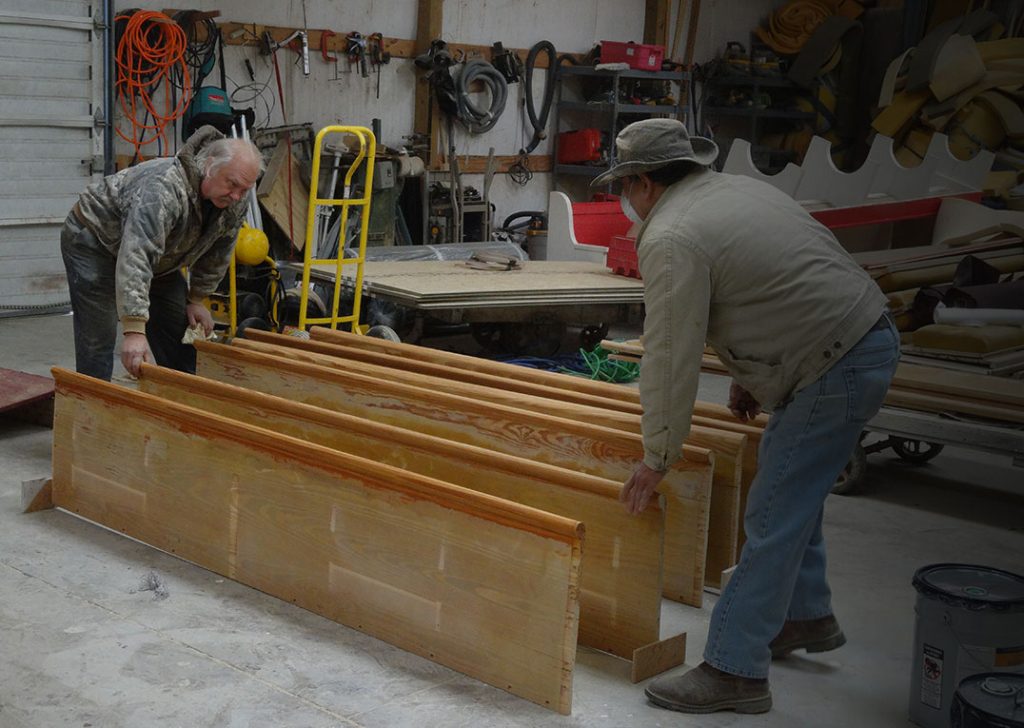
church pew restoration

Installing pews in a historic Philadelphia church requires careful planning. Many churches in Philadelphia have unique architectural features – narrow aisles, stone columns, or raised platforms – that affect seating layout. Follow these steps to ensure a smooth, safe pew installation:

  1. Evaluate and Measure the Space: Begin by measuring your sanctuary’s dimensions, including length, width, and ceiling height. Note any fixed obstacles like columns, alcoves, or steps. Also measure doorways and corridors if you’ll move pews in pieces. Philadelphia’s older churches often have tight entryways, so confirm that each pew or pew section will fit through hallways and doors before planning the layout.
  2. Plan Your Layout: Sketch a scale diagram of the sanctuary and plot pew rows, center aisle, and side aisles. Aim for at least a 5-foot-wide main aisle and about 3-foot side aisles. Standard guidance also calls for roughly 36 inches of front-to-front spacing between rows. Check local building and fire codes – churches must comply with occupancy rules for public assembly. Ensure your design maintains all required exit paths and includes space for accessible seating (for example, a 36-inch-wide route for wheelchairs).
  3. Prepare the Pews: If you’re reusing existing or used pews, it’s best to disassemble them before moving. As McPhail notes, “It is generally best for the used church furniture to be completely taken apart to its basic parts, shipped to its destination then installed as if it were new furniture”. One important point: pew support legs are often cut to fit a specific floor height. After moving, you may need to trim or adjust each leg for a level fit. Move the pew sections into place near their final positions before reassembling.
  4. Install and Anchor Pews: Starting with the front row, place each pew and use a level to ensure it’s straight. Secure pew ends firmly to the floor – proper anchoring prevents wobbling. McPhail offers anchoring solutions because loose pew ends are a common issue. Also, be sure to re-anchor or fasten furniture so it meets all fire-safety codes. Continue placing pews row by row, always checking measurements. Make sure each row is aligned, that seating lines are even, and that hymnals, kneelers, and cup holders are positioned uniformly.
  5. Final Checks: Walk all aisles and pathways to verify clearances match your plan. Confirm that exit routes remain at least the minimum width and that pews do not obstruct any signage or doors. Sit on a few pews to test stability. Once everything is level, anchored, and code-compliant, your installation is complete.

Pew installation is a job that calls for experience and precision. Contact McPhail Church Services for professional pew installation in Philadelphia, PA. Our team can handle the planning, measuring, moving, and anchoring – ensuring your new pew layout is safe, comfortable, and compliant with all codes.
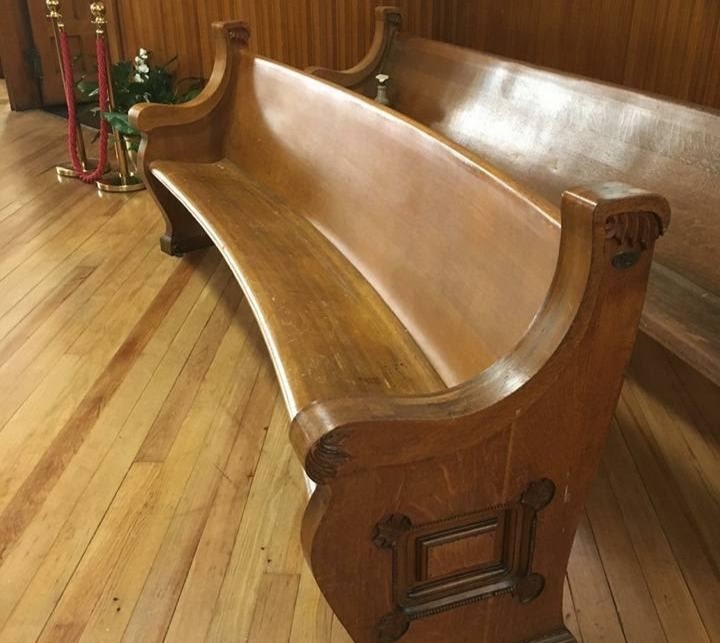
church pew restoration

Richmond, Virginia is home to many historic churches with centuries-old wood pews that reflect the city’s rich heritage. These antique benches have witnessed generations of worship, so when it’s time to refresh seating, it’s important to balance tradition with modern comfort and safety. Thoughtful pew reupholstery can honor the past while providing a welcoming place to sit today.

Balancing Tradition and Comfort

Maintaining historic pews means respecting their original character. Craftsmen often avoid high-gloss finishes, using stains that match the original wood tones. Likewise, new cushions or fabrics should fit the period style – for example, muted damasks or simple woven textures in classic colors. At the same time, modern padding adds comfort. As one expert notes, restorers can “erase years of wear… and change the color or the cushion upholstery to give your pews a whole new look” while still honoring the pews’ traditional role. In practice, this might mean adding a thin foam layer under the existing seat or selecting fabric patterns that look vintage. The key is subtlety – the pews should feel very much as the congregation remembers, only more comfortable.

Choosing Materials to Match History

Fabric selection is crucial to preserve your church’s aesthetic. For a Richmond sanctuary, that might mean velvets, heavy silks, or woven jacquards in colors that complement stained glass and woodwork. At the same time, contract-grade fabrics provide durability. Industry experts recommend materials like woven polyester or Crypton, which are engineered to “withstand daily wear and tear” in high-use settings. Many churches choose treated microsuede or vinyl for pew seats because they repel spills and stains and are easy to clean. These modern fabrics can mimic traditional textures – for instance, vinyl can be embossed with a subtle pattern – while outlasting older cloths. The goal is a fabric that looks appropriately period-inspired but endures through years of weekly services.

Fire Safety and Accessibility

Even historic churches must meet today’s safety standards. Upholstered pews in public buildings are generally required to use fire-resistant fabrics and must pass tests like CAL 117 or NFPA 701. McPhail selects only certified, flame-retardant upholstery materials for reupholstering antique pews, ensuring every cushion carries the necessary compliance labels. Accessibility is another modern consideration: while places of worship often have some ADA exemptions, inclusive design is encouraged. McPhail can trim pew ends or leave gaps so that wheelchair-accessible routes (typically 36 inches wide) are maintained. In short, new upholstery and layout changes can make historic seating both safe and welcoming for all parishioners.

McPhail Church Services understands the care that historic pews demand. We take extra care with antique and custom pieces, “using traditional methods and materials to maintain [their] character”. Our craftspeople match fabric patterns, wood stains, and finishing techniques so that repairs look original. Whether it’s refinishing worn wood or expertly re-covering cushions, McPhail’s restoration work blends the old and new seamlessly.

Give your Richmond church’s pews the respectful restoration they deserve. Contact McPhail Church Services today to discuss historic pew reupholstery in Richmond, VA. We’ll help you select fabrics and finishes that honor your church’s history while keeping your congregation comfortable and safe for years to come.

church pew padding before

Your church’s pews are more than just seating – they’re a vital part of your sanctuary’s history and comfort. In Charlotte’s humid climate, wooden pews endure heavy use, and over time they can start to show wear. Keeping an eye out for warning signs ensures your congregation’s safety and comfort. Here are five common signs your Charlotte, NC church pews need professional repair:

  1. Creaking or Squeaking: If pews groan or squeak under weight, it often signals loose joints or failing hardware. Congregants may joke about “old floorboards,” but persistent squeaks can indicate serious structural issues. High humidity in Charlotte (summers are known to be hot and humid) causes wood to expand and contract, stressing joints and weakening glue over time. Don’t ignore these noises – they often foreshadow a larger failure.
  2. Cracked or Splintered Wood: Visible cracks, splits, or spintered boards are clear distress signals. Splinters or chunks of wood breaking off not only mar the look of your pews, they can injure worshippers. McPhail experts note that “broken or splintered wood in one or several areas” is a tell-tale sign of needed repair. Moisture fluctuations can warp planks and pop joints apart, so in Charlotte’s changing seasons you might see new cracks if repairs are delayed.
  3. Loose or Unstable Legs: Wobbly or detached pew legs are a serious safety hazard. Over time, even solid oak legs can loosen from repeated use or shifting floors. Loose support means a pew can tip or collapse under pressure. McPhail Church Services advises churches to watch for “loose, damaged, or shaky structures” as warning signs. Repairing or re-anchoring legs promptly prevents someone from being hurt when benches give way.
  4. Worn, Torn, or Unsightly Upholstery: Torn, stained, or flattened pew cushions not only look bad, they affect comfort and safety. Old padding can lose resilience and may not meet modern fire-safety requirements. Rips or abrasions in the fabric invite faster deterioration of the foam underneath. If upholstery is frayed, discolored, or smells musty, reupholstering the pew can restore both its appearance and code compliance.
  5. Missing or Broken Accessories: Many pews have built-in kneelers, cup holders, or book racks. When these are missing, broken, or hanging loose, it can distract congregants and detract from worship. Even minor damage (like a loose hymnal rack or cracked kneeler) is worth fixing. McPhail highlights that replacing broken accessories is part of comprehensive pew repair services.

Charlotte Climate and Building Codes

Local factors make Charlotte churches especially prone to pew wear. Summers here are notably hot and humid, so wood absorbs moisture and swells, then dries and shrinks in winter. This constant movement stresses joints and finishes. North Carolina’s fire and building codes require that sanctuary seating meet safety standards – for example, flame-resistant upholstery and proper aisle clearances – to protect congregations in an emergency. Neglecting these issues could violate safety codes and endanger worshippers during a fire or other crisis.

The Cost of Delaying Repairs

Putting off pew repairs is risky. Damaged pews pose slip-and-fall hazards and may injure someone if a bench breaks under pressure. Beyond physical danger, aging pews can give visitors the impression of neglect, undermining your church’s image. Legally, churches must comply with local safety codes and cannot ignore obvious hazards. Economically, small repairs now prevent much larger expenses later – for example, fixing one cracked board costs far less than replacing an entire pew set later.

Does your Charlotte church need pew repairs? Contact McPhail Church Services today to schedule an inspection of your sanctuary seating. Our team of experts will evaluate the condition of your pews, recommend needed repairs or refinishing, and ensure everything meets comfort and safety standards. Protect your congregation and your investment – reach out to McPhail for professional church pew repair in Charlotte, NC.